
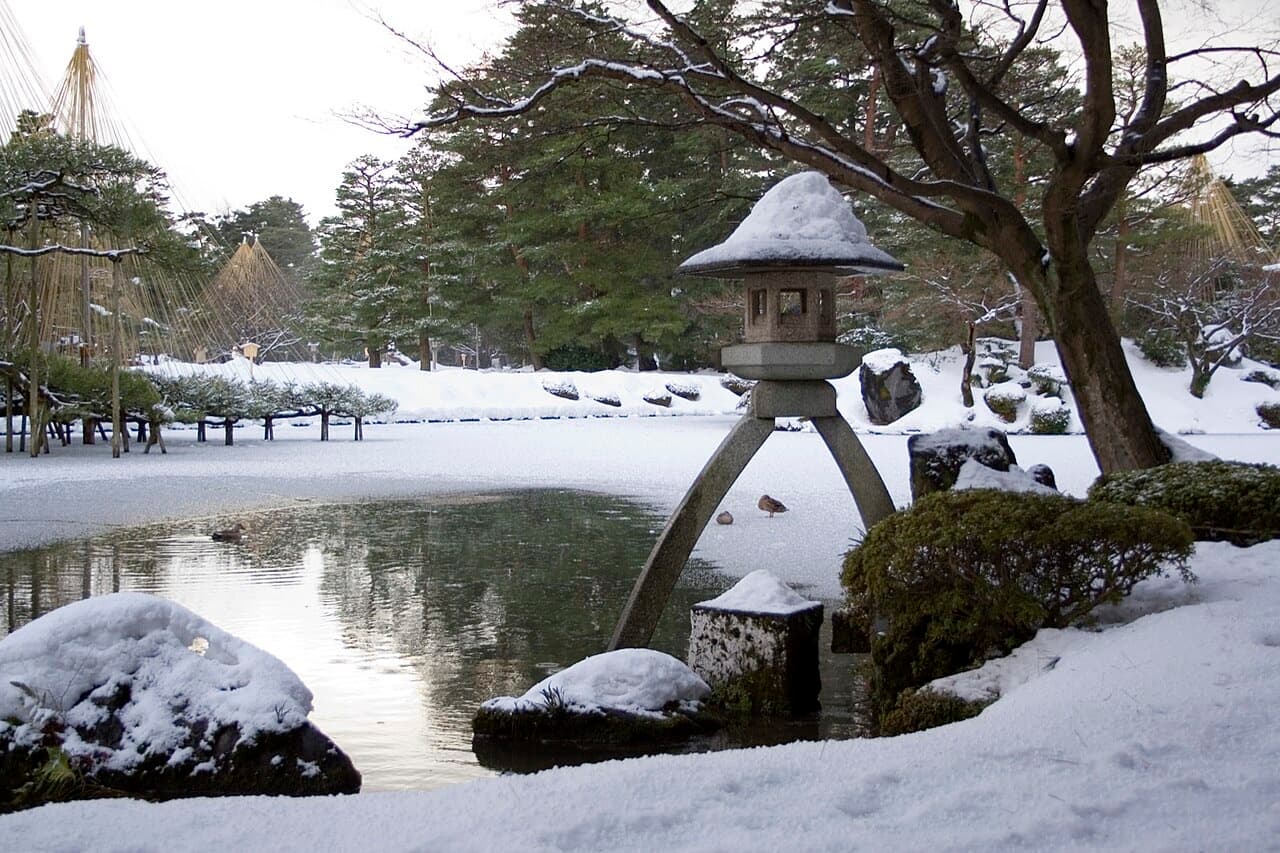
 Kenrokuen: tab2_dawa / CC BY 2.0 / Wikimedia Commons
Kanazawa in Winter: A 2-Night Plan for Snow, Gardens & Food
Plan two nights around Kenrokuen, warm meals and indoor stops, then choose the Tokyo–Kanazawa–Kyoto route that suits your trip.
Last updated: October 13, 2026. Prices and seasonal operations checked against the linked sources.
Kanazawa in winter is worth the trip if you want three things: Kenrokuen's pine trees roped up against heavy snow, the Sea of Japan seafood season, and compact historic streets you can cover on foot. Don't book it expecting a guaranteed snow globe, though. Rain, sleet and wet pavement are realistic possibilities, even in January.
The good news is that two nights is enough. You arrive one afternoon, spend one full day and leave the next morning. That covers Kenrokuen, the castle, Omicho Market and the teahouse streets, with room to swap things around when the weather turns.
This is the winter-only version. For sights you can see in any season, read our things to do in Kanazawa guide. For when the leaves turn, see Kanazawa autumn leaves 2026.
Quick Answer
- Best-fit route: BF002 Traditions & Gardens of Japan. It runs 7 days / 6 nights: Tokyo 2, Kanazawa 2, Kyoto 2.
- Catalog price: USD 1,200–1,800 per person, based on double occupancy. Your departure date, room arrangement and availability all affect the final quote. This is the range across the whole catalog (BF002 pricing PDF), not a guaranteed price for every winter departure.
- Meals: room only. Hotel breakfast is not included on BF002.
- Budget extra for: accommodation tax, local transport that isn't in the itinerary, admissions and meals.
- Snow: January and February give the best odds, but snow is never guaranteed.
Is Kanazawa in Winter Worth It? Snow, Rain and Realistic Expectations
Kanazawa is the capital of Ishikawa Prefecture. It sits on the Sea of Japan side of central Japan, in the Hokuriku region. Winter weather here changes fast. A sunny morning can turn to sleet by lunch and clear again by mid-afternoon. An old local saying goes that you can forget your lunch, but never your umbrella.
Some numbers help. The Japan Meteorological Agency's 1991–2020 normals put Kanazawa's average January temperature at about 4°C. So most days are cold and damp rather than frozen solid, and snow on the ground often turns to slush quickly. The snowy season peaks in January and February, but a big snowfall that settles in the city is never certain. Some winters bring plenty. Some bring very little.
For your actual travel dates, use the JMA forecast and check local transport notices shortly before departure. Historical snow patterns help you choose a season, but they cannot tell you whether the garden will be white on your morning there.
So why visit Kanazawa now? Because winter brings things other seasons don't:
- yukitsuri ropes over the pines
- straw mats on the samurai-district walls
- crab and sweet shrimp on menus
- hot oden at the end of a cold day
When snow-covered scenery does appear, it's stunning. Treat it as a bonus, not the plan.
Why Two Nights Is the Right Length
Kanazawa's big sights are close together. The arrival afternoon covers Omicho and Higashi Chaya. The full day covers Kenrokuen, the castle and a museum. The departure morning leaves time for a last walk and some souvenirs.
Winter daylight is short, and Kenrokuen closes at 17:00 in winter. So the order of your day matters more than adding days. A third night mostly protects you against one bad-weather day. If you already know you want a slower pace, say so when you enquire.
Getting to Kanazawa Station from Tokyo, Kyoto and Osaka
From Tokyo, the Hokuriku Shinkansen runs from Tokyo and Ueno stations to Kanazawa. The fastest Kagayaki trains take around two and a half hours, and every Kagayaki seat must be reserved. BF002 uses this route on the way in.
From Kyoto or Osaka there's no longer a direct train. The Shinkansen extension to Tsuruga opened in March 2024. Since then, the Thunderbird limited express runs only as far as Tsuruga, where you change to the Hokuriku Shinkansen. From Kyoto, plan on about two hours including the change. Both platforms are inside the same station, and the transfer is signposted. Check current times on JR-West.
Kanazawa Station is worth a few minutes even if you're only passing through. The wooden Tsuzumi-mon gate, shaped like a traditional hand drum, stands at the east exit under the glass Motenashi Dome. The dome was designed partly to shelter arriving visitors from the city's rain and snow. The shops inside are handy for last-minute Japanese sweets and gold-leaf gifts.
Plan Around Weather-Flexible Clusters
Don't plan one rigid route. Think in four clusters and match them to the forecast each morning.
Kenrokuen Garden and Kanazawa Castle Park: Best on a Dry or Snowy Morning
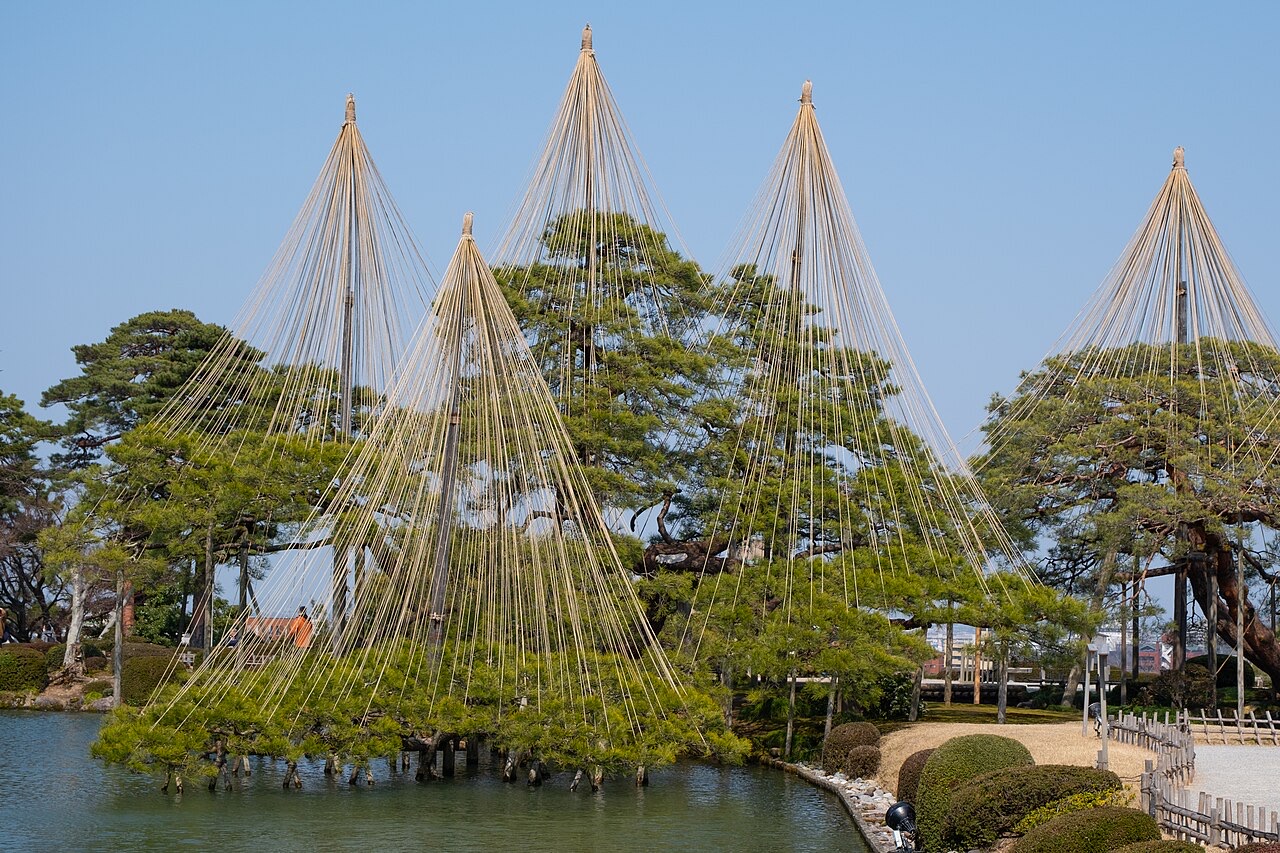
Kenrokuen is counted among Japan's three great gardens. The Maeda lords of the Kaga domain shaped it over generations, and its 11.4 hectares are a real piece of feudal Japan. Most winter visitors come for yukitsuri, a winter tradition. Gardeners run ropes from tall poles to the branches of the pine trees so heavy snow can't snap them.
Visit Kanazawa says the work at Kenrokuen runs from November 1 to mid-December. The supports are installed tree by tree rather than appearing across the garden overnight. The city's winter guide says the ropes stay up until mid-March. So the rope cones are there even in a week with no snow.
Practical details, as listed on the official Kenrokuen page in October 2026:
- Admission: adults ¥320, ages 6–17 ¥100, 65 and over free with ID.
- Winter hours: 8:00–17:00 from October 16 to the end of February.
- Early entry: the prefecture's castle and garden site lists free early-morning entry through selected gates. Times change by season, so check before you count on it.
Kanazawa Castle Park is right next door, across from the Ishikawa-mon gate. Kanazawa Castle was the Maeda family's seat through the Edo period. The grounds are free, and the original stone walls are the real highlight. The rebuilt Hishi Yagura and Gojukken Nagaya turret buildings (9:00–16:30, last entry 16:00, adults ¥320, per the official site) are a good place to warm up. Gravel paths and slopes get slushy, so wear proper shoes.
Omicho Market: Fresh Seafood Under Cover
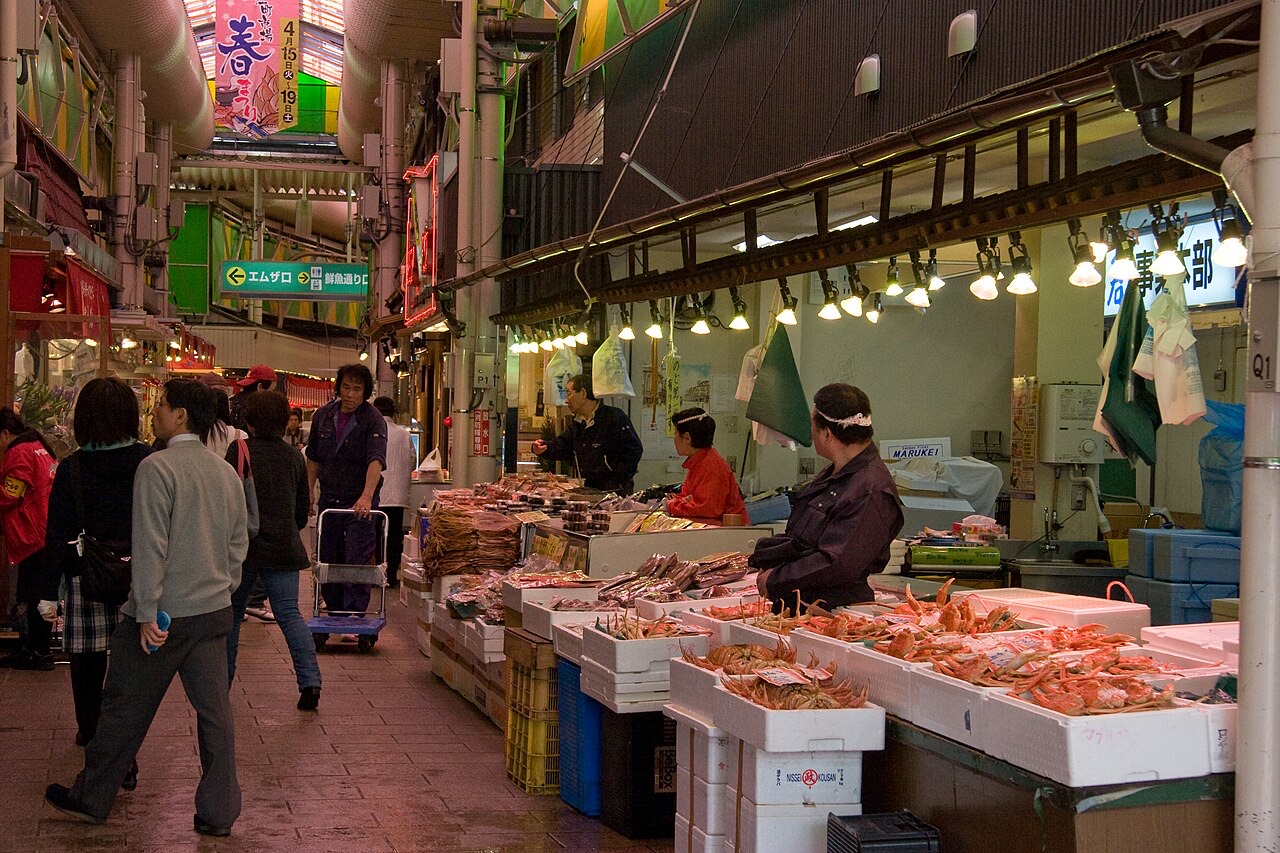
Omicho Market has around 170 shops and restaurants, and much of it is under cover. That makes it a great place on a rainy day. It also gets crowded around lunchtime. Arrive late morning, before the rush. Each shop sets its own hours. Some take Wednesdays off, many wind down by late afternoon, and Visit Kanazawa notes New Year closures from January 1 to 4, which vary by shop.
Winter is crab season. The local tourism association's food guide describes the season starting in early November. Male snow crab is sold as kano-gani with a blue tag. The female kobako-gani is sold for only a short period, usually until around late December. Exact supply depends on the catch, so ask at the stall instead of assuming. Sweet shrimp (amaebi), seafood rice bowls and market sushi are easier to find all winter.
Kanazawa Oden, Crab and Japanese Sweets
Kanazawa oden is a year-round local favourite. After a cold day it's the perfect way to warm up. Look for kuruma-fu, a wheel-shaped wheat gluten that soaks up the broth. In winter, look for kani-men, made with female snow crab. The Korinbo and Katamachi areas are the easy dinner zones.
Kanazawa also has a serious sweets culture, tied to the tea ceremony. The city also produces the vast majority of Japan's gold leaf. Expect wagashi (traditional sweets) and gold-leaf treats everywhere, especially in the teahouse district.
Higashi Chaya District and Nagamachi: Teahouses, Straw Mats and Earthen Walls
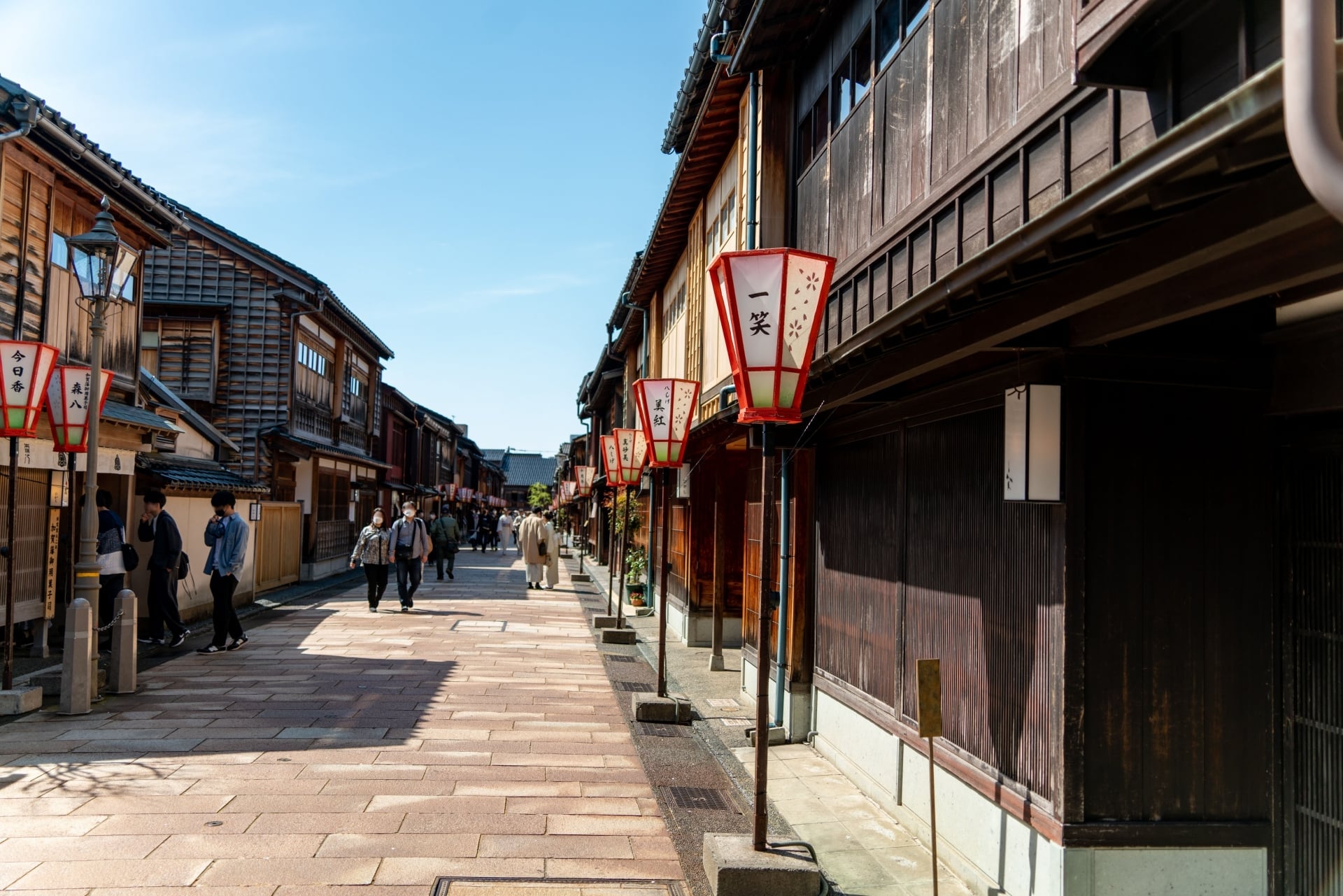
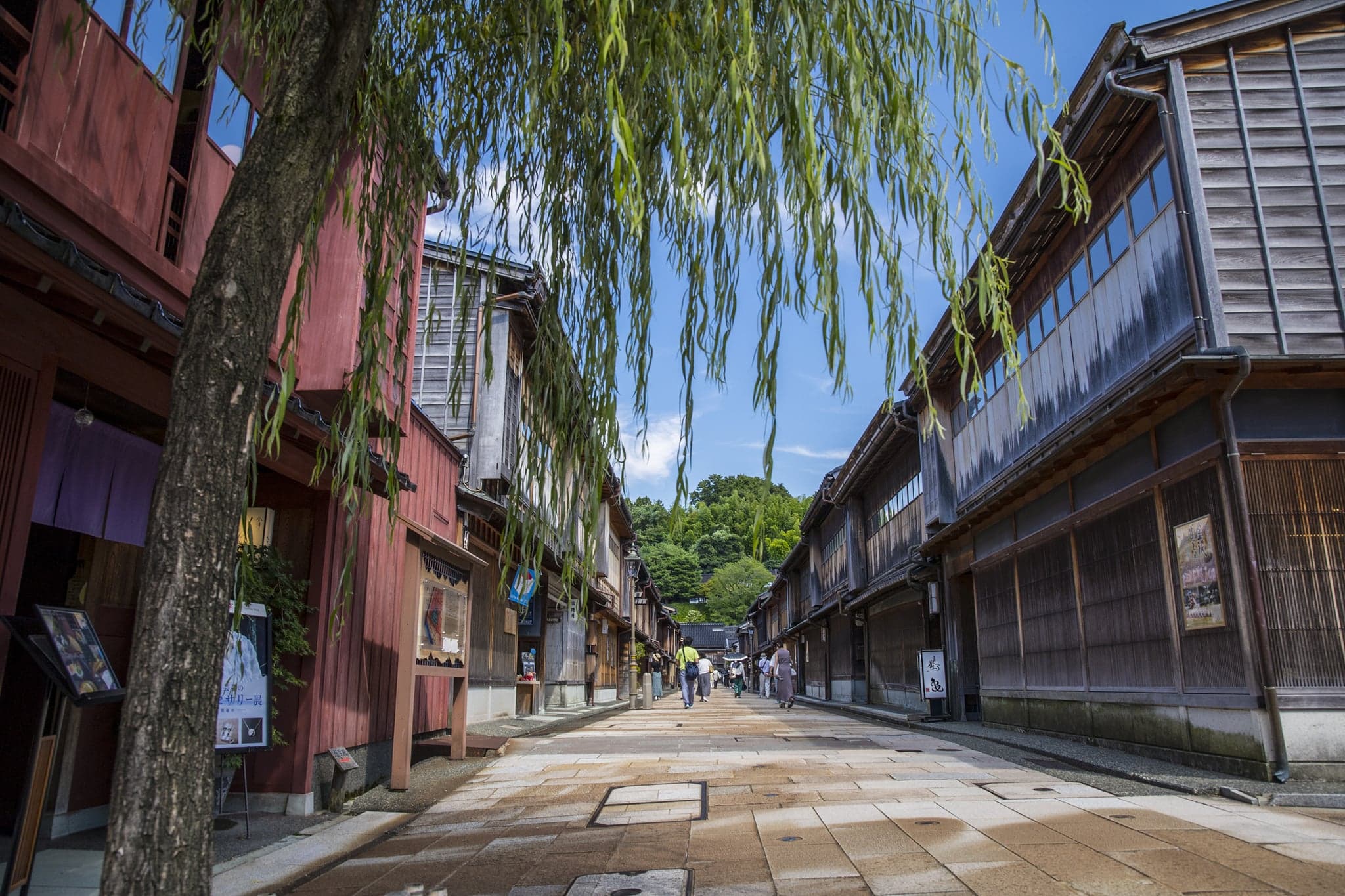
Higashi Chaya lies north-east of the centre, across the Asano River. It's Kanazawa's largest teahouse district, laid out in 1820. You'll find wooden lattice fronts, stone-paved streets, gold-leaf shops and cafés serving matcha with sweets. It can be crowded in the middle of the day. Wet paving stones get slippery, so take it slowly.
Nagamachi, the old samurai district, is on the other side of town, west of Korinbo. In early December, workers attach straw mats called komo to the earthen walls to protect them from snow and frost. Visit Kanazawa says the scene stays until about early March. Nagamachi is small. Don't try to walk between the two districts in sleet. Take a bus or taxi instead.
Rainy-Day Backup: 21st Century Museum of Contemporary Art and D.T. Suzuki Museum
The 21st Century Museum of Contemporary Art is a short walk from Kenrokuen.
- Public Zone: free, open 9:00–22:00.
- Exhibition Zone: 10:00–18:00, until 20:00 on Fridays and Saturdays. It closes on Mondays (or the next weekday when Monday is a holiday) and over the New Year holidays.
- Tickets: prices depend on the current exhibition.
The D.T. Suzuki Museum is smaller and quieter, built around the Buddhist thinker's ideas. It opens 9:30–17:00 (last entry 16:30) and costs ¥310 for general admission. It normally closes on Mondays (the following weekday instead when Monday is a national holiday), from December 29 to January 3, and occasionally for exhibition changes. Its water garden is one of the few views in town that rain arguably improves.
Planning beyond winter 2026–27? The 21st Century Museum has announced a renovation closure from May 6, 2027 to March 2028. Check its visitor information before using it as a rainy-day stop on a later trip.
A 2-Night Kanazawa Winter Itinerary, Day by Day
This plan follows Days 3–5 of BF002. The day themes are suggestions. Admissions aren't included.
Day 1 (Arrival Afternoon): Omicho, Higashi Chaya and an Oden Dinner
Before you leave Tokyo, send your large suitcase on to Kyoto. BF002 includes that delivery, and honestly it's a lifesaver on wet streets. Take the Hokuriku Shinkansen from Tokyo or Ueno, and leave your two-night bag at the hotel front desk.
Go to Omicho first for a late lunch, before the stalls start closing. Spend late afternoon in Higashi Chaya with tea and sweets. Have dinner in Korinbo or Katamachi, with oden if it's a cold evening.
Snow monkey option: BF002 offers an optional taxi tour to see the snow monkeys at Jigokudani from Nagano, a stop on the same Shinkansen line. It runs 11:00–14:30, takes a maximum of 3 passengers per vehicle and needs advance reservation. Park entry isn't included, so check the park's official site for current ticketing. The trade-off is real: you'll reach Kanazawa in the evening and skip Omicho.
Day 2 (Full Day): Gardens First, Then Follow the Weather
Breakfast isn't included on BF002. A convenience store or bakery is the quickest fix.
- Dry or snowy day: Kenrokuen at 8:00, then Kanazawa Castle Park and the turrets from 9:00. After lunch, go to the art museum, then Nagamachi in late afternoon.
- Rainy day: start at the museum at 10:00, then the D.T. Suzuki Museum, then lunch at Omicho. Save Kenrokuen for any dry spell before 17:00.
- Monday: both museums normally close their exhibition spaces, with holiday exceptions. Check the calendars first; the 21st Century Museum's Public Zone, castle turrets and shopping streets can provide alternatives when their own opening schedules allow.
- Shirakawa-go day: the optional chartered taxi (9:00–15:00) uses most of your full day. Put Kenrokuen on your arrival afternoon or departure morning if possible. A garden visit after the taxi returns depends on winter road conditions and the remaining time before 17:00.
Day 3 (Departure Morning): A Short Walk, Souvenirs and the Train to Kyoto
Have breakfast, take a short walk in the castle grounds, and buy souvenirs at Kanazawa Station. Then take the Shinkansen to Tsuruga and the limited express to Kyoto, where you collect your forwarded bag according to the confirmed delivery schedule. Next stop: our Kyoto in winter guide.
Winter Light-Ups, Events and New Year Closures
The official winter illumination listing, checked on October 13, 2026, gives February 6–10, 13, 20 and 27, 2027, with free admission from 18:00–20:45 and closing at 21:00. These are scheduled dates, so check the listing again before travel for changes or weather-related notices. The city's winter guide also mentions illuminations around Omicho, Korinbo and Katamachi, plus a Saturday-evening Light-up Bus. Check that the current schedule still matches.
Late December to early January needs extra checking. Museums close, many market shops close from January 1 to 4, and restaurant hours vary. Check each venue for your dates. And don't expect empty streets in winter. Weekends and holidays are still busy.
Winter vs Other Seasons in Kanazawa
Kenrokuen is designed to look good in all four seasons. Spring brings plum blossoms, then cherry blossoms. Early summer adds azaleas and irises. In the fall, autumn colour takes over. Those seasons are easier for long walks.
Winter trades comfort for character. You get ropes on the pines, straw mats on the walls, and the crab season. Choose winter if those draw you and you're fine with cold, rainy days now and then.
Compare the Routes: Which Kanazawa Trip Fits You?
| Route | Length | Kanazawa nights | Other overnight stops | Meals (catalog) | Shirakawa-go | Luggage delivery | Catalog USD range |
|---|---|---|---|---|---|---|---|
| BF002 | 7 days / 6 nights | 2 | Tokyo 2, Kyoto 2 | Room only | Optional taxi from Kanazawa, 9:00–15:00, extra charge, max 3 per car | Tokyo → Kyoto | 1,200–1,800 |
| GR006 | 12 days / 11 nights | 2 | Tokyo 4, Osaka 2, Kyoto 3 | Breakfast included | Optional taxi from Kanazawa, fare not included | Tokyo → Kyoto, Kyoto → Tokyo | 2,800–4,200 |
| GR003 | 12 days / 11 nights | 2 | Tokyo 4, Kyoto 3, Takayama 2 | Breakfast included | Included: chartered taxi Takayama–Shirakawa-go–Takayama | Tokyo → Kyoto, Kyoto → Tokyo | 3,200–4,700 |
| KA002 | 7 days / 6 nights | 1 | Osaka 3, Takayama 2 | Breakfast included | Included: chartered taxi Kanazawa–Shirakawa-go–Takayama | None listed | 2,000–3,000 |
| SK009 | 13 days / 12 nights | 2 | Tokyo 3, Yudanaka Onsen 1, Hakuba 3, Kyoto 2, Hakone 1 | Breakfast included; dinner in Yudanaka and Hakone | Optional taxi from Kanazawa, 9:00–16:00, fee not included | Airport → Hakuba, Hakuba → Kyoto, Kyoto → Tokyo | 4,700–6,000 |
Interested in a tour? Click a route code above, or search for it in the top-right Search bar.
All prices are per person, based on double occupancy. Departure date, room arrangement and availability affect the final quote. These are ranges across the whole catalog, not guaranteed prices for winter departures. Accommodation tax, local transport that isn't listed, admissions and meals outside the itinerary can be extra.
Each route above includes 24/7 support during your stay, travel insurance, the main intercity Shinkansen and limited express trains, and a transport IC card. The card amount varies by route; BF002's is ¥3,000.
On BF002, our staff meet you at the airport and give you the travel essentials for your booked route, including the IC card. It's self-guided, with no guide, but you can request a local guide as an option.
Ski costs on SK009, listed separately: ski gear and skiwear rental are included. Lift tickets are not. SK009 also includes a Snow Monkey Park visit by hotel shuttle from Yudanaka, with entry fees not included. Conditions vary, so read our Japan ski packages guide too.
Choose a starting route
Traditions & Gardens of Japan
Two nights in each city, with the specified intercity trains and Tokyo-to-Kyoto luggage delivery. Hotel breakfast is not included; Shirakawa-go is an optional extra.
Share your dates and party size, and we’ll check availability and send a quote for your trip.
How to Choose: City Trip, Village Extension or Ski Combination
Winter city trip: pick BF002 if you want the lowest catalog range and Kyoto next. Pick GR006 if you want breakfasts, time in Osaka and Kyoto first, and an afternoon departure from Kanazawa.
Village extension: pick GR003 for two nights in Takayama with Shirakawa-go included. KA002 is the faster option. It spends just one night in Kanazawa, then the included taxi carries you on through Shirakawa-go to Takayama. It isn't the two-night plan.
Ski combination: SK009 adds three nights in Hakuba before Kanazawa.
Arrival and Departure Cities
BF002 arrives in Tokyo and ends in Kyoto, so you can fly into the Tokyo area and depart from a suitable Kansai-area airport after Kyoto. Flights and any unlisted airport transfer cost extra. GR003, GR006 and SK009 start and end in Tokyo. KA002 starts and ends in Osaka. For bigger seasonal plans, see our Japan winter itinerary and Tokyo in winter guides.
Walking Tolerance and Luggage
A full Kanazawa day means a lot of walking on gravel, slopes and stone paving, often wet. If that's a challenge for you, plan taxis between the clusters. On BF002, GR003, GR006 and SK009, your large luggage goes ahead, so you only carry a two-night bag in Kanazawa. KA002 lists no luggage delivery, so pack light.
Shirakawa-go as a Winter Day Trip: What's Included and What Isn't
Shirakawa-go's thatched farmhouses sit in the mountains, which are usually much snowier than the coast, though conditions vary. There's a panoramic view from the village observatory.
On BF002, the chartered taxi day trip is optional. It runs 9:00–15:00 for a maximum of 3 passengers, needs an advance request and costs extra. It's a daytime visit, not a booking for the winter light-up. The official village site runs that event on reservations with restricted access. For more, read our Shirakawa-go guide.
Common Mistakes, and the Resources That Help
- Building the trip around guaranteed snow.
- Expecting the daytime Shirakawa-go taxi to include the light-up.
- Forgetting the museums' Monday closures.
- Reaching Omicho at 5 p.m., when many stalls have closed.
- Forgetting that breakfast isn't included on BF002.
- Not checking New Year hours from late December to early January.
Check these the week before you go: Visit Kanazawa, the official castle and garden site, kanazawa21.jp, JR-West, and the JMA forecast.
Our self-guided routes give you a set multi-city plan, guidance on trains and journey times, and help with bookings before you fly. Once you're in Japan, you travel at your own pace, with 24/7 support and insurance. Luggage delivery is included on the routes specified in the comparison above; KA002 does not list it.
Interested in Kanazawa in winter? Get in touch through Plan My Trip on selfguidejapan.com, and we'll suggest the tours that fit your dates.
Would you like to add two nights in Kanazawa to your winter trip? Get in touch through Plan My Trip on our self-guided tours site, and we’ll suggest the tours that best fit your dates and plans.
Frequently Asked Questions
Does it snow in Kanazawa in winter?
Often, but you can't count on it. January and February are your best chance. Rain and sleet are common, and snow in the city can melt quickly. Kenrokuen's yukitsuri ropes are in place from November until about mid-March either way.
How many nights should I spend in Kanazawa in winter?
Two nights is enough: an arrival afternoon, a full day and a departure morning. If you only have one night, KA002 is the faster alternative, moving on via Shirakawa-go to Takayama.
Does the seven-day Tokyo–Kanazawa–Kyoto route include breakfast?
No. BF002 is room only. It includes six hotel nights, the main intercity trains, a ¥3,000 IC card, luggage delivery from Tokyo to Kyoto, 24/7 support and travel insurance.
Can I visit Shirakawa-go from Kanazawa in winter?
Are Kanazawa's sights open over New Year?
Partly. The D.T. Suzuki Museum closes from December 29 to January 3. The 21st Century Museum closes over the New Year holidays, and many Omicho shops close from January 1 to 4. Check each venue for your dates.
Related Articles
Things to Do in Kanazawa: Kenrokuen, the Samurai and Geisha Districts, Omicho and a Two-Day Plan
14 min read
Japan Winter Itinerary: 12 Days of Snow Monkeys, Onsen, Shirakawa-go and Quiet Temples
16 min read
Kyoto in Winter: Snow, Quiet Temples and the 2026–27 Dates
16 min read