
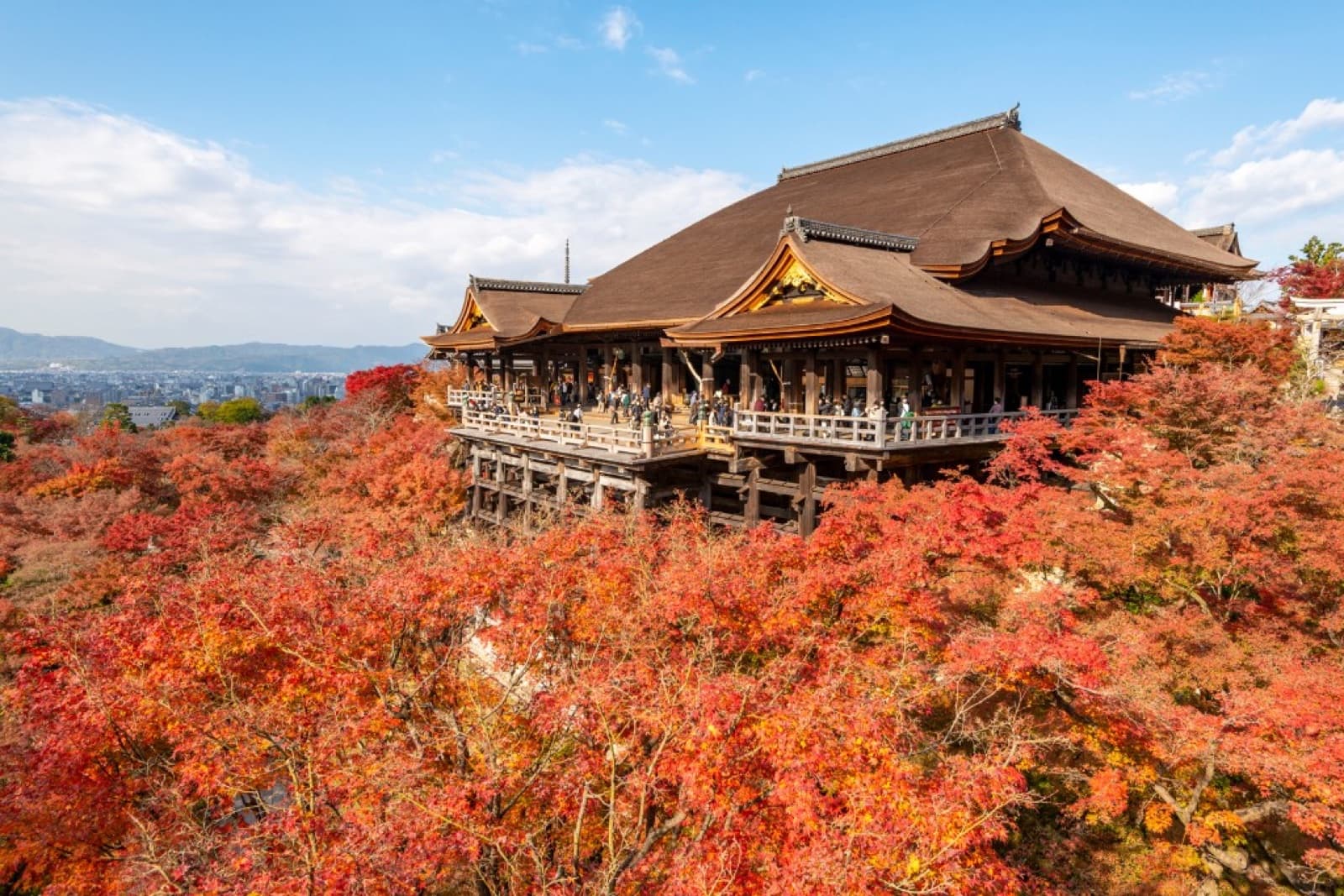
 写真提供:清水寺
Best Places to See Autumn Leaves in Japan: 9 Top Spots, Ranked
Nine spots ranked by what they actually deliver — the view, the crowds, the effort to reach them — with a self-guided route that survives a warm autumn. For week-by-week peak dates, see our separate foliage forecast.
Japan in autumn is arguably the best-kept secret among first-time visitors who default to cherry blossom season. You get cooler weather, fewer crowds at most spots, longer peak windows, and colors that run red, copper, gold and orange for weeks on end. The short answer: aim for late October through mid-December 2026, with late November to mid-December (JMC's second 2026 forecast: Tokyo November 28, Kyoto December 11) the safest window for first-timers — it lines up with peak foliage in Tokyo, Hakone, Lake Kawaguchi, Kyoto and most of western Japan. Go earlier — late September through mid-October — if Hokkaido, Tohoku, Nikko or the Japanese Alps are your priority.
The catch is that Japan's koyo front sweeps from the northern island of Hokkaido all the way to southern Kyushu across roughly ten weeks. There is no single "best week." There's only the best week for the region you've chosen. Below, I'll walk through timing, regions, specific spots, and how to actually turn the forecasts into a working plan. If you want the pure timing detail, pair this with our Japan autumn leaves forecast 2026 guide, and see the wider seasonal picture in autumn in Japan 2026.
🍁 Quick Answer: Best Autumn Leaves Spots 2026
- Best all-round spots: Kyoto temples, Nikko & Lake Chuzenji, Miyajima, Lake Kawaguchi, Kenrokuen, Oirase Stream.
- Least effort from Tokyo: Nikko, Hakone and Lake Kawaguchi are day trips; Kamikochi and Oirase need an overnight.
- When each peaks: north and mountains late September–mid-October, Tokyo from November 28 and Kyoto from December 11 (JMC's second 2026 forecast) — the week-by-week dates live on our autumn leaves forecast.
- Golden rule: match your dates to a region — not a region to your dates — and go at dawn.
How Japan's Fall Foliage Season Actually Works
Each year, starting in mid-September, the koyo front slowly moves southward from the northern island of Hokkaido until it reaches the lower elevations of central and southern Japan around late November. Some trees around Tokyo and Kyoto stay colorful into December.
There's a bit of physiology behind this. Japan's koyo peak isn't set by the calendar month — it's triggered by a physiological threshold: five consecutive days with a minimum temperature below 8°C. Once night temperatures drop under 8°C and chlorophyll breaks down faster than anthocyanins form, the leaves start to turn.
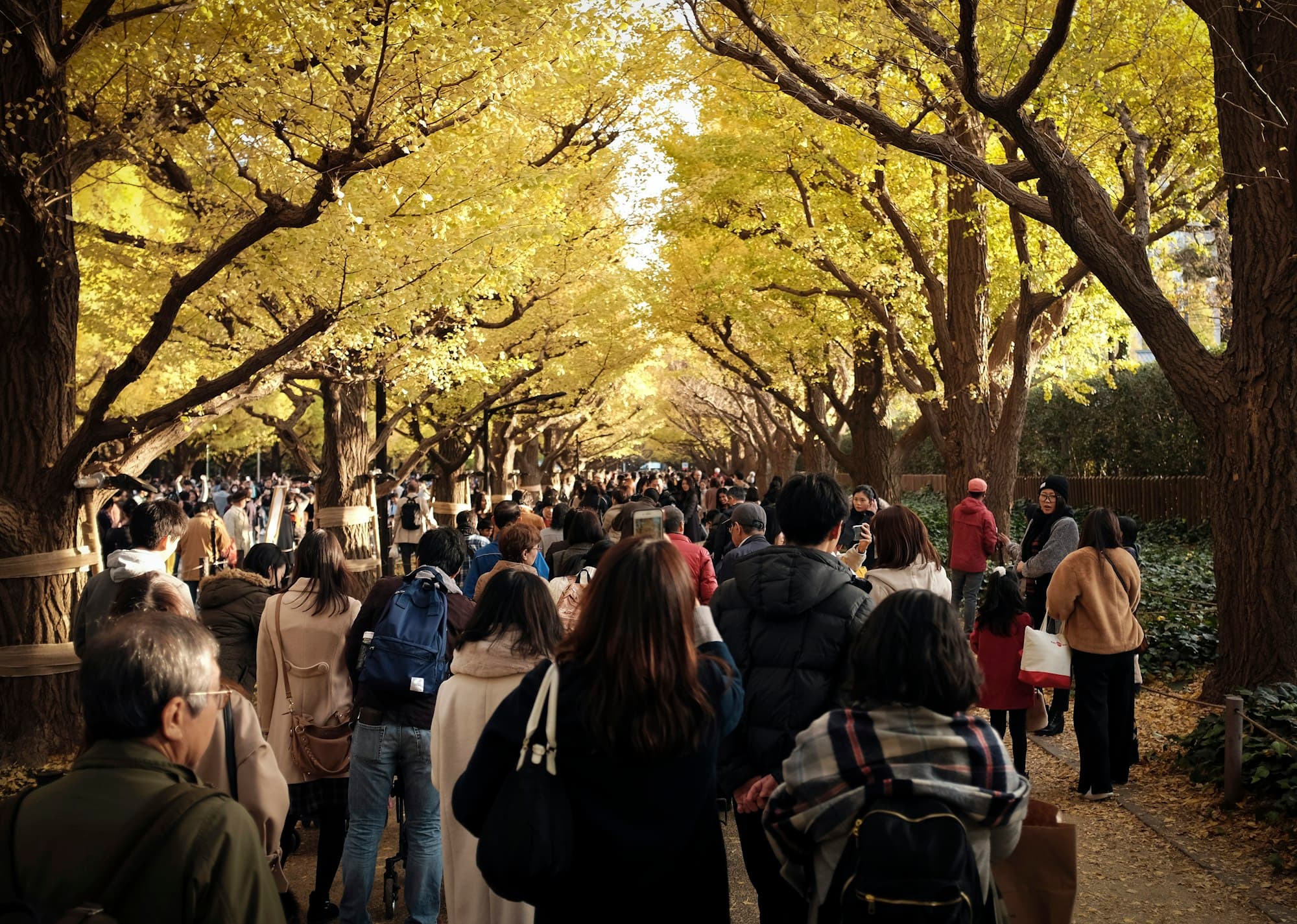
Two waves overlap. Yellow leaves (ginkgo trees) come first in late October, followed by red leaves (Japanese maple) in early November. That's why a well-timed trip can catch golden ginkgo avenues in one city and blazing Japanese maples a few days later in another. Honestly, this is where a lot of first-timers trip up: they book Kyoto for mid-November, then arrive to find half the maples still green.
Which Region Fits Your Dates
Colors move north to south, and from higher elevations down to lower ones. Here's the working calendar for the best autumn leaves spots in 2026, based on long-term averages and JMC's second 2026 forecast (published October 1; next update early November):
- Mid-September to early October — Northern Hokkaido: the red leaves of Asahidake, the highest peak of the Daisetsuzan Mountains, may start their fall foliage season in mid-September. This is Japan's first forecast territory — where "red-leaf hunting," or momijigari, actually kicks off. Daisetsuzan National Park is the classic pick.
- Early to mid-October — higher elevations: the Tateyama Kurobe Alpine Route, Kamikochi in the Japanese Alps, and the higher slopes of Aomori start turning. Kamikochi's larch trees turn gold against the snow-capped Hotaka mountains, and the area is closed from mid-November to mid-April. That closure catches people off guard, so plan for early to mid-October here. This window also overlaps the Takayama Autumn Festival in the nearby old castle town — see our Takayama Autumn Festival 2026 guide.
- Late October to early November — Tohoku, Nikko, Fuji Five Lakes: the red leaves in the Tohoku region come a little later, with Oirase Gorge and Bandai Highland in late October and Oufukasawa Bridge in early November. Nikko's higher areas — particularly Lake Chuzenji and Kegon Falls — usually peak in late October to early November, well before Tokyo itself.
- Mid to late November — Kanazawa, Setouchi, Kyoto's outer hills: you can enjoy the magnificent autumn scenery at Kenrokuen in Kanazawa from mid-November to early December. Miyajima and much of Kyoto's periphery light up in mid to late November, ahead of the city-centre temples in December.
- Late November to mid-December — Tokyo, Kyoto, Osaka: central Japan's big cities are the finale. JMC's second 2026 forecast puts Tokyo's peak from November 28, Osaka's from December 4 and Kyoto's from December 11 — a few days behind its average, still inside JMC's average band — so plan Kyoto for December 8–21 and put it at the end of your trip. Tokyo runs November 25 – December 10, with the ginkgo turning a few days before the red maples and holding into mid-December.
- Late November to mid-December — southern Kyushu and coastal pockets: Unzen is expected to peak around early November and Takachiho Gorge in late November, with the far south holding colour into mid-December. Southern Kyushu is your last chance before winter.
For a month-focused view of the same window, our Japan in November 2026 guide breaks down weather and crowds week by week, and the best time to visit Japan in 2026 compares autumn against the rest of the year.
Best Places to See Autumn Leaves in Japan
Here are the spots worth building an autumn trip around. I've tried to mix icons with a few off-the-beaten-path picks.
🍂 Best spots & typical peak windows (2026)
| Spot | Region | Typical peak window |
|---|---|---|
| Daisetsuzan / Asahidake | Hokkaido | mid-Sep – early Oct |
| Kamikochi & the Alps | Central / Chubu | early – mid-Oct |
| Oirase Stream & Lake Towada | Tohoku (Aomori) | late Oct |
| Nikko / Lake Chuzenji & Kegon Falls | Kanto (Tochigi) | late Oct – mid-Nov |
| Lake Kawaguchi & Fuji Five Lakes | Mt. Fuji | early – late Nov |
| Hakone | Kanto (Kanagawa) | mid-Nov |
| Kenrokuen, Kanazawa | Hokuriku (Ishikawa) | mid-Nov – early Dec |
| Momijidani Park, Miyajima | Hiroshima / Setouchi | mid – late Nov |
| Kyoto temples (Tofuku-ji, Eikan-do, Kiyomizu-dera, Arashiyama) | Kansai | Dec 8 – 21 (JMC 2026: peak from Dec 11) |
| Mt. Takao | Kanto (Tokyo) | mid – late Nov |
| Tokyo ginkgo avenues & city gardens | Kanto | late Nov – mid-Dec |
💡 Lower elevations peak later than higher ones at the same latitude — if the mountains are done, drop into the city gardens; if the cities are past peak, the coast may still be lit up.
Kyoto: The Classic Autumn in Japan Experience
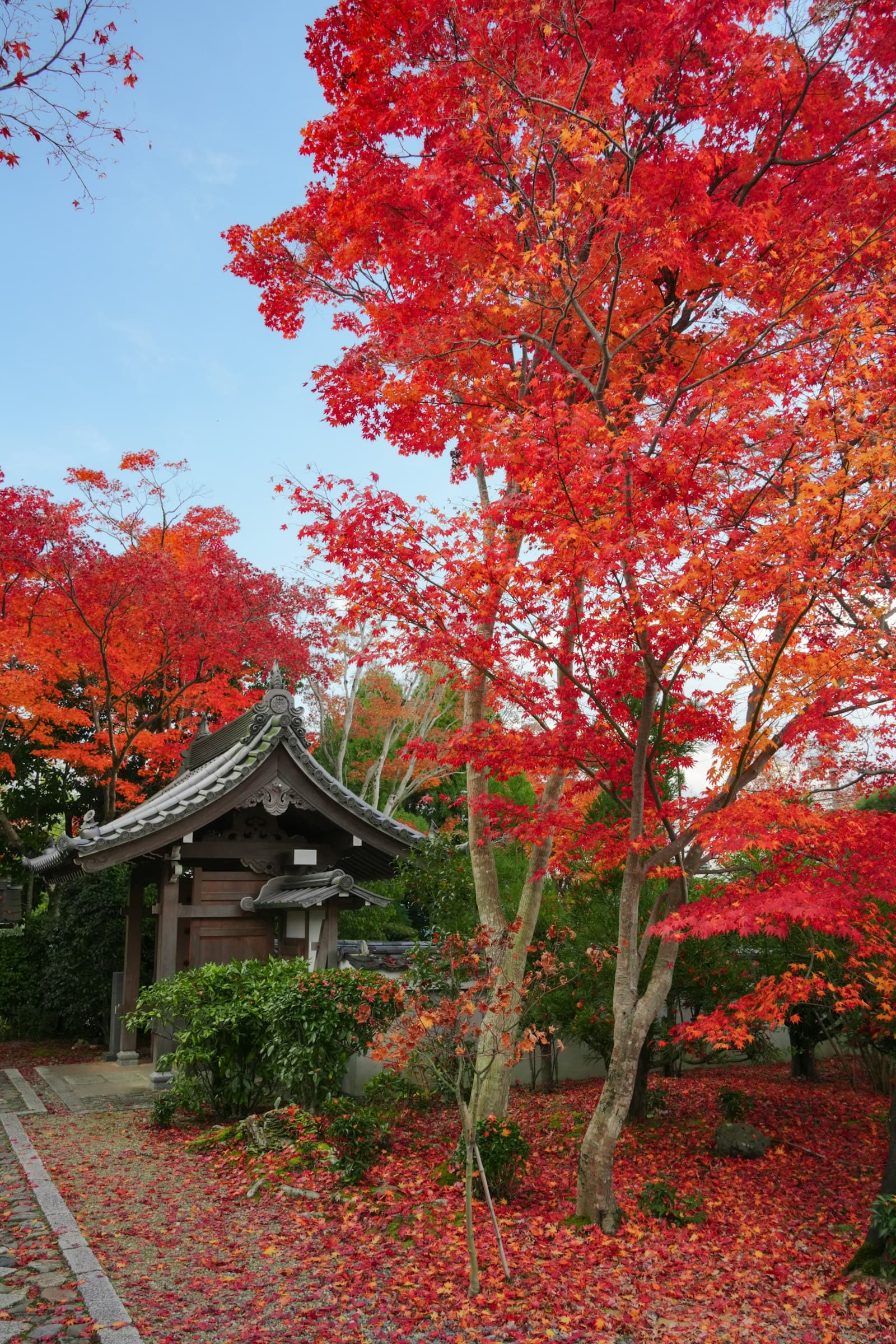
Kyoto is the postcard version of Japanese autumn. Tofuku-ji, Eikan-do, Kiyomizu-dera, Arashiyama, Nanzen-ji — all of them deliver gorgeous fall foliage. Kiyomizu-dera is one of the most popular spots in Japan for four-season views; from the main hall you overlook mountains dyed entirely red, and at night the temple is illuminated for a beauty quite different from daytime. The trade-off is crowds: Arashiyama and Kiyomizu-dera are overwhelming at peak — go at 7am, or pick lesser-known temples like Jojakko-ji or Hosen-in. From Kyoto Station, Tofuku-ji is two stops away on the Nara Line, which makes it easy to knock out at dawn before breakfast. For a deeper temple-by-temple breakdown, see our Kyoto autumn leaves 2026 guide.
Kamikochi and the Shinhotaka Ropeway
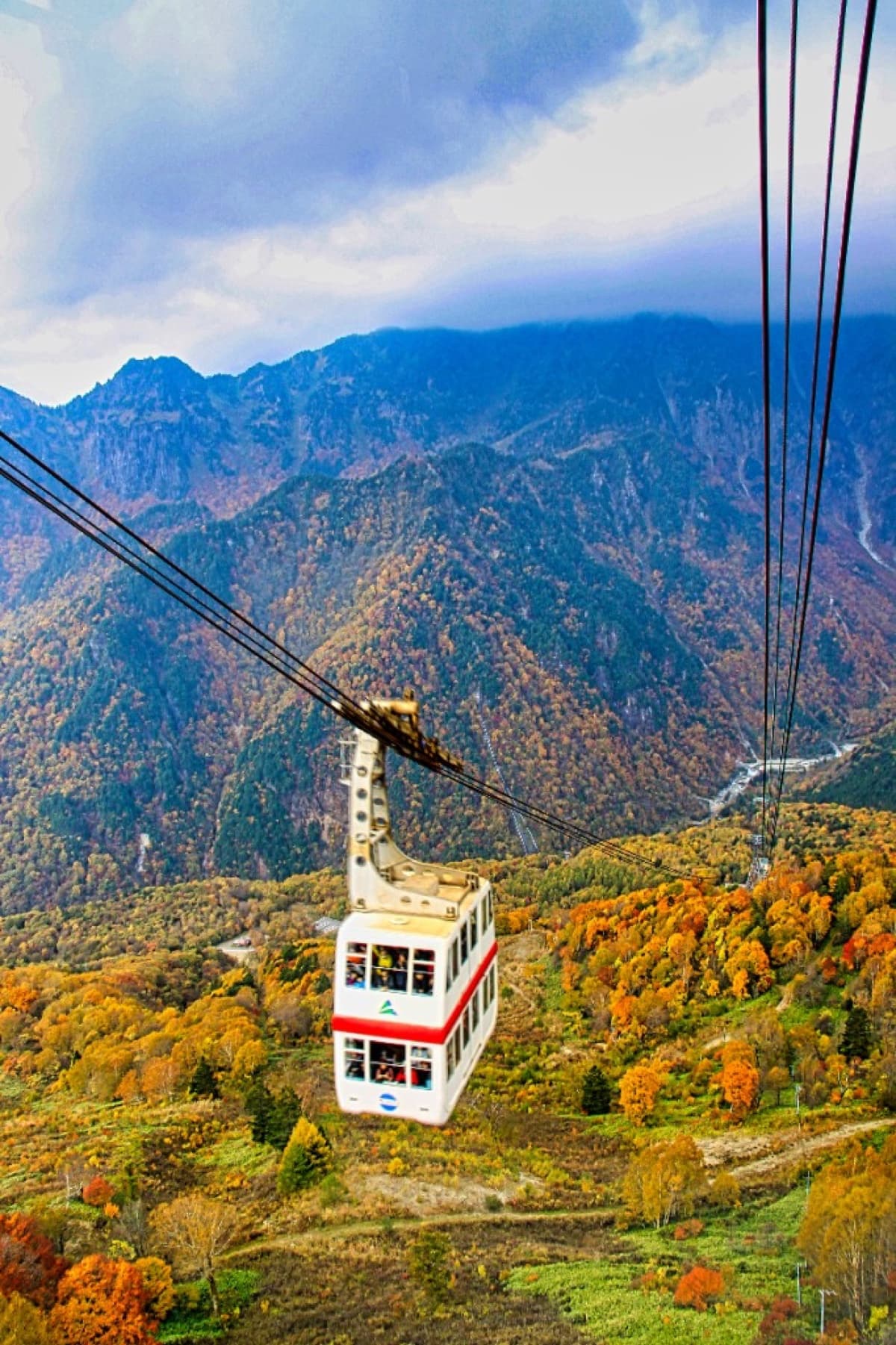
Kamikochi in the Japanese Alps is one of the country's most photogenic autumn hikes — golden larch against the Hotaka peaks, usually in early to mid-October before the valley closes for winter. Pair it with the Shinhotaka Ropeway on the same trip: Japan's only double-decker gondola climbs to over 2,000 metres for panoramic alpine views above the treeline.
💬 From our Japan travel team
After walking Kamikochi, take the Shinhotaka Ropeway to enjoy the autumn scenery from above. Ride Japan's only double-decker gondola and experience views from over 2,000 metres — a completely different perspective from the valley floor.
Nikko: A Day Trip from Tokyo That Actually Delivers
Nikko is genuinely worth the trek. Known for its UNESCO World Heritage sites, it captivates visitors with majestic shrines and temples surrounded by autumn color, with the Toshogu Shrine area typically best in mid-November. Push further into the national park — Lake Chuzenji, Kegon Falls, the Irohazaka switchback road — and you'll see peak color in late October, weeks before central Tokyo turns. It works as a day trip from Tokyo, but honestly, one night in Nikko or Kinugawa Onsen lets you catch morning light before the tour buses roll in.
Hakone: Hot Springs, Foliage, and Mount Fuji Views
Hakone combines hot springs, an open-air museum, and foliage, and it's easy from Tokyo — about 1.5 hours away. Peak is usually mid-November. Combine the Hakone Ropeway (another cable-car situation) with a night at a ryokan, and you've got half the autumn wishlist in one stop.
Lake Kawaguchi and the Fuji Five Lakes
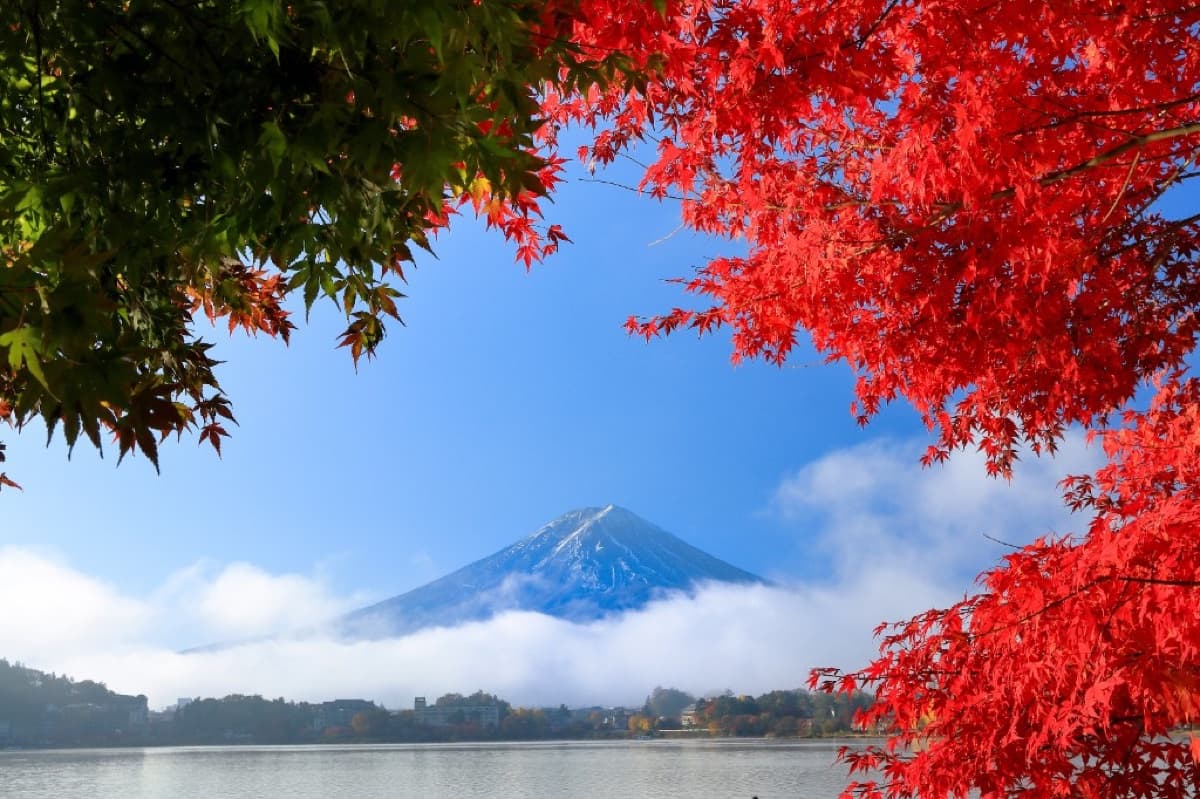
Lake Kawaguchi delivers the money shot: maple leaves framing Mount Fuji. The Kawaguchiko Lakeside Autumn Foliage Corridor is a popular spot; from early to late November, when the leaves are at their best, there's a light-up event, and the Fuji Kawaguchiko Autumn Leaves Festival runs at the same time. For the view behind the Chureito Pagoda in Fujiyoshida, early November is usually the sweet spot.
Miyajima and the Seto Inland Sea
If you're going to Hiroshima, Miyajima is non-negotiable in autumn. Momijidani Park, at the foot of the Misen primeval forest, is renowned as the best spot on the island, with about 700 maple trees including Iroha maple, big maple, urihada maple and yamamomiji; in mid to late November the entire area turns a fiery red. Ride the Miyajima Ropeway — Japan's unique two-stage aerial cable car — up Mount Misen for panoramic views of the Seto Inland Sea with foliage below. The system circulates a funicular and an aerial ropeway in series, which is unique in Japan, giving spectacular views of the sea and primeval forest. Add a slow morning at the Peace Memorial Park in Hiroshima — quiet, contemplative, and its A-bomb survivor ginkgos turn a bright yellow in November.
Tokyo: Ginkgo Avenues and City Parks
You don't have to leave Tokyo to see color. The city gardens and ginkgo avenues — Meiji Jingu Gaien, Shinjuku Gyoen, Rikugien — peak late November into early December, with the ginkgo holding into mid-December. Mt. Takao (an hour from Shinjuku) sits higher and turns mid-to-late November, so treat it as a separate trip rather than a same-week add-on.
Kanazawa's Kenrokuen: A Garden Built for This Season
Kenrokuen, one of Japan's three great gardens, is planted with many momiji, sakura and keyaki on Yamazaki Mountain and Horai Island in Kasumigaike Pond. Evening illuminations during peak week are worth the detour.
Off-the-Beaten Path: Oirase Stream and Beyond
Located in Aomori Prefecture in northern Japan, Oirase Gorge is famous for its scenic hiking trail along the Oirase River, lined with beautiful foliage in the fall. The Oirase Stream walk is one of Japan's most photogenic hiking trails and stays refreshingly quiet compared to Kyoto. Other quieter picks: Korankei in Aichi (about an hour from Nagoya), Yamadera in Yamagata, the Kakunodate samurai district, and the famous mountain temples on Mt. Koya.
Checking Peak Timing Before You Book
Three tools do the heavy lifting.
- Japan Meteorological Corporation (JMC). Before you travel, check the latest forecast from the Japan Meteorological Corporation — it's Japan's most widely used autumn foliage forecast and is updated throughout the season. The JMC (n-kishou.com) published its second 2026 forecast on October 1 — Tokyo from November 28, Kyoto from December 11 — and the next update is due in early November, with further revisions through November.
- Japan-guide's on-location reports. These come out weekly in the last few weeks of the season and are genuinely the most useful thing on the internet for calling peak within a three-day window.
- Local tourism X/Twitter feeds. Faster than English blogs when you're trying to work out whether a spot is peaking today.
Building a Real Self-Guided Itinerary
Reading the forecast is one thing. Turning it into hotels, trains and backup plans is another. Here's how I'd approach it.
Match Your Dates to a Region, Not the Other Way Around
If your dates are locked (work leave, school holidays), pick the region that matches. Late October? Skew north — Tohoku, Nikko, the Alps. Late November? Tokyo, Miyajima. Early to mid-December? Kyoto (JMC 2026: peak from December 11). Early to mid-September is too early for anywhere except northern Hokkaido's highest peaks.
Chase the Wave South (For Longer Trips)
If you're planning a longer trip, consider starting in Tohoku or Hokkaido in late October, then slowly heading south toward Kyushu by mid-December for a scenic chase of Japan's fall-foliage wave. A classic 14-day version: Sapporo → Aomori (Oirase Stream) → Nikko → Tokyo → Hakone → Kyoto → Miyajima.
Book Anchors, Stay Flexible on the Rest
Kyoto's peak fortnight (December 8–21 in 2026 — JMC's first forecast puts the peak from December 11) is the single most expensive lodging window of Japan's entire year — pricier than cherry-blossom season. Book 4–5 star hotels 12 weeks out; even 3-star, book 8 weeks ahead. Lock flights and one or two anchor hotels, then keep the middle of the trip loose so you can shift by a day or two if the JMC updates change your target week.
Consider a Rail Pass
If you're crossing regions in 7 days — say Tokyo → Nikko → Tohoku → Kyoto — the 7-day nationwide JR Pass at ¥50,000 (rising to ¥53,000 through overseas JR-designated agencies from 1 October 2026; the official website still lists ¥50,000 and has announced no change of its own) typically saves ¥10,000–15,000. If you're staying inside Kansai, or only touring one region like Tohoku, a regional pass wins.
Practical Tips That Actually Matter
💬 From our Japan travel team
Autumn in Japan is not just about foliage — it's also a season for food and art. Seek out autumn-only experiences you cannot get at other times of year: seasonal kaiseki, matsutake mushrooms, persimmons, chestnuts, and gallery or museum exhibitions timed to the season.
Hotels and trains get crowded during peak foliage season. For a smoother trip, consider our self-guided tours — we handle accommodation, transport, and day-by-day routing so you can focus on the leaves.
- Go early. Like, really early. At the same spot, a two-hour shift in timing means 50× the crowd and a night-and-day difference in light — this is the single most important decision of a foliage trip. From dawn to around 9am, nearly every marquee spot is empty, with raking light and the most beautiful back-lit leaves. Early morning is the single biggest hack for leaf-peeping without the crush.
- Dress in layers. Days can be 15–20°C. Mornings and evenings drop close to freezing at higher elevations. A light down jacket you can shove in a daypack is a lifesaver.
- Book night illuminations ahead. Many temples and gardens run evening light-ups during peak season. Kiyomizu-dera, Eikan-do, Kenrokuen, Korankei — all worth checking. Tickets can sell out on the day.
- Mind the elevation. Lower elevations peak later than higher elevations at the same latitude. If you arrive early and the mountains are done, drop into the city gardens; if you arrive late and the cities are past peak, the coast might still be lit up.
Common Mistakes to Avoid
- Booking everything around the first forecast. Early forecasts can still shift; JMC's next update is due in early November. Lock flights and one or two anchor hotels; keep the rest flexible.
- Cramming Hokkaido into a short trip. If this is your first trip to Japan and you have under 10 days, skip Hokkaido — it's quite far from the classic cities like Tokyo, and you'll lose a lot of time in transit.
- Underestimating how quickly rooms sell out. Kyoto's peak fortnight can be booked out by August.
- Scheduling Kyoto for mid-November and assuming peak. In recent warm years, Kyoto has peaked into early December and even mid-December for the reddest maples — and JMC's second 2026 forecast puts the peak from December 11.
Autumn vs Other Seasons: Is It Worth It?
Compared to cherry-blossom season, autumn wins on a few counts. The koyo season is longer — two full months versus sakura's roughly one week per location; there are multiple colors — red, orange, yellow and copper, versus sakura's pink-only palette; the weather is cooler at 15–20°C; most spots (except Kyoto at peak) are calmer than sakura; autumn ingredients like matsutake mushroom, persimmon and chestnut peak; and Kyoto, Nikko and Tokyo all run special koyo evening light-ups.
Cherry blossoms are shorter and more of a lottery. Autumn gives you more than a month of shifting color across the country, which makes it more forgiving for travelers who can't be flexible.
After the Leaves: Where Japan Goes Next
Autumn colour finishes in southern Kyushu around mid-December, and the country changes over quickly. The evening attraction shifts from foliage to light, the mountains close to hikers and open to skiers, and prices fall from their November peak.
- Winter illuminations. Nabana no Sato runs 17 October 2026 to 31 May 2027, and Huis Ten Bosch launches a new show in November — winter illuminations has the confirmed 2026-27 dates.
- Snow. Japan ski season 2026-27 and winter in Japan cover the season from mid-December.
- New Year. Japanese New Year 2027 — the one period where much of Japan genuinely closes.
- Choosing a season. best time to visit Japan and how much a trip to Japan costs.
For this season's peak dates, our autumn leaves forecast is updated as the Japan Meteorological Corporation revises its regional projections — the second 2026 forecast came out on October 1, and the next update is due in early November.
Self-Guided Routes for the 2026 Autumn Colour Season
The colour moves south for six weeks — Hokkaido in early October, the Japan Alps and Takayama in late October, Kyoto and Nara in the second half of November. These are the routes we run that follow it, with the month each one is built for.
| Route | Length | From (per person) | Why this autumn |
|---|---|---|---|
| Discover Hokkaido: Nature & Scenic Views (HD001) | 7 days | $3,700–4,300 | Sounkyo Gorge, Lake Akan and Shiretoko peak in early to mid October — the first colour of the season. |
| Scenic Southern Hokkaido Escape (HD002) | 7 days | $2,200–2,700 | Sapporo, Lake Toya and Hakodate in October, at the lowest price here. |
| Spirit of Tradition: Shirakawa-go & Cultural Japan (GR009) | 14 days | $4,100–5,900 | Takayama for its Autumn Festival (9–10 October), Shirakawa-go in late October, Kyoto and Nara in November. |
| Japan Highlights & World Heritage (GR002) | 12 days | $3,300–4,800 | Kyoto and Nara at peak colour in the second half of November. |
| Cultural Essence: Kyoto & Kanazawa Short Escape (GR006) | 12 days | $2,800–4,200 | Kenrokuen and Kyoto within the same fortnight; the lowest-priced twelve-day route we run. |
| Koyasan: Sacred Sites and Quiet Beauty (KM003) | 12 days | $3,500–5,200 | Koyasan’s maples turn in early November. Departures run April to November. |
| Hot Springs & Highlights: Kinosaki & Gero (HS002) | 14 days | $4,300–5,700 | Kinosaki’s crab season opens on 7 November — colour by day, crab and the outdoor baths by night. |
Interested in a tour? Click the route name above, or search by route code in the top-right Search bar.
For the month itself, see Japan in October 2026 and Japan in November 2026; for the beds that sell out first in colour season, where to stay in Kyoto names the hotels our routes actually book.
Prices are per person on a twin-share basis from our current price list and move with the departure date; departure windows are as the catalogue listed them on 22 September 2026. Ask us for an exact quote for your dates.
Japan Trip Cost Calculator (2026)
Set your trip below — the estimate updates instantly. Yen prices are converted at a rounded ¥150 to the dollar; the market rate is about ¥157 in September 2026, which makes yen costs a few percent cheaper than shown.
Intercity is priced as point-to-point tickets unless you add the pass — on the Tokyo–Kyoto–Osaka route the pass usually costs more than the tickets.
Estimated total
$4,530
$2,265/person · $453/day · 2 travelers, 10 days
Estimate only — a mid-range guide, not a binding quote. Peak season & specific hotels shift the total.
For comparison, our self-guided routes run about $270–390 per person per day with hotels, trains, luggage delivery and 24/7 support included — the difference from a DIY estimate is the hotel class and having it all arranged.
Planning a trip for Japan's autumn colors and not sure which spots to fit in? Get in touch through Plan My Trip on our self-guided tours site, and we'll suggest the tours that best fit your dates and plans.
FAQ: Best Autumn Leaves Spots in Japan
When should I start planning a Japan fall foliage trip for 2026?
Six months out is a good rule of thumb — earlier if you want a ryokan in Kyoto or Hakone during peak week. Start planning flights by early summer, then confirm hotels against JMC's second forecast (out October 1; next update early November).
How long does peak foliage last in one spot?
Usually about 1–2 weeks, occasionally longer if it stays cool; an early frost or windstorm can cut it short. Across a region, the peak can span two weeks to more than a month.
What's the difference between koyo and momiji?
Both mean autumn leaves. Koyo is the general term; momiji specifically points to Japanese maples and the pastime of viewing them — momijigari is the autumn cousin of hanami.
Is a JR Pass worth it for an autumn trip?
If you're crossing multiple regions in a week — say Tokyo, Kyoto and Hiroshima — the nationwide pass usually pays for itself. For single-region trips, a regional pass is better.
Can I still see colors in Japan in early December?
Yes. Tokyo, Kyoto and southern Kyushu frequently hold color into the first week of December, and 2026 leans that way: JMC's second forecast puts Tokyo's peak from November 28 (right on its average) and Kyoto's from December 11 (six days behind, still inside JMC's "average" band), so Kyoto's maples should hold into the third week of December.
Are there autumn spots to visit in Japan without any crowds?
Try Oirase Stream in Aomori, Hachimantai in northern Tohoku, Oku-Nikko around Lake Chuzenji, Mt. Koya in Wakayama, or the smaller temples in Higashiyama rather than Kiyomizu-dera. Autumn is also peak hot-springs season — Kinugawa Onsen near Nikko, Hakone, Kusatsu, Kurokawa in Kyushu and Jozankei in Hokkaido all pair foliage with soaking; book ryokan six months to a year ahead for peak dates.
Turn This Into a Real Itinerary
Reading forecasts and pinning maps is the fun part. The tricky bit is stitching together trains, ryokan, timed-entry temples and backup plans when the weather shifts. That's exactly what selfguidejapan.com is built for — self-guided routes that match your dates to the regions most likely to be peaking, with the flexibility to pivot when the JMC updates land. If you're planning a fall-foliage trip for 2026 and want a concrete route rather than a list of pretty places, pick your dates and we'll point you at the leaves.
Timing based on long-term averages and the Japan Meteorological Corporation's second 2026 forecast (published October 1; next update early November). Confirm current conditions before booking non-refundable stays. Hero photo courtesy of Kiyomizu-dera (写真提供:清水寺). Only temple-designated images may be used for Kiyomizu-dera photography — see the official Kiyomizu-dera website for image-use terms. Last updated: October 3, 2026.
Related Articles
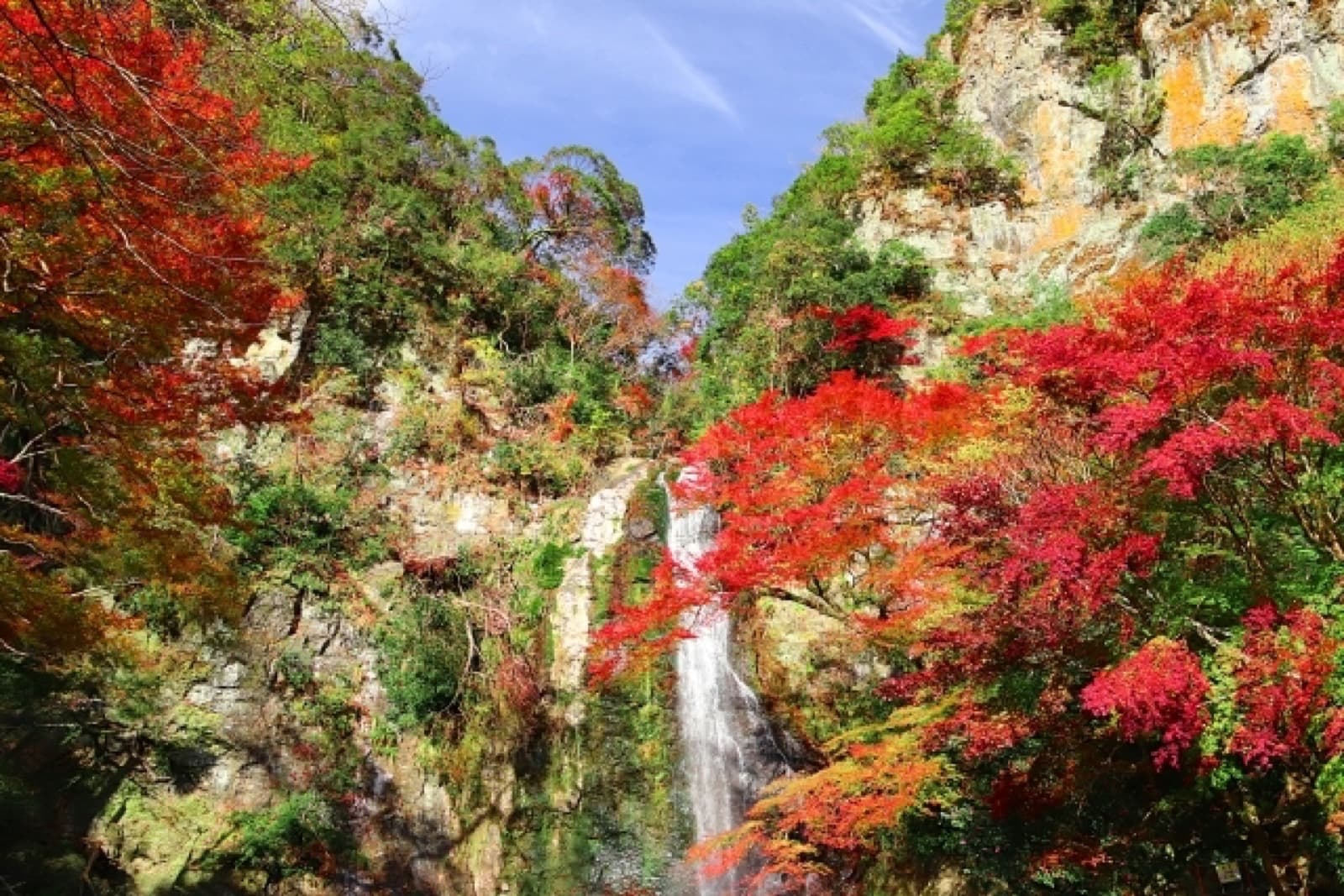
Osaka Autumn Leaves 2026: Peak Dates, Minoo Park & Why It Beats Kyoto as a Base
15 min read
Tokyo Autumn Leaves 2026: Peak Dates, Best Spots & a Day-Trip Plan
14 min read
Japan Autumn Leaves Forecast 2026: Latest Dates City by City, and Where the Colors Are Now
14 min read