
Japan Typhoon Season 2026: Aug–Sep Peak — Should You Cancel? (Month-by-Month Risk)
When typhoons actually hit Japan, where the risk concentrates, the tools to use, and how to fold all of that into a self-guided itinerary that bends instead of breaks.
Planning a trip to Japan during late summer or fall? You need to know what typhoon season actually looks like on the ground — not the scary version, not the dismissive "it'll be fine" version, but the real one.
Japan's typhoon season typically runs from May to October, and the strongest typhoons happen in August and September, with around 2–3 typhoons hitting Japan within these months. If you're putting together a self-guided itinerary for 2026, that's the window you need to plan around.
Here's the honest take. Most travelers visiting Japan during these months never see anything worse than a wet afternoon. A few unlucky ones lose a day to closed trains. And every so often, a powerful typhoon strikes and reshuffles the whole week. The trick is building an itinerary that bends instead of breaks.
Quick Answer: Japan Typhoon Season 2026
Season runs May–October, peaks August–September. Highest risk: Okinawa & Kyushu. Lowest risk: Hokkaido. The 2026 season started unusually early but most travelers will only see a wet afternoon. Build a flexible day or two into your itinerary, book refundable hotels for island/coastal nights, and watch JMA + NHK World.
Peak Month
September
Highest Risk
Okinawa, Kyushu
Lowest Risk
Hokkaido
Avg Hits/yr
~3 in Aug–Sep
This guide covers the 2026 outlook, where the risk concentrates, which tools to use, and how to fold all of that into a real plan. For a broader month-by-month look, see our best time to visit Japan 2026 guide.
When Is Typhoon Season in Japan?
Typhoon season in Japan runs from May to October, and it peaks in August and September — on average, around 2–3 typhoons hit Japan within those two peak months. August produces the most storms by count, but September is the month when storms are most likely to take tracks that pass through the vicinity of Japan. Risk is highest in Okinawa and Kyushu and lowest in Hokkaido.
Average typhoons forming each month (Western Pacific basin)
| Month | Avg Storms Forming | Likelihood of Tracking Near Japan |
|---|---|---|
| June | ~1.7 | Low |
| July | 3.7 | Moderate |
| August | 5.7 | High |
| September | 5.0 | Highest |
| October | 3.4 | Moderate (declining) |
Traveling during the peak window? Our Japan in August 2026 guide and Japan in September 2026 guide cover those months in full. If your dates fall in June or early July, typhoon risk is low but tsuyu rain is in play — see the Japan rainy season 2026 guide — or compare every month in the best time to visit Japan 2026 guide.
What the 2026 Season Is Shaping Up to Look Like
The 2026 season has started unusually early.
The first named storm of the season, Nokaen, developed on January 15, marking the first named storm to develop in the month of January since Pabuk in 2019. The season's first typhoon, Sinlaku, reached typhoon status on April 10. An early start doesn't automatically mean a busier total season, but it's worth noting.
The longer-range outlook is more cautionary. From late summer to fall, caution is needed for prolonged rainfall and typhoons, because El Niño conditions have been strengthening through mid-2026, which historically shifts typhoon formation further east and tends to produce longer, more recurving tracks. That makes Japan more susceptible to the influence of weather fronts and typhoons.
Translation for travelers:
If your trip lands in August, September, or October 2026, build flexibility in. Don't panic-cancel anything.
When Typhoons Actually Hit Japan
The peak is narrower than the full "season." The average number of typhoons forming is 3.7 in July, 5.7 in August, 5.0 in September, and 3.4 in October. Starting around July, typhoons tend to follow courses that bring them close to Japan, with September being the month when they are most likely to take tracks that pass through the vicinity of Japan. The month-by-month table above shows how those two patterns line up.
So while August produces more storms by sheer count, September is the month when those storms are most likely to actually steer toward the country. Autumn typhoons often accelerate as they approach Japan, and they sometimes intensify the activity of the autumn rain front, bringing heavy rainfall.
If you're flexible, June and early July, or late October into November, give you summer-ish weather with lower typhoon risk. June overlaps with rainy season — see our Japan rainy season 2026 guide for tsuyu specifics.
Where the Risk Concentrates
Japan is long, and the storm map isn't even.
In the southern areas like Okinawa and Fukuoka, typhoons can occur 6–7 times a year, while northern regions like Hokkaido experience fewer typhoons. Places like Tokyo, Osaka, Kyoto, and Nagoya usually face heavy rains and strong winds when typhoons pass through. The Kyushu region, including Okinawa, Fukuoka, Beppu, Kumamoto, and Kagoshima, experiences the highest number of typhoons, followed by Shikoku. In contrast, inland areas such as Kyoto, Osaka, and Tokyo are generally less affected by typhoons. Hokkaido, located in the northern part of the country, is the least affected by typhoons.
Rough hierarchy of Japan typhoon risk for travel planning
| Risk Tier | Region |
|---|---|
| Highest | Okinawa and the Ryukyu Islands |
| High | Kyushu (Fukuoka, Kagoshima, Beppu, Kumamoto), Shikoku (Kochi, Matsuyama) |
| Moderate | Pacific coast of Honshu — Tokyo, Yokohama, Nagoya, Osaka |
| Low | Inland Kansai and the Japan Sea coast |
| Lowest | Hokkaido and the northern regions |
This matters when sequencing a trip. If you're visiting Japan in mid-September, doing Okinawa first and Hokkaido last is a different risk profile than the opposite. Pairing southern islands with northern detours is the move — see our Hokkaido tour package guide for low-risk northern routes.
Why Typhoons Are Called Taifu and How They Differ from Hurricanes
Same storm, different label.
A typhoon is essentially a tropical cyclone — a rotating storm system that forms over warm ocean waters. These weather phenomena are called different names depending on where they occur in the world, but they're all the same type of storm at their core. The ones in the Atlantic Ocean are hurricanes. In the western Pacific Ocean and parts of Asia, they're typhoons — taifu (台風) in Japanese. In the South Pacific and Indian Ocean, just "cyclones."
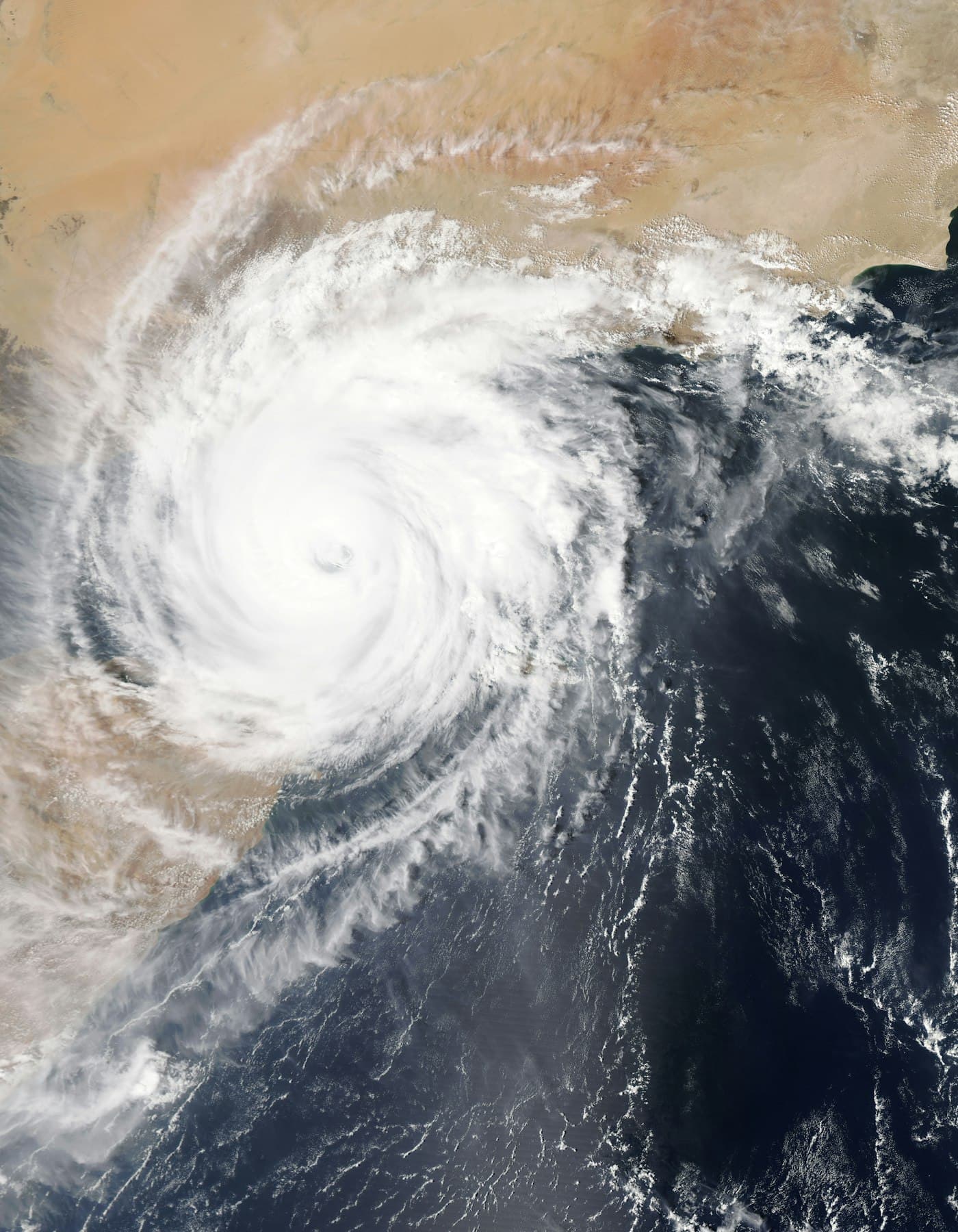
One quirk of local media: while they are given names much like hurricanes overseas, in Japan typhoons are referred to by number. The first typhoon of the season is Typhoon Number 1, the second Typhoon Number 2, and so on. So when Japanese TV says "Taifu Number 12," that's their typhoon number, not a code.
What Actually Happens When a Typhoon Strikes During Your Trip
The disruption is mostly logistical, not life-threatening in modern cities.
Typhoons bring heavy rains and strong winds that can cause transportation cancellations, with Shinkansen, trains, buses, attractions, and shops closing, and you could face delays at train stations or airports.

A typical day during a direct hit:
- Night before: Local media and rail operators announce planned suspensions (keikaku unkyū).
- Morning of: Flights start canceling. Outdoor sightseeing closes. Department stores often shut early.
- Peak hours: Stay indoors. When the storm is actually happening, your main job is to stay safe and ride it out — do not go outside during a typhoon unless you absolutely must evacuate. The moment-to-moment status of the wind and rain can be deceiving; sometimes there's a calm period followed by more intense weather.
- Next day: Trains usually restart in waves. Shinkansen typically resumes within a few hours of the storm clearing. Local lines can lag.
Luckily, Japan's infrastructure is designed to withstand the storms — newer buildings are reinforced, drainage systems are advanced, and coastal defenses reduce the risk of storm surges. In central Tokyo, you're realistically dealing with bad weather and shut transit, not flooding inside your hotel.
The bigger hazards sit outside cities: landslides in mountain villages, flooding in low coastal towns, and rough seas around the islands.
The Tools You Should Actually Use
You don't need ten apps. You need three sources you'll actually check.
Japan Meteorological Agency (JMA)
The official one. Provides forecasts, warnings, and tracking for all tropical cyclones affecting Japan. The English site shows current typhoon positions, predicted paths, and intensity forecasts. Bookmark it before you fly.
Joint Typhoon Warning Center (JTWC)
The US-run tracker for the same basin. JMA forecast tracks usually go to 5 days ahead; some services extend up to 10 days. JMA and JTWC sometimes show slightly different track cones — seeing both helps you avoid over-reacting to one model.
NHK World
For English-language emergency information. Comprehensive disaster coverage in multiple languages, push notifications for emergency weather warnings, and continuous live coverage with English interpretation during major typhoons.
Add the rail operator's own page for whichever line you're on (JR East, JR West, JR Central, JR Kyushu, etc.) — they post planned suspensions a day in advance.
Looking for the year-round pattern rather than this season? Our evergreen typhoon season in Japan guide covers the mechanics that repeat every year. Watching a storm approach right now? Our Japan typhoon tracker lists the live tools (JMA, Windy, Zoom Earth, Digital Typhoon) for the current typhoon's latest track, plus the 2026 season outlook.
How to Build a Typhoon-Aware Self-Guided Itinerary
This is where the difference between a guided tour and a self-guided trip really matters. You're the dispatcher.
Sequence North-to-South, or Build in a Buffer City
If you're traveling in late August through late September, doing Hokkaido or Tohoku first and Okinawa last gives the season's pattern room to breathe. Or anchor the trip in Tokyo or Kyoto, where bad weather rarely shuts you in for more than a day. See our 2-week Japan itinerary for an example of a north-then-south sequencing.
Keep One or Two Flexible Days
If you're in Japan during typhoon season, plan in some flexibility — allowing a few extra days can reduce stress if you encounter a typhoon. A floating day in the middle of the trip is the single best insurance policy.
Book Refundable Where It Matters
Hotels, mostly. Skip non-refundable rates for nights on islands or coastal towns in August and September. The premium is small, the upside is huge when a storm passes through. For a wider look at hotel pricing trade-offs, see our Japan hotel prices 2026 guide.
Have an Indoor Plan B for Each City
Tokyo: teamLab, the Edo-Tokyo Museum, Ginza basements. Kyoto: the National Museum, covered shopping arcades like Nishiki, temple interiors. Osaka: the Aquarium, Umeda's underground city. Honestly, having two indoor backups per stop turns a stormy day into a slow day, not a wasted one.
Don't Book the Storm-Day Shinkansen
If a typhoon forecast lines up with your transfer day, move the transfer. Trains running on the next day, after the storm passes, are far more reliable than trains trying to outrun the storm. Whether the JR Pass is worth it for your route is a separate question — see Is the JR Pass worth it in 2026?
Common Mistakes Self-Guided Travelers Make
A few patterns we see repeatedly:
- Booking Okinawa for the first half of September. It's the highest-risk window in the country's highest-risk region. Move it earlier or later if you can.
- Stacking outdoor sightseeing on consecutive days. Hiking the Kumano Kodo, climbing Mt. Fuji, and a Hakone open-air day in the same week leaves no indoor fallback.
- Trusting one-week-out forecasts as gospel. Track cones widen fast. Watch trends, not single frames.
- Ignoring local announcements. Japanese trains often cancel service the day before, not during, the storm. If you wait for visible bad weather, you've missed the window.
- Trying to use umbrellas in strong winds. With high winds, umbrellas are more of a hazard than a help. Pack a proper rain jacket.
For a broader list of pitfalls, see our Japan travel mistakes to avoid guide.
How Typhoons Compare Across the World's Basins
Quick context for the curious. Typhoons in the western Pacific form the same way as hurricanes in the Atlantic Ocean — warm sea surface temperature, low wind shear, a feed of moist air. Satellite imagery from Himawari-9 lets forecasters watch them spin up in near real time, and rapid intensification can take a storm from tropical storm to a powerful typhoon in under 24 hours.
Japan's emergency response is, in our experience, the strongest of any country we've traveled in during storm season. Warnings come early, transit shuts down preemptively, and the next-day recovery is fast.
Other Points Worth Knowing Before You Go
A few small but useful tips:
- Convenience stores stay open through most storms and are reliable for water, snacks, and chargers.
- Hotel front desks usually post the local hazard map and the nearest evacuation site in English on request.
- If you're on the coast, check storm surge advisories separately from wind warnings — flooding is the real danger.
- Travel insurance covering weather disruptions is worth it for August–October trips.
- Stay away from the coast and islands when a storm is bearing down — they're often the worst-hit.
Want a typhoon-aware itinerary?
We design self-guided trips that work with the season — flexible transfers, indoor-friendly backup days, and storm-aware sequencing — without locking you into a group tour. Tell us your dates and we'll tell you the smartest split.
24/7 Support While You're in Japan
One of the underrated perks of booking a self-guided tour with us is round-the-clock support. Even if a typhoon hits the middle of your trip, you have direct access to staff who can give you precise, situation-specific advice on what to do — whether that means rebooking a Shinkansen seat, switching to an indoor plan in Kyoto, or moving a coastal night to a safer base.
That is the part group tours and pure DIY trips both miss. With a group tour, you are at the mercy of the operator's schedule. With a pure DIY trip, you are alone with a Google search at 11pm. Our 24/7 support sits in the middle: you keep the freedom of a self-guided trip and you keep a Japan-based team behind you when the weather turns.
Concretely, that means we can help you with:
- Reading JMA, JTWC, and JR rail-operator updates and translating them into "here is what to do today."
- Adjusting hotel nights or rebooking Shinkansen and limited express seats around suspended service.
- Re-routing a coastal or island leg to a safer inland city when a track forecast turns bad.
- Confirming what is open, what is closed, and what is the smartest indoor backup near your hotel.
You can travel through August or September with peace of mind, knowing the weather is the only variable you actually have to react to — not the bookings, not the logistics, not the language barrier.
Should You Still Visit Japan During Typhoon Season?
Yes, with eyes open.
If you're thinking of visiting Japan during the typhoon season, chances are it won't affect your stay, but it's always good to be prepared, and to pack or purchase any necessary supplies and storm-related items. The festivals, the food, the long evening light — late summer Japan is genuinely one of the best windows of the year. Just plan for the weather, not against it.
If you'd rather not piece together every contingency yourself, that's exactly what selfguidejapan.com is built for. We help independent travelers map out routes that work with the season — flexible transfers, indoor-friendly backup days, and storm-aware sequencing — without locking you into a group tour. Take a look at our self-guided tours when you're ready to plan, or compare seasons in our best time to visit Japan 2026 guide.
FAQ
When is the safest month to visit Japan in 2026 if I want to avoid typhoons?
Late October into November, and April–May, give you the best balance of mild weather and low typhoon risk. June is also relatively quiet for storms but it's the rainy season.
Do typhoons hit Tokyo directly?
Sometimes. More often, Tokyo gets the edge of a storm passing offshore — heavy rains, strong winds, and transit delays, rather than a full direct strike.
Will my flights be canceled?
Possibly, if a typhoon is forecast to pass over or near your airport. Airlines usually announce 24–48 hours ahead. Rebook fast; the day after a storm is busy.
Are bullet trains safe during typhoons?
JR runs them conservatively. Transportation may be disrupted, with Shinkansen, trains, buses, attractions, and shops closing. When they're running, they're safe. When risk is high, they stop pre-emptively.
How far in advance can typhoons be predicted?
The Japan Meteorological Agency issues warnings up to five days ahead, and long-range forecasts can even help predict typhoons 10 days or more in advance. Reliable detail is usually within 72 hours.
What should I do if a typhoon hits during my trip?
Stay indoors, follow JMA and NHK World updates, keep your phone charged, and don't try to make a scheduled train or flight if operators have suspended service. The storm passes; your trip continues the next day.
Related Articles
Japan Typhoon September 2026: A Traveler's Guide to Planning Around the Storms
15 min read
Kyushu Typhoon Season 2026: A Practical Planning Guide for Self-Guided Travelers
12 min read
Japan Typhoon Tracker 2026: Latest Track, Live Tools & the Season Outlook
15 min read