Koenji Awa Odori 2026: How to Plan Tokyo's Wildest Summer Dance Festival
August 29–30, 2026, 5–8 p.m. — up to 12,000 dancers and over a million spectators in the shopping streets around JR Koenji Station. Free to watch, right off the Chuo Line. Dates, stations, seats, and the mistakes to avoid.
If you're building a Japan trip around late August and you've heard the drums calling from a neighborhood in west Tokyo, this is the one. The 67th Tokyo Koenji Awa Odori will be held from 5:00 PM to 8:00 PM on Saturday, August 29 and Sunday, August 30, 2026, with venues in the shopping streets around JR Koenji Station, Tokyo Metro Marunouchi Line Shin-Koenji Station, and eight performance stages along Konan-dori.
That's your headline. Two evenings. Free to watch. Right off the Chuo Line. And this is what makes it special: awa odori belongs to Tokushima, on the island of Shikoku, but for one weekend a year you can watch that 400-year-old dance culture at full scale in a Tokyo neighborhood — no domestic flight required. Below is a practical planner for the Tokyo awa odori festival — dates, routes, tickets, how to slot it into a self-guided itinerary, and the mistakes travelers make that ruin the night.
🥁 Quick Answer: Koenji Awa Odori 2026
- Dates: Saturday, August 29 & Sunday, August 30, 2026, 17:00–20:00 both evenings.
- Cost: free from the streets; reserved seats in two tiers, ¥10,000 and ¥15,000 (the tier sets which performance street you sit on); indoor Za Koenji stage ¥2,500 (advance only).
- Scale: up to 12,000 dancers and 1.2 million visitors — the largest awa odori outside Tokushima.
- Access: JR Koenji Station (Chuo/Sobu Line, under 10 min from Shinjuku) or Shin-Koenji on the Marunouchi Line.
- Golden rule: arrive by 3:30 p.m. for a barrier spot — and you watch, you don't join (that's Tokushima).
What Is the Koenji Awa Odori Festival?
Awa odori is a folk dance from Shikoku with roots going back centuries. It originated in Tokushima Prefecture and is a summer tradition with a history of over 400 years, in which thousands of dancers in colorful costumes parade through the streets. The Koenji version brings that tradition to Tokyo.
Koenji Awa Odori is one of Tokyo's largest summer street festivals, with up to 12,000 dance team participants and over 1.2 million visitors over the two-day event, held on the last weekend of August in and around the neighbourhood of Koenji, Suginami — the largest Awa Dance Festival of its kind outside of Tokushima Prefecture. For where it sits in the wider season, see our Japanese summer festivals guide.
Short version: it's a huge dance festival that spills across an entire Tokyo neighborhood.
A Quick History — Why Koenji, Not Just Tokushima?
The festival began as a shopping-street project, not as a cultural export. Since its humble beginnings in 1957 to revitalize the local shopping streets, the Koenji Awa Odori has exploded into Tokyo's premier summer spectacle, drawing nearly one million spectators.
Koenji's yearly festival began in 1957 and was then named Koenji Baka Odori — "the fools' dance at Koenji" — and was officially renamed Koenji Awa-Odori six years later. Local youth wanted to revitalize the shopping district and borrowed the Tokushima style with help from a Tokushima-native mentor. Nearly seventy years later, it's the calendar highlight for the whole ward.
Honestly, that origin story is why the festival still feels like a neighborhood party rather than a tourist show.
💬 From our Japan travel team
This is a genuinely special festival, and the reason is the borrowing. Koenji is a Tokyo street party, but what you are watching is Tokushima's culture — the same dance, the same two-beat drum and shamisen rhythm, the same ren structure that Shikoku has kept alive for over 400 years. If your trip does not stretch as far as Tokushima, the last weekend of August in Tokyo is your chance to see the real thing.
Koenji Awa Odori 2026: The Dates and Times You Need
Save these to your calendar and don't misread the day:
🗓️ Koenji Awa Odori 2026 at a Glance
| Dates | Saturday, August 29 & Sunday, August 30, 2026 |
| Time | 17:00–20:00 each evening |
| Cost | Free to watch from the streets |
| Location | Shopping streets around JR Koenji Station, Suginami Ward, Tokyo |
Everything starts just as the sun is setting at 5 p.m., and the procession finishes promptly at 8 p.m. — on both days. That timing is a mercy: the scorching daytime heat has usually eased by then. If you're in town earlier in the month, the Bon Odori circuit and Obon week lead naturally into this final weekend.
Getting There: JR Koenji Station and Shin-Koenji Station
You've got two main stations to work with, plus a walkable backup or two.
JR Koenji Station is served by the JR Chuo and Sobu lines. Shin-Koenji Station is served by the Tokyo Metro Marunouchi Line. From Shinjuku, JR Koenji is a short hop on the Chuo/Sobu local — under ten minutes on most trains. From central Tokyo, the Marunouchi Line runs straight to Shin-Koenji, which puts you at the southern edge of the action.
Additional access includes walking from Asagaya Station or Nakano Station (roughly 15 minutes), or from Higashi-Koenji on the Marunouchi Line (about 12 minutes).
A tip from experience: if the crowd at Koenji Station looks brutal on exit, hop back on and try Shin-Koenji or walk from Nakano. You'll thank yourself.
What Actually Happens on the Streets
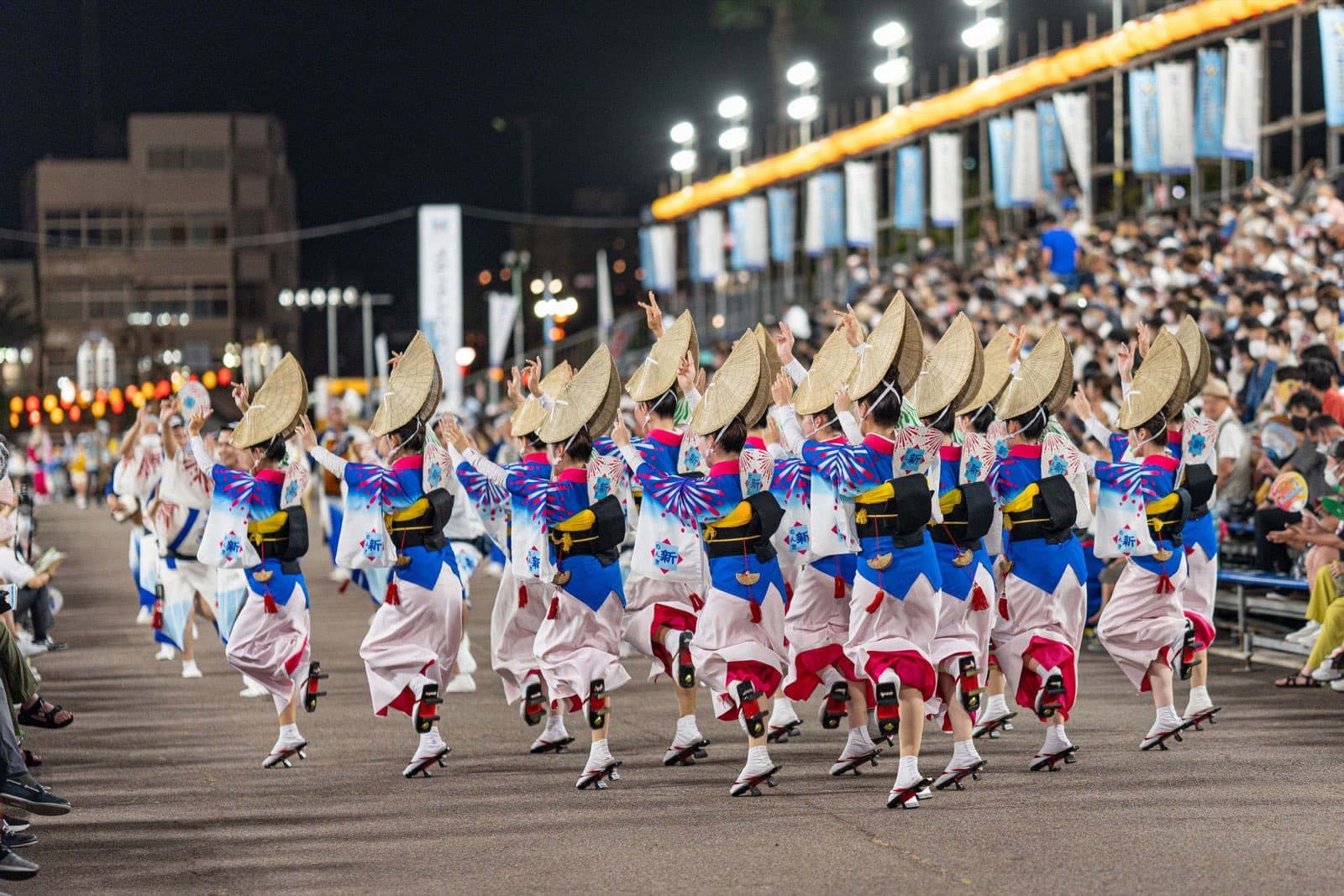
The energy comes from the ren (連) — dance troupes of up to 100 musicians and dancers advancing in lines along the local streets to the accompaniment of music. Each group has its own costume, choreography, and calls. They flow through eight performance stages across the shopping district over the two nights.
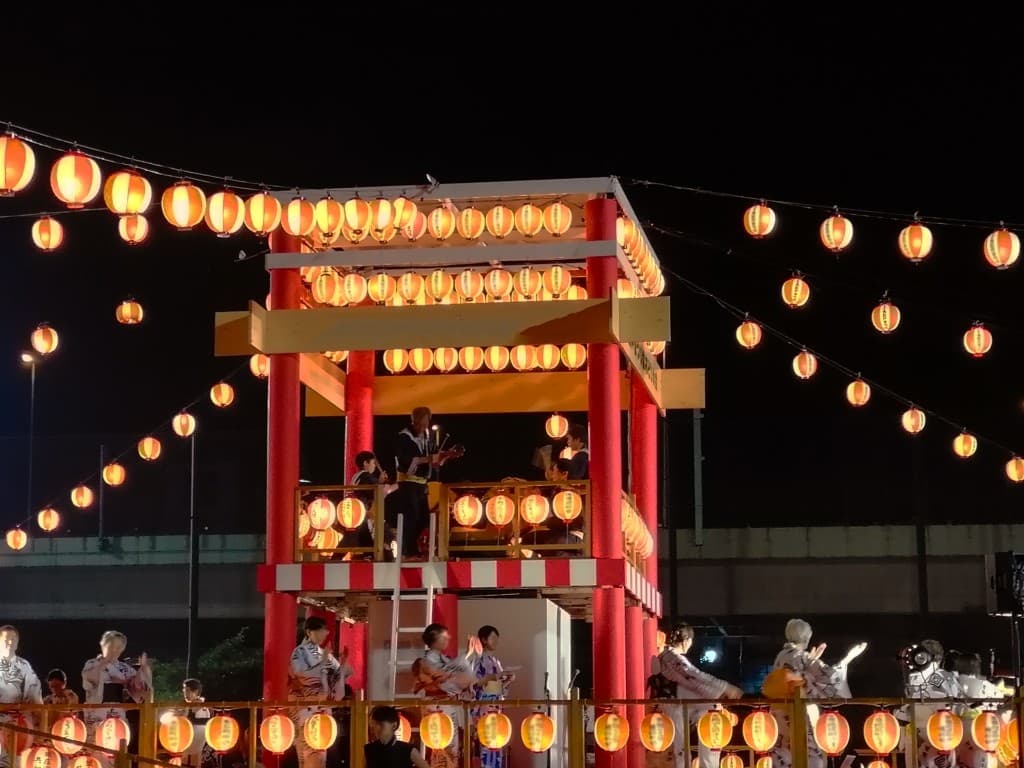
At the core of the awa odori is the relentless, hypnotic two-beat rhythm of drums, gongs, and shamisen. Add flutes on top. It's loud, it's rhythmic, it gets under your ribs.
Spectators line the barriers. There is no walk-in troupe, and spectators may not join a performing ren — remain outside the dance lane. This is different from Tokushima: in Koenji you watch, not participate.
Men's Dance vs Women's Dance
There are two visual styles running through every ren, and once you spot the difference you can't unsee it.
🕺 Men's style (otoko odori)
- • Vigorous and low-centered
- • Wide stances, exaggerated arm movements
- • An almost aggressive energy
- • Happi (shorter yukata) over shorts or pants
💃 Women's style (onna odori)
- • Restrained and elegant
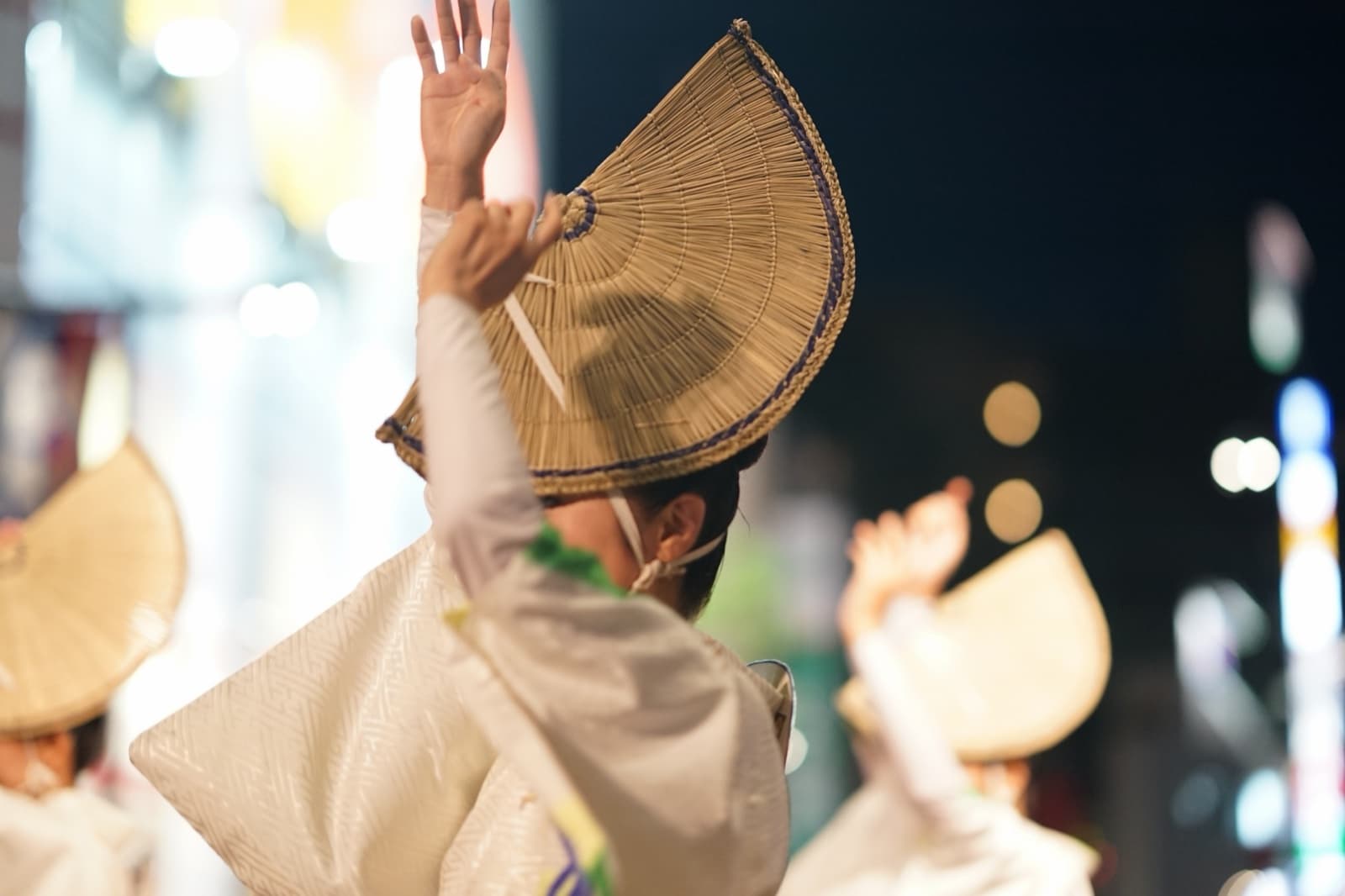
- • Amigasa straw hats partially concealing the face
- • Graceful, upward-reaching posture
- • Cotton yukata robes
Same simple dance base, wildly different presentation.
Free Street Viewing vs Reserved Seating
You have two ways to see the Koenji awa odori festival — three if you count the indoor stage.
Free street viewing. Show up, find a barrier spot, stand for hours. It's how most of the million-plus spectators do it. To make the most of your visit, plan to arrive by 3:30 p.m. Any later on a Saturday or Sunday and you'll be looking at the back of someone's head.
Reserved seats. If you don't want to be jostled around by the crowds, consider reserving a seat. Special viewing seats are sold online in two price tiers — ¥10,000 and ¥15,000 — and the tier you pick determines which performance street your seat is on, so check what each tier covers on the official ticket page before you book rather than assuming the cheaper one is simply further back.
Za Koenji indoor stage. The official 2026 Summer Za Koenji Stage Awa Odori runs on both August 29 and 30, with performances beginning at 11:30 a.m. and 2:00 p.m. Tickets are ¥2,500 per performance, fully reserved and sold in advance; there are no same-day tickets. Good backup if you can't handle standing crowds.
What to Bring, Wear, and Eat
Wear light clothes. A yukata is welcome if you have one — plenty of Koenji residents wear them. Bring a small towel. Bring water. Bring cash for the stalls.
In Tokyo style there are food and drink stands lining the streets and large crowds of people — yakisoba, kakigori, beer, takoyaki, the usual summer festival lineup. Eat before the dancing starts at 5 p.m., because once the procession is rolling, moving through the crowd to a food stall is painful.
The organizer asks visitors not to bring bicycles or strollers. Take that seriously — the streets get packed.
How to Fit It Into a Self-Guided Japan Itinerary
The festival is on the last weekend of August, which is a specific slot in the calendar. Here's how it drops into a real trip.
Option A — Tokyo-only week. Land midweek, do Asakusa, Shibuya, and a day trip to Nikko or Kamakura, then keep Saturday evening free for Koenji. Sunday can be a second visit or a Shimokitazawa/Kichijoji day.
Option B — Double up with Tokushima. The main Tokushima Awa Odori runs August 11–15 in Tokushima City on Shikoku, near Tokushima Castle. If your Japan window is long enough, you can fly or ride down for the origin event, then come back and finish in Tokyo for the Koenji weekend. Two very different flavors of the same tradition.
Option C — Late-summer loop. Kyoto and Osaka earlier in the week, Shinkansen back to Tokyo on Friday, Koenji Saturday night, quiet Sunday morning coffee in the neighborhood before flying home. Our Japan in August guide covers the wider month.
Common Mistakes to Avoid
- Arriving after 5 p.m. and expecting a front-row view. It's already gone.
- Ignoring the Tokyo Metro Marunouchi Line as a backup exit route.
- Bringing bulky luggage — station coin lockers fill up fast on the weekend.
- Assuming you can join the dance. In Koenji you watch. Save the participation for Tokushima's niwaka-ren.
- Booking a hotel far from any Chuo Line stop, then facing packed trains home at 8 p.m.
Plan Your Self-Guided Trip
The Tokyo Koenji Awa Odori is one of the easier big festivals to add to a self-guided itinerary — no domestic flight, no Shinkansen booking, no ticket lottery. Just show up early and stay hydrated.
If you're mapping out a wider trip around this festival, selfguidejapan.com has route planners and neighborhood guides built specifically for independent travelers who'd rather figure things out themselves than follow a flag. Use it to slot Koenji into a real week on the ground.
FAQ
When is Koenji Awa Odori 2026?
The 67th Tokyo Koenji Awa Odori is scheduled for Saturday, August 29 and Sunday, August 30, 2026, from 5:00 p.m. to 8:00 p.m. both evenings.
Is the festival free?
Yes — street viewing costs nothing. Reserved seats come in two tiers, ¥10,000 and ¥15,000, with the tier deciding which performance street your seat is on, and the indoor Za Koenji stage runs ¥2,500 per performance, advance sales only.
Which station is best?
JR Koenji Station puts you at the north performance area; Shin-Koenji Station on the Tokyo Metro Marunouchi Line puts you closer to the south side. Try to exit at whichever has the shorter queue.
Can I dance in the procession?
No. Koenji is a watch-only festival. If you want to join a ren, go to Tokushima in mid-August for the niwaka-ren drop-in group.
Is it kid-friendly?
It's loud, crowded, and standing-only in most spots. Older kids are fine; strollers are discouraged by the organizers.
How does it compare to Tokushima's Awa Odori?
Tokushima is bigger, longer (five days including the indoor opening), and lets you participate. Koenji is one weekend, two evenings, in central Tokyo — a full-scale awa odori experience without the Shikoku detour.
Ready to Build Your Late-August Tokyo Trip?
Two evenings, free from the street, ten minutes from Shinjuku — Koenji Awa Odori is the easiest big-festival win on the 2026 calendar. Our self-guided tours handle the rail, hotels and routing so your festival night stays simple.
Dates, times, venue layout and seat prices per the Tokyo Koenji Awa Odori organizers (67th edition, August 29–30, 2026); Za Koenji stage schedule and ticketing per the theater's official announcements; access times per JR East and Tokyo Metro. Event details can change — confirm on the official Koenji Awa Odori site before you lock in plans. Last updated: August 2026.