
JR Autumn Unlimited Pass: A Practical Guide for Self-Guided Japan Trips
¥7,850 buys three consecutive days on JR local and rapid trains nationwide — on sale September 18 to October 16, 2026 and valid October 3 to 18 — and this guide covers what the pass includes, what it leaves out, and when it beats the Japan Rail Pass.
If you're planning an independent Japan trip in October and you've seen the words "JR autumn unlimited pass" floating around, here's the short version. It's a seasonal, three-day ticket sold by the JR Group that gives you unlimited rides on JR local and rapid services across the whole country for a very small price — ¥7,850 for adults and ¥3,920 for children, for three consecutive days on local and rapid JR trains around the country. No Shinkansen. No fancy limited express. Just slow, honest train travel through the parts of Japan most tourists skip.
That's the appeal, and also the catch. This guide walks you through what the pass covers, what it doesn't, how it compares to the Japan Rail Pass and other regional passes, and — the bit most articles skip — how to actually slot it into a real self-guided itinerary without wrecking your schedule.
This is the permanent guide to the product. The pass comes back every autumn, so the general rules below hold from year to year; the 2026 edition section carries this year's confirmed dates and prices and is refreshed when JR announces each new edition.
🚃 Quick Answer: JR Autumn Unlimited Pass
- Price: ¥7,850 adult / ¥3,920 child, for three consecutive days.
- 2026 sale period: September 18 – October 16, 2026.
- 2026 travel period: October 3 – 18, 2026 — pick any three consecutive days inside it.
- Covers: local and rapid JR trains nationwide (ordinary non-reserved seats), the three JR BRT lines and the JR West Miyajima Ferry.
- Does NOT cover: Shinkansen, limited express or express trains; Green Cars and reserved seats; non-JR railways and subways.
- Hokkaido Shinkansen option ticket: ¥4,650 / ¥2,320 — one ride Shin-Aomori to Kikonai plus Kikonai to Goryokaku, used together with the pass.
- Where to buy: in Japan, at major JR stations and JR travel centers during the sale period. No residency or nationality restriction is stated.
What Is the JR Autumn Unlimited Pass?
The official name is the "Aki no Norihodai Pass" in Japanese (秋の乗り放題パス), sometimes translated as the Autumn Unlimited Ride Pass. JR has no settled English name for it, so you will see both.
JR Group confirmed on August 31, 2026 that the Autumn Unlimited Ride Pass returns for 2026, timed as always to Railway Day on October 14.
It's a nationwide pass in the sense that it gives you three full days of unlimited rides on JR regular and rapid (kaisoku) trains, and there aren't any regional restrictions — the pass lets you ride regular and kaisoku trains on any JR line in Japan. So one ticket covers Hokkaido, Tohoku, Kanto, Kansai, Chugoku, Shikoku and Kyushu — as long as you stick to local trains and rapid JR trains.
The three days must be consecutive. You can't split them across the two-week window or hold days in reserve.
JR Autumn Pass 2026: Dates, Price and Where to Buy
Sales timing matters here. In 2025, the pass was priced at ¥7,850 for adults and ¥3,920 for children, sold from September 12 to October 17, and available at major JR stations and travel centers. The travel window was October 4–19, a two-week window in which to use the three consecutive days.
For the JR autumn pass 2026 edition the price is unchanged — ¥7,850 for adults and ¥3,920 for children — and the dates are now official: on sale from September 18 to October 16, 2026, valid for any three consecutive days between October 3 and October 18, 2026. The Hokkaido Shinkansen option ticket goes on sale September 18 to October 18 for the same travel window. Two medium-distance local journeys a day is roughly where the pass starts beating individual tickets.
| 2026 edition at a glance | Detail |
|---|---|
| Sale period | Friday September 18 – Friday October 16, 2026 |
| Travel period | Saturday October 3 – Sunday October 18, 2026 |
| Validity | Three consecutive days from the start date you choose at purchase |
| Price | Adult ¥7,850 / Child ¥3,920 (same as 2025) |
| Option ticket | Hokkaido Shinkansen option: adult ¥4,650 / child ¥2,320, on sale September 18 – October 18; must be used with the pass |
| Where to buy | Major JR stations nationwide (including reserved-seat ticket machines), JR travel centers and major travel agencies in Japan |
You buy the actual pass in person. Ticket counters at major JR stations, ticket offices, and JR travel centers all handle it. There's no overseas agency purchase route the way there is with the nationwide Japan Rail Pass — you pick it up on the ground in Japan.
What the Autumn Unlimited Ride Pass Covers
Here's where people trip up. The pass sounds broader than it actually is.
Included
- All JR local trains (futsu) on JR lines nationwide — ordinary cars, non-reserved seats
- All rapid JR trains (kaisoku) on the same JR train lines
- The three JR BRT bus lines (Kesennuma and Ofunato lines in Tohoku, Hitahikosan line in Kyushu)
- The JR West Miyajima Ferry in Hiroshima (yes, a JR ferry counts — the ¥100 Miyajima visitor tax is charged separately)
Not included
- Shinkansen, limited express and express trains — a separate ticket is required, full fare
- Green Car and reserved-seat cars on local and rapid trains
- Non-JR trains, private railways, and non-JR operators
- Tokyo Metro and other subway networks
- The Narita Express (it's a limited express train)
- The Haruka limited express from Kansai Airport
That last group matters more than you'd think. The pass doesn't cover Tokyo Metro, so getting around central Tokyo still costs you. It doesn't cover most non-JR lines that fill in the gaps — think Odakyu to Hakone, Kintetsu around Nara, or the Enoden along the coast.
Autumn Unlimited Ride Pass vs Japan Rail Pass
This is the comparison most travelers actually want.
The Japan Rail Pass (nationwide JR pass)
The nationwide Japan Rail Pass is aimed at long-distance travel using bullet trains. It's a nationwide rail pass for long-distance train travel in Japan. The pass can be used only by temporary visitors and offers unlimited rides on JR trains for one, two or three weeks. It comes in two types: ordinary and Green Car.
But the JR Pass price jumped hard a couple of years back. The pass underwent a massive price increase in 2023, which greatly diminished its appeal. There are now very few itineraries for which the pass actually pays off compared with regular tickets and alternative transport options, such as domestic flights. Current prices for every version are in our Japan Rail Pass price guide.
That's important. The typical golden route — Tokyo, Kyoto, and back home — used to be an easy win for the Japan Rail Pass. Now the math is tighter, and lots of JR Pass holders end up paying for the pass even when individual Shinkansen tickets or domestic flights would have been cheaper.
The Autumn Pass
The Autumn Unlimited Ride Pass is aimed at the opposite kind of traveler. Slow, curious, happy to take local JR routes and stop in small towns. It's a fraction of the price of a Japan Rail Pass, but it doesn't include the fastest trains. If you plan on a round trip on the Hikari Shinkansen from Tokyo Station to Shin-Osaka, this isn't your pass — the JR Pass or individual tickets are.
The Seishun 18 Ticket
The closest relative is the Seishun 18 Ticket, JR's long-running local-and-rapid pass sold for the spring, summer and winter holiday periods. The three-day version costs ¥10,000, so the autumn pass is ¥2,150 cheaper for the same three days of the same kind of travel — and it has a child fare, which the Seishun 18 does not. The trade-off is the window: the autumn pass can only be used between October 3 and 18, 2026, while the Seishun 18 covers whole holiday seasons.
| Autumn Unlimited Ride Pass | Japan Rail Pass | Seishun 18 Ticket | |
|---|---|---|---|
| Who can buy | No residency or nationality restriction is stated | Temporary visitors only (foreign passport, tourist entry) | No residency or nationality restriction |
| Trains covered | JR local and rapid trains nationwide (ordinary non-reserved seats), 3 JR BRT lines, JR West Miyajima Ferry | Almost all JR trains including limited express, plus reserved seats | JR local and rapid trains nationwide (ordinary non-reserved seats) |
| Shinkansen | No — only the separate Hokkaido Shinkansen option ticket (Shin-Aomori to Kikonai) | Yes, except Nozomi and Mizuho without a supplement | No |
| Price / validity | ¥7,850 adult / ¥3,920 child; 3 consecutive days, October 3–18, 2026 only | 7, 14 or 21 days, ordinary or Green Car — see the price guide | ¥10,000 for the 3-day version; no child fare; sold for spring, summer and winter periods |
| Best for | A three-day module of slow local day trips in October | Multiple long-distance Shinkansen legs in one to three weeks | The same slow travel in other seasons |
Quick verdict
- Choose the nationwide Japan Rail Pass if you're doing multiple long-distance Shinkansen legs in one to three weeks. Green Car or ordinary, depending on comfort budget.
- Choose the autumn pass if you're doing multiple day trips from a base city, or you actively want to ride the slow lines through the countryside in October.
JR East, JR West, JR Central, JR Kyushu, JR Hokkaido: How Regional Coverage Works
The Autumn Unlimited Ride Pass covers JR lines in every region — JR East, JR West, JR Central, JR Kyushu and JR Hokkaido — as long as you stay on local or rapid services. That's what makes it useful for chasing autumn colour across regions rather than being locked to one JR East pass or a JR West regional pass. Where the colour actually is in early-to-mid October is in our autumn leaves forecast.
There are also regional passes you should know exist. JR East, JR West, JR Central and JR Kyushu each sell their own regional passes that do include limited express services and sometimes Shinkansen inside a defined area. Those are usually a better fit if your trip is region-focused and includes fast trains. The autumn pass is the odd one out — nationwide reach, but slow only.
From our Japan travel team: Autumn is one of the busiest seasons in Japan, and hotels and trains fill up fast — especially around the mid-October foliage in Tohoku and Nikko. Start planning early. Our self-guided tours handle the bookings and support you through the trip, so if you want to layer an autumn pass window onto a Tokyo–Kyoto route, just ask and we'll help you slot it into your route.
The Hokkaido Shinkansen Add-On
If you want to go north, there's an optional supplementary ticket.
For travelers headed to Hokkaido, there's a Hokkaido Shinkansen option ticket (¥4,650 for adults, ¥2,320 for kids) that can be used in tandem with the pass and allows for a one-time ride between Shin-Aomori and Kikonai Stations on the Hokkaido Shinkansen line and one ride on the non-JR Donan Isaribi Tetsudo Line from Kikonai to Goryokaku Station, from which JR lines can be accessed. It is one-way, one time, and only valid together with the pass itself.
That's a clever workaround. The pass itself can't touch a bullet train, but this add-on gets you into Hakodate without buying a full-fare Shinkansen ticket, which normally runs into serious money.
Seat Reservations, Green Car and Reserved Seat Rules
Because the autumn pass only allows local and rapid trains, seat reservations aren't really part of the picture the way they are on the JR Pass. Most local JR services don't offer a reserved seat option at all — you just board and find a seat. Rapid JR trains are usually the same.
A few rapid services do have Green Car sections or reserved seat carriages that require a separate supplementary ticket. If you want a reserved seat on one of those, you pay for it. Same goes for any night trains or special sightseeing trains that use limited express rolling stock — you'll need a supplementary ticket on top.
No Green Car pass upgrade exists for this ticket the way it does for the nationwide JR Pass. It's a plain, single-class product.
Realistic Itineraries That Actually Work
The trap with any "unlimited" ticket is planning something that sounds cool on paper but wastes half your day changing trains. Local trains are slow. Tokyo to Osaka on locals is around nine hours; on the Shinkansen it's under three (the fast options are compared in our Tokyo to Kyoto guide).
Here are three itineraries the pass genuinely suits.
1. Tokyo Countryside Loop
Base in Tokyo. Use day one for a Nikko trip via the JR Utsunomiya Line and JR Nikko Line — early-to-mid October is when the higher parts of Nikko turn, as our Nikko autumn leaves guide explains. Day two, head north to Mito or the Boso Peninsula. Day three, ride the JR Chuo Line west into the mountains toward Otsuki and back. You never touch the Shinkansen. You cover ground the Tokyo Monorail and Tokyo Metro can't reach.
2. Kansai Slow Days
Base in Kyoto or Osaka — the two are a short JR hop apart, as covered in our Kyoto to Osaka guide. Day one, ride the JR Sagano Line to Arashiyama, then out to the coast. Day two, JR local lines through the Kansai region — Nara, Wakayama, or the JR Kosei Line along Lake Biwa. Day three, into Hyogo or west toward Himeji on the JR Kobe Line. The Haruka limited express to Kansai Airport is not included, so plan your airport transfer separately.
3. Hokuriku Foliage Detour
If you're already up on the Sea of Japan coast, the JR Himi Line and the local lines around Toyama and Kanazawa are beautiful in autumn. Three days of slow travel through fishing towns and small onsen villages, with the option of tying in the Hokkaido Shinkansen add-on if you're pushing further north. One caution: the former Hokuriku Main Line between Kanazawa and Toyama is now run by third-sector railways rather than JR, so plan those hops carefully and lean on the JR branch lines instead. The JR Takayama Main Line local from Toyama up to Takayama is one of the best of them, and the Takayama Autumn Festival on October 9–10 falls inside the pass window.
When It's Genuinely Worth It (And When It Isn't)
Start with the traveller, not the arithmetic. Because the pass only covers local and rapid services, it suits people who want to ride Japan's regional trains and enjoy the travelling itself — not people trying to get from A to B. Without the Shinkansen or a limited express, moving between the big cities takes a long time: Tokyo to Osaka on locals is around nine hours against under three by bullet train.
That makes it a natural fit if you have been to Japan before and want a trip that isn't the standard route, or if you simply enjoy the differences between Japan's local railways — the two-car diesel cars, the coastal branch lines, the regional liveries that change every time you cross a company boundary.
Then the arithmetic. Multiple day trips from a base city easily beat individual tickets, especially if a single one-way local fare already runs ¥1,500–¥2,500. Two decent legs a day and you've cleared the pass price.
Where it isn't worth it: fast, city-hopping trips. If your plan is a round trip Tokyo to Kyoto with a stop in Hiroshima, the autumn pass is the wrong tool. Buy individual Shinkansen tickets, use a regional JR pass, or fly domestic flights on ANA or JAL — often cheaper than the Shinkansen for the same route. For that kind of trip, run the numbers through our JR Pass calculator and read whether the JR Pass is worth it in 2026 before buying anything.
Common Mistakes to Avoid
- Assuming Shinkansen and limited express are included. They aren't. Only the Hikari? Nope, not even the Hikari. No bullet trains at all.
- Assuming Tokyo Metro is covered. The pass doesn't cover Tokyo Metro or any city subway.
- Buying the pass without checking the two-week window. You can only use it inside the JR-set travel period — October 3 to 18 in 2026, which takes in the Sports Day long weekend (October 10–12) and Railway Day on October 14.
- Trying to cover Tokyo to Osaka on locals. Technically possible, painful in practice.
- Forgetting the airport transfer. Narita Express and the Haruka limited express aren't included. Budget a separate ticket.
- Not carrying the actual pass. It's a paper ticket. You show it at ticket gates and to conductors. Lose it and you're buying new tickets.
How to Combine the Autumn Pass With Other Transport
Most self-guided travelers don't rely on one ticket. A realistic autumn setup often looks like this:
- Individual Shinkansen tickets or a short regional JR East Pass for the big legs (say, Tokyo to Sendai).
- Autumn pass for a three-day chunk of local exploring in the middle.
- IC card (Suica or ICOCA) for daily Tokyo Metro and non-JR city trips — visitors can pick up a Welcome Suica on arrival.
- Highway buses overnight to save on hotels and cover long-distance jumps where local trains would take all day.
The autumn pass slots in beautifully as the "slow middle" of a bigger trip.
From our Japan travel team: If this is your first trip to Japan, we'd gently suggest choosing your transport by what it does to your days rather than by what it saves you. With a limited number of days, the question that matters is how many of them you actually spend sightseeing — and slow local trains can quietly eat one. Our self-guided tours cover the accommodation, the transport and a suggested shape for each day, so if you have an idea of what you want to see in Japan, please do get in touch and we'll build it around your dates.
Autumn vs Other Seasons: How This Pass Fits the Calendar
Autumn in Japan doesn't get the crowd surge of cherry blossoms in spring, and it dodges the heavy rainy season in June and the sticky summer months of July and August. It's also outside Golden Week, so trains and hotels are more available than they are in late April and early May. All of which makes October a genuinely good time to ride slow trains — the weather is mild, the leaves are turning, and the pass gives you a very cheap way to see it. The full picture of the month — weather by region, festivals, what to pack — is in our Japan in October guide.
There's no autumn-priced equivalent sold for spring blossoms or winter snow. The nearest thing in those seasons is the Seishun 18 Ticket — same local-and-rapid coverage, ¥10,000 for three days, no child fare — alongside the regional passes and JR East pass products that cover those months. If your trip lands in a different month, the autumn pass simply won't be on sale.
Buying the Pass: Practical Steps
- Note the 2026 dates: on sale September 18 to October 16; valid October 3 to 18 (any three consecutive days). Every JR company sells the same product.
- Land in Japan first. No overseas agency purchase route exists.
- Go to a JR ticket office or travel center at a major station — Tokyo Station, Shin-Osaka, Kyoto, Hakata, Sapporo all work. Reserved-seat ticket machines at major stations also sell it.
- Pick your three-day start date at purchase. The pass runs for three consecutive days from the start date you specify, so choose it carefully.
- Buy the Hokkaido Shinkansen add-on at the same time if you need it. Same sales window.
- Carry the actual pass with your passport. Show it at the gates.
One gate-side note: this is a paper pass, not an IC card and not a QR code on your phone, so keep it in a pocket you can reach. JR East's move to QR code train tickets from spring 2027 concerns ordinary short-distance tickets and doesn't change how you use this pass in 2026.
Turning This Into a Self-Guided Trip
The autumn pass rewards travelers who plan around it calmly, not in a panic. If you're building an independent itinerary — especially one that's already got a Tokyo base and a Kyoto stretch — think of the autumn pass as a three-day "regional exploration" module you drop in somewhere in the middle. Not as a replacement for your long-distance backbone.
That's exactly the kind of trip selfguidejapan.com helps put together. Our self-guided tours give you the accommodation, transfers, and route planning locked in, with free days built into Tokyo, Kyoto and Osaka. If your dates land inside the pass's usage window, we can shape those free days so the pass earns its price and you don't end up doubling up on tickets. Just tell us what you want to see.
FAQ: JR Autumn Unlimited Pass
Is the JR Autumn Unlimited Pass only for foreign tourists?
No. Unlike the nationwide Japan Rail Pass, JR's conditions for the autumn pass state no residency or nationality restriction — it is sold on the same footing as the Seishun 18 Ticket, not as a foreign-tourist-only product, so residents and visitors can both buy it.
Can I ride the shinkansen with this pass?
No. Only local and rapid JR trains. The one exception is the Hokkaido Shinkansen add-on, which is a separate supplementary ticket for the Shin-Aomori to Kikonai section.
Can I use it for the Narita Express or the Haruka to Kansai Airport?
No. Both are limited express services and not covered. Buy a separate ticket for airport transfers.
Does it cover Tokyo Metro or private railways?
No. It only covers JR train lines, plus specific BRT and the Miyajima Ferry. Tokyo Metro, Toei Subway, and non-JR operators like Odakyu, Kintetsu and Hankyu are all separate.
Is the JR Pass worth it compared with the autumn pass?
Different tools. The nationwide JR Pass is worth it when you're doing lots of long-distance shinkansen. The autumn pass is worth it when you're doing lots of local JR day trips during the October window. Some travelers use both across a longer trip.
Where can I buy the actual pass?
At ticket counters and travel centers inside major JR stations during the sales period. You can't buy it before you arrive in Japan.
Can I get a green car upgrade?
No. It's a single-class ticket. Green car and reserved seat carriages on limited express or shinkansen aren't included.
Do I need seat reservations?
Generally no, because local trains don't require them. If a specific rapid service has a reserved seat car you want to use, you'd pay a separate supplementary ticket.
Is it valid on JR-run highway buses?
No. Highway buses are not covered. The only bus-type services included are the three JR BRT lines: Kesennuma and Ofunato (JR East) and Hitahikosan (JR Kyushu).
What happens if I lose the actual pass?
You'll need to buy new tickets. Treat it like cash and carry it with your passport.
Does the Autumn Pass Fit Your Route?
Planning an autumn Japan trip and wondering whether the Autumn Unlimited Ride Pass actually fits your route? That's the kind of question our self-guided tours are built to answer. Reach out and we'll walk through the dates, the base cities, and whether the pass earns its price for the trip you have in mind — with the fast trains, hotels and luggage transfers booked around it.
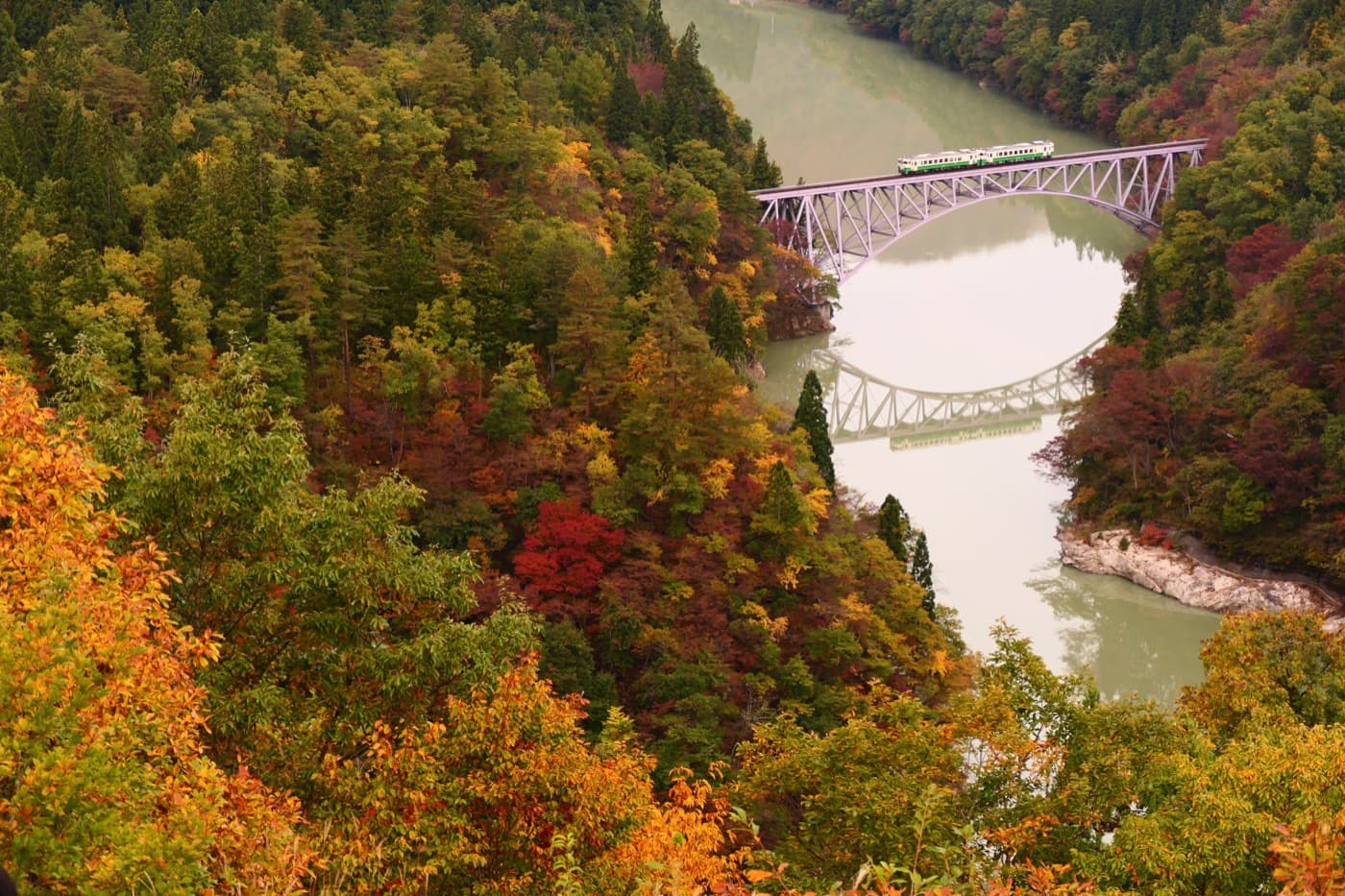
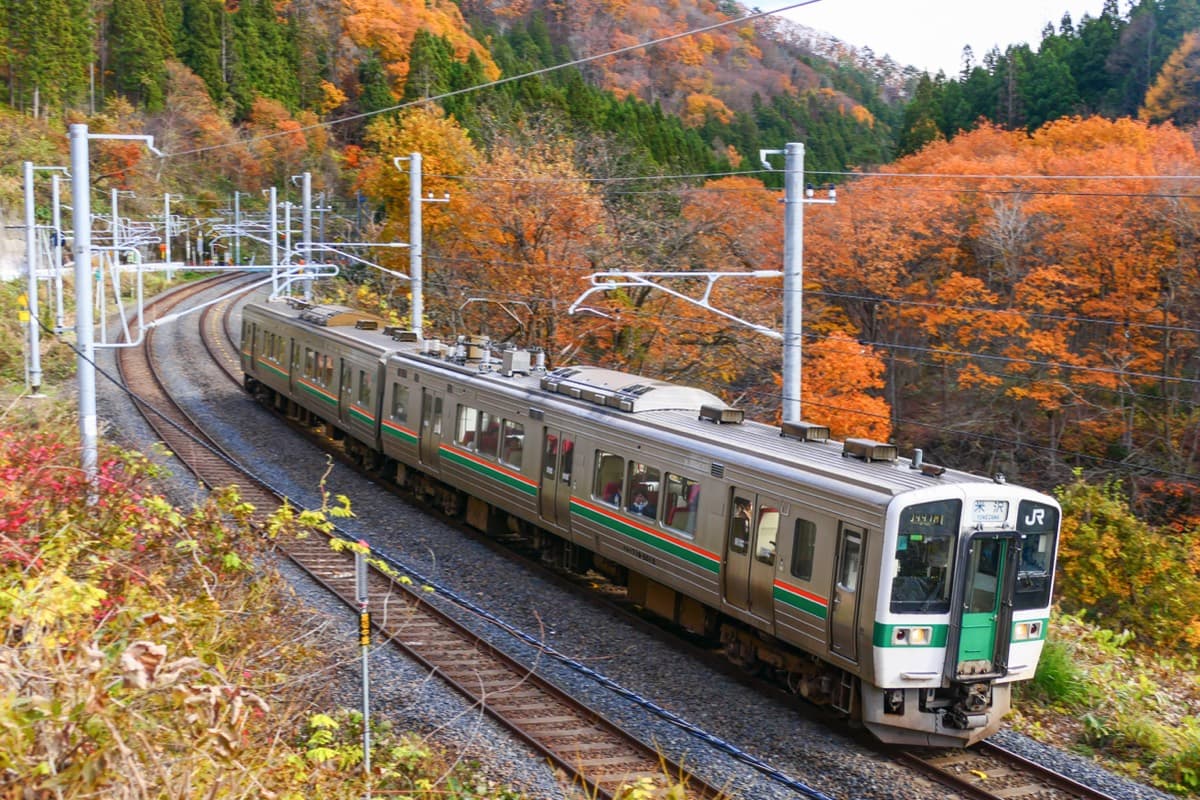
Hero image: the first Tadami River bridge on the JR Tadami Line in autumn, by MaedaAkihiko via Wikimedia Commons (CC BY-SA 4.0). Body image: a JR Yamagata Line local train in autumn, by MaedaAkihiko via Wikimedia Commons (CC0).
Related Articles
Japan QR Code Train Tickets: What's Changing and How to Plan Around It
10 min read
Is the JR Pass Worth It in 2026? When You Save — and When You Lose
30 min read
Japan Rail Pass Price Increase October 2026: New Official Prices (7, 14 & 21 Days) & How to Avoid It
14 min read