BluePlanet LogoHome
Average Daily Budget for Japan 2026 (Per Person)
Budget Travel

Average Daily Budget for Japan 2026 (Per Person)

Real yen prices and US dollar conversions for budget, mid-range, and luxury travel — accommodation, food, transport, attractions, and what travelers actually spend.

schedule22 min readUpdated for 2026

How much does it cost to visit Japan in 2026? The honest answer: it depends entirely on your travel style, but you can plan a fantastic trip to Japan on roughly ¥10,000 per day if you are careful, or spend ¥40,000+ per day if you want luxury. Most travelers land somewhere in the middle.

This guide breaks down the average daily budget for tourist in Japan 2026 by category — accommodation prices, food costs, transportation costs, entrance fees, and daily expenses — with real yen prices, US dollar conversions, and sample budgets for budget travelers, mid-range travelers, and visitors looking for tighter control over their travel costs.

All figures are per person and exclude international flights to Japan, since round trip flights vary wildly by departure date and home country. For more on overall affordability, see our Japan affordability guide; for specific scenario costs, see how much a Japan trip costs.

Quick Answer: Average Daily Budget for Tourist in Japan 2026

Budget

¥8,000-12,000/day

~$55-85 USD

Mid-range

¥18,000-28,000/day

~$125-195 USD

Luxury

¥40,000+/day

~$280+ USD

Per person, including accommodation, all meals, public transport, and 1-2 paid attractions. Excludes flights, JR Pass, and bullet trains.

Is Japan Cheap to Visit in 2026?

Is Japan cheap? It is the single most-asked question from foreign visitors planning a trip to Japan, and the answer surprises most people: yes, Japan can be cheap — much cheaper than Western Europe and only slightly more expensive than parts of Southeast Asia.

The Japanese yen has weakened significantly against the US dollar and other major currencies over the past few years, making Japan in 2026 one of the best-value destinations among developed countries. Hotel costs, train tickets, restaurant meals, and entrance fees often work out to noticeably reasonable prices for foreign visitors.

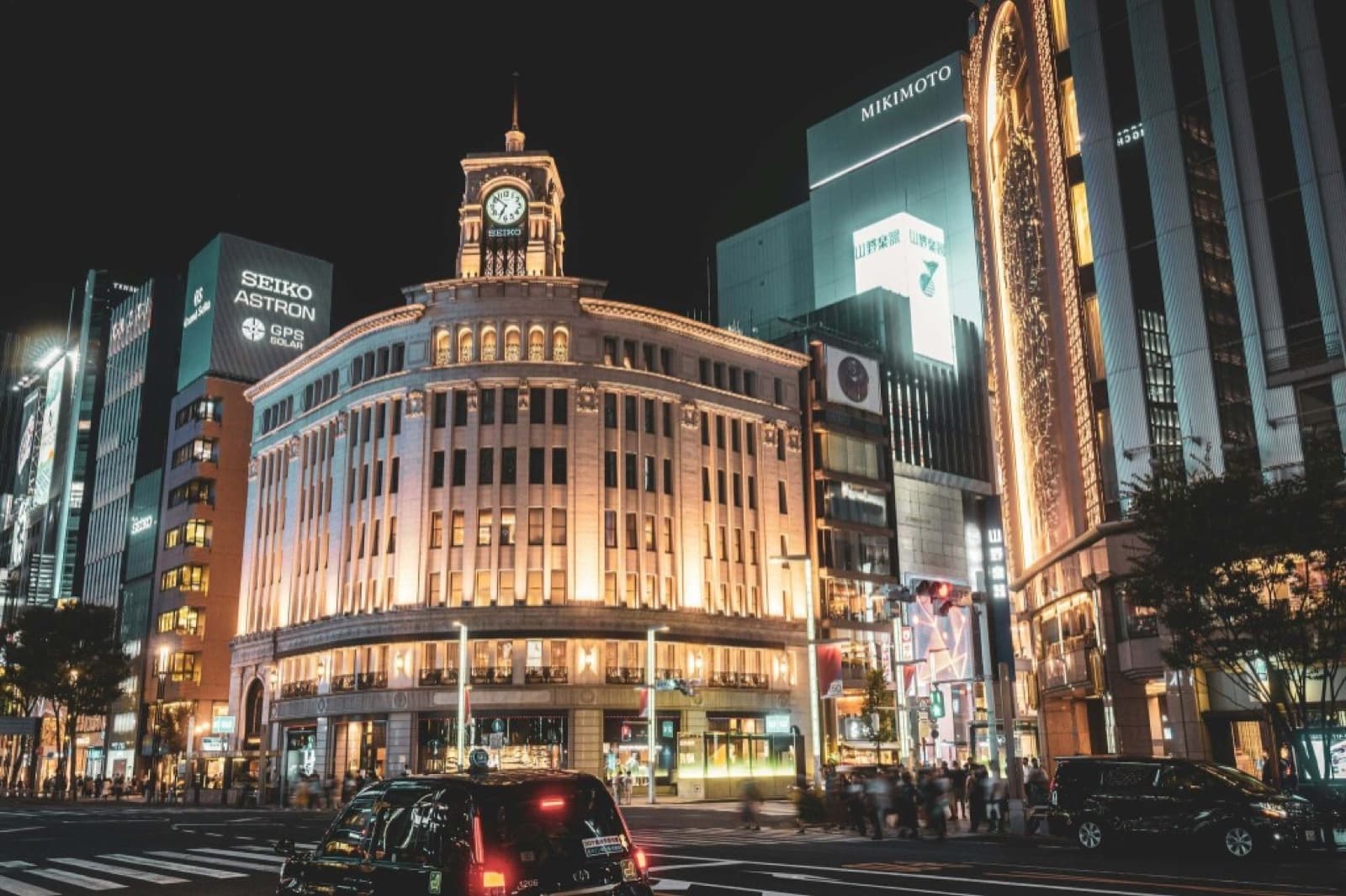
That said, "cheap" depends on context. Compared to Thailand or Vietnam, Japan is more expensive. Compared to Paris, London, or New York, Japan is significantly cheaper for the same quality of experience. Even compared to North American cities like Toronto or San Francisco, daily costs in Tokyo or Kyoto often come in lower than what travelers expect from a major Asian capital.

The vast majority of foreign visitors leave Japan saying "we spent less than we thought we would." Once you understand the cost structure — accommodation tiers, food categories, transportation options, and entrance fee patterns — you can build a trip that matches almost any budget.

A brightly lit Lawson convenience store in Tokyo at night with neon illuminated signs
Convenience stores like Lawson keep daily food costs surprisingly low across every Japanese city.

Japan Cost Overview: What Drives the Daily Number

The Japan cost calculation has four main drivers: where you sleep, how you eat, how you move, and what you pay to enter tourist attractions. Each category has a wide range, and small choices in each can shift your total daily spending dramatically.

A budget conscious traveler staying at a capsule hotel, eating at convenience stores, riding local trains, and visiting free city parks might spend ¥7,000-9,000 in a day. A mid-range traveler at a business hotel, eating at casual restaurants, taking taxis occasionally, and visiting paid attractions might spend ¥20,000-25,000.

Knowing where each category sits helps you build a budget that matches the trip you actually want.

Currency: The Japanese Yen and Travel Math

The Japanese yen (¥, JPY) is Japan's currency, and understanding it is the first step in budgeting any trip to Japan.

A close-up of various Japanese yen coins
Japanese yen coins — Japan still relies on cash for many small daily expenses.

Japan is still a heavily cash-friendly country. While credit cards work at most major hotels, large stores, and chain restaurants, smaller shops, family-run restaurants, vending machines, and many train stations still prefer or require cash. Plan to carry ¥10,000-20,000 in cash daily.

Yen vs US Dollar in 2026

The US dollar to yen exchange rate has hovered around 1 USD = 140-155 JPY in recent months. For quick mental math, dividing yen by 150 gives a close US dollar estimate.

That means a ¥1,500 bowl of ramen costs roughly $10. A ¥10,000 hotel night runs about $67. A ¥50,000 Japan Rail Pass works out to roughly $335.

Compared to a few years ago when the rate sat near 110 JPY per US dollar, today's rate makes Japan considerably cheaper for American visitors.

Yen vs Western Europe Currencies

The euro and British pound have also strengthened significantly against the yen. As of early 2026, 1 EUR ≈ 160 JPY and 1 GBP ≈ 185 JPY.

European visitors find Japan dramatically cheaper than Western Europe — meals, hotel costs, and museum entrance fees frequently come in at half the equivalent price in Paris, Amsterdam, or Rome.

Three Budget Tiers for Japan 2026

Most foreign visitors fall into one of three budget tiers. Here is what each looks like.

Budget Travelers (¥8,000-12,000/day)

Budget travelers stay in capsule hotels, hostels, or cheap hotels. They eat mostly from convenience stores, ramen shops, and street snacks. They use local trains and walk between sights. They prioritize free tourist attractions and city parks over paid attractions.

This tier is sustainable for two-week trips and longer. Many budget conscious travelers report that Japan delivered far more than they expected at this price point — even on a tight budget, the country's incredible food, free major attractions, and excellent public transportation make for an unforgettable trip.

Mid-Range Travelers (¥18,000-28,000/day)

Mid-range travelers stay in business hotels with private rooms and private bathrooms. They eat at sit-down restaurants for at least one meal a day. They mix public transportation with occasional taxi rides. They visit major attractions and pay entrance fees without rationing.

This is the most common tier among foreign visitors. Mid range travelers find the best balance of comfort and Japan experiences here, with enough flexibility to splurge occasionally on a special meal or a ryokan night.

Luxury Travelers (¥40,000+/day)

Luxury travelers stay in high-end hotels, traditional ryokan, or boutique properties. They eat at mid-tier and high-end restaurants daily. They use bullet trains comfortably, take taxis when convenient, and visit paid attractions without budget concerns.

Even at this tier, Japan often feels like reasonable prices compared to luxury travel in Western Europe or Southeast Asia's top resorts.

Hotel Costs and Accommodation Prices

Hotel costs are the single biggest line item in most travelers' Japan budgets. Here is what to expect across categories.

Average accommodation prices in Japan 2026 (per night)

CategoryPer Night (¥)Per Night (USD)What to Expect
Hostel dorm¥2,500-5,000$17-33Shared room, kitchen access
Capsule hotel¥3,000-5,500$20-37Sleeping pod, shared bathroom
Cheap private room¥6,000-9,000$40-60Budget hotels, simple guesthouse
Business hotel¥6,000-12,000$40-80Compact private room, en-suite
Mid-range hotel¥15,000-25,000$100-167Larger room, central location
Ryokan / luxury¥15,000-80,000+$100-535+Per person, often 2 meals included

Capsule Hotel Costs

Capsule hotel costs run ¥3,000-5,500 per night across major cities. A capsule hotel offers a small sleeping pod (about 2 meters long, just enough to sit up in), shared bathrooms, and lockers for luggage.

Modern capsule hotels include free WiFi, air conditioning, towels, and basic toiletries. They are a uniquely Japanese accommodation type that budget travelers consistently rate highly.

Capsule hotels are particularly good value in Tokyo, Osaka, and Kyoto, where business hotels can run double or triple the price.

Business Hotels

Business hotels are Japan's bread-and-butter mid-range option. Most chains — Toyoko Inn, APA Hotel, Super Hotel, Dormy Inn, Richmond Hotel — offer compact, clean private rooms with en-suite bathrooms for ¥6,000-12,000 per night.

Business hotels typically include breakfast, free WiFi, and sometimes a small public bath. Rooms are small (10-15m²) but functional. They are located near train stations across all major cities.

Mid-Range Hotels with Private Rooms

Mid-range hotels with larger private rooms, in-room amenities, and central locations run ¥15,000-25,000 per night. International chains (Hilton, Marriott, IHG) and Japanese mid-range chains (Hotel Granvia, Mitsui Garden) populate this tier.

A modern Tokyo hotel room with city skyline view through the window
A mid-range Tokyo hotel — typically ¥15,000-25,000 per night with central locations and city views.

These hotels typically have lobbies, restaurants, and concierge services. Worth the upgrade for travelers who want more space and comfort.

Ryokan and Traditional Stays

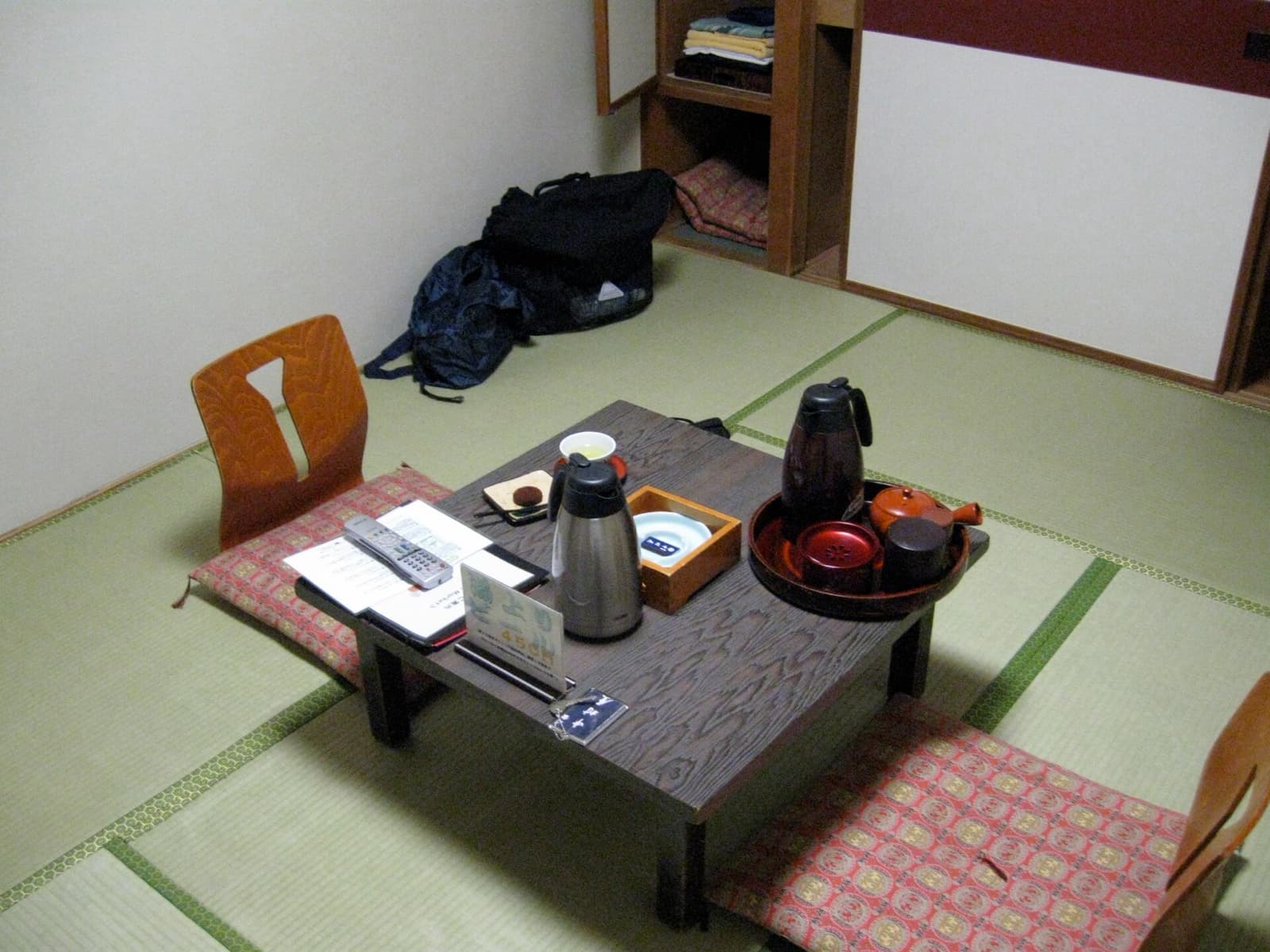
Traditional ryokan (Japanese inns) range from ¥15,000 per person at simple countryside ryokan to ¥80,000+ per person at luxury properties. Most include two meals (kaiseki dinner and breakfast), futon bedding, and access to onsen baths.

A 1-2 night ryokan stay during your trip to Japan is one of the most memorable Japan experiences, regardless of budget. See our onsen guide and ryokan primer.

Cheap Hotels and Hostels

Cheap hotels and hostels in Japan run ¥2,500-5,000 for a dorm bed or ¥6,000-9,000 for a budget private room. Hostels in Tokyo, Kyoto, and Osaka are well-run, typically clean, and often staffed by English-speaking travelers who can help with travel tips.

For budget conscious visitors, hostels offer kitchen access and luggage storage, both useful for stretching travel costs further.

Food Costs in Japan 2026

Food costs are where Japan delivers its most surprising value. Incredible food at very reasonable prices is part of what makes the country famous.

Convenience Stores: Particularly Good Value

Japanese convenience stores (7-Eleven, FamilyMart, Lawson) are unlike convenience stores anywhere else. A complete meal — onigiri, salad, hot bento, drink — runs ¥500-800.

A traveler holding a half-eaten onigiri rice ball wrapped in seaweed at Meiji Shrine, Tokyo
Onigiri at ¥150-250 each — a complete convenience store meal runs ¥500-800.

Convenience stores stock fresh sushi, rice bowls, sandwiches, hot foods, and surprisingly good coffee. Many travelers eat 1-2 meals per day from convenience stores throughout their entire trip.

For budget travelers, breakfast at a convenience store typically costs ¥300-500. Combined with vending machine drinks (¥130-160), it is the cheapest sustainable food strategy in Japan.

Street Snacks and Local Markets

Tsukiji Outer Market in Tokyo, Nishiki Market in Kyoto, and Kuromon Ichiba in Osaka all offer excellent street snacks for ¥300-800 per item. Grilled scallops, takoyaki, fresh sashimi skewers, and tempura on sticks make for a fantastic walking lunch. See our street food guide for what to order.

Skewered grilled squid and shrimp at a Japanese market stall
Street snacks at ¥300-800 per item — easily one of the best food experiences in any major city.

Budget ¥1,500-2,500 for a market lunch grazing through 4-5 stalls — easily one of the best food experiences in any major city.

Mid-Range Restaurants

Sit-down restaurants run ¥1,000-2,500 for lunch sets and ¥2,500-6,000 for dinners. Japanese food at this tier is often extraordinary — ramen shops, kaiten sushi (conveyor belt), tempura, tonkatsu, and family izakaya.

A tonkatsu set lunch with rice, miso soup, and pickles typically costs ¥1,200-1,800. Ramen runs ¥900-1,500. Kaiten sushi often comes in at ¥150-500 per plate, with most diners eating 8-12 plates for ¥2,500-4,500 total.

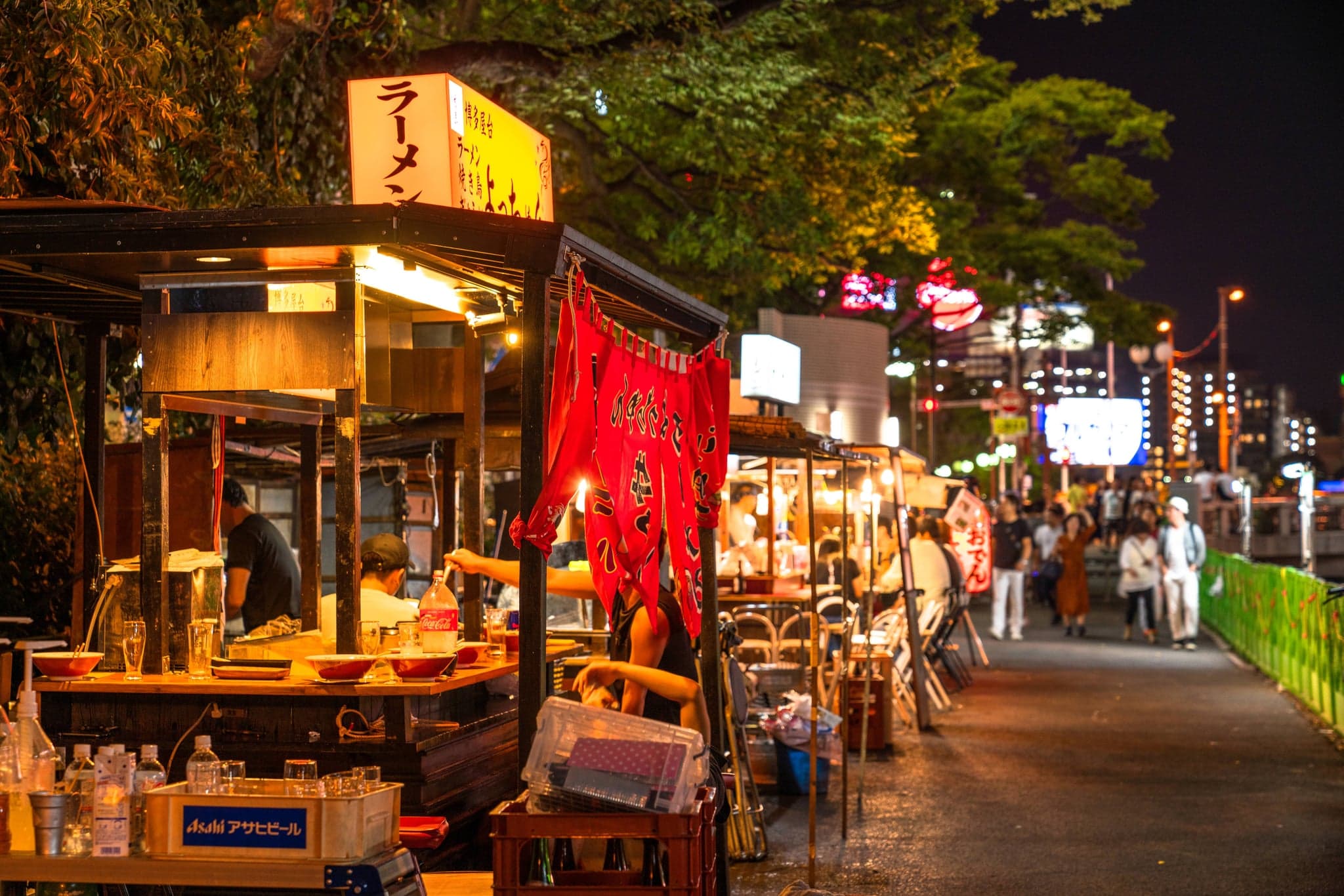
Izakaya (Japanese pubs) are a particularly good value for groups. Order 5-8 small plates plus drinks for ¥3,000-4,500 per person and you will eat extraordinarily well. Yakitori shops, gyoza specialists, and standing sushi bars offer similarly strong value.

Sushi pricing covers a huge range. Conveyor belt sushi is ¥150-500 per plate. Mid-tier omakase sushi runs ¥6,000-12,000 per person. Top-tier omakase at famous Tokyo or Kyoto sushi counters can hit ¥30,000+ per person — but those are rare splurges, not typical meals.

Coffee, Cafes, and Drinks

Coffee in Japan ranges from ¥120 (vending machine canned coffee) to ¥800+ (specialty third-wave cafes). Major chains like Doutor, Tully's, and Komeda Coffee charge ¥350-550 per cup with comfortable seating that doubles as workspace.

A Japanese specialty coffee shop with hand-pour coffee being prepared at the counter
Specialty coffee in Japan: ¥500-800 for an excellent pour-over.

Themed cafes (cat cafes, owl cafes, maid cafes) typically charge ¥1,000-2,500 for entry plus a drink. They are tourist-priced but memorable single experiences.

Bars and izakaya drinks run ¥500-800 for beer, ¥600-900 for highballs, and ¥800-1,500 for cocktails. Convenience store beer at ¥250-350 is dramatically cheaper for travelers who want to drink in their hotel room.

Free Ramen and Budget Tricks

Some Japanese chains offer free ramen refills (kaedama) or free rice. Ichiran, Tenkaippin, and Yamaokaya all let you upgrade portions or refill noodles cheaply, stretching a single bowl into a satisfying meal.

For budget conscious travelers, a single ramen bowl with kaedama plus a free water counts as a complete dinner for ¥900-1,200.

Family restaurants like Saizeriya, Gusto, and Joyfull offer huge menus at very low prices — full meals for ¥600-900. They are popular among Japanese university students and budget travelers alike. Saizeriya specifically is famous for ¥299 pasta and ¥499 mains.

Standing soba and udon shops at train stations serve full bowls for ¥350-600. They are the cheapest sit-down (well, stand-up) meals in Japan.

Transportation Costs

Transportation costs vary widely depending on whether you are moving within a city or traveling between major cities.

Japan Rail Pass: Worth It?

The Japan Rail Pass (JR Pass) is Japan's national rail pass for foreign visitors. As of 2026, the 7-day JR Pass costs ¥50,000, the 14-day pass ¥80,000, and the 21-day pass ¥100,000.

The rail pass post-2023 price hike (roughly 70% higher than it was) has made it less universally worth it. The math: if your itinerary includes a Tokyo-Kyoto round trip plus a Kyoto-Hiroshima round trip, you will roughly break even. Anything more, and the rail pass saves money. For a deeper analysis, see our JR Pass 2026 worth it guide or run your specific route through our JR Pass calculator.

For most foreign visitors doing the classic Tokyo-Kyoto-Osaka triangle in two weeks, individual train tickets are now slightly cheaper than the JR Pass. Here is a concrete example: Tokyo→Kyoto (¥14,000) + Kyoto→Hiroshima round trip (¥22,000) + Hiroshima→Tokyo (¥19,000) = ¥55,000. Compare to the 7-day JR Pass at ¥50,000 — a small saving of ¥5,000, but only if you complete this itinerary in 7 days.

For shorter trips that focus on one or two cities, the JR Pass almost never pays off. For longer trips that crisscross the country (Tokyo to Hokkaido to Kyushu, for example), it remains an excellent deal.

Regional rail pass options often offer particularly good value. The JR West Pass (5 days, ¥17,000) covers Kyoto, Osaka, Hiroshima, and Okayama. The JR Tokyo Wide Pass (3 days, ¥15,000) covers the Tokyo region including Mount Fuji and Nikko. The JR Hokkaido Pass (5 days, ¥20,000) covers all of Hokkaido. These regional train passes typically beat both individual tickets and the full national rail pass for area-focused itineraries — a meaningful money saving for budget-conscious travelers who plan ahead.

Bullet Trains and Train Tickets

Bullet trains (Shinkansen) connect every major city in Japan. Tokyo to Kyoto costs ¥14,000 one way; Tokyo to Hiroshima ¥19,000; Tokyo to Aomori ¥17,500.

Train tickets can be bought at train stations, on the JR website, or through apps. Reserved seats cost ¥500 more than non-reserved but guarantee a seat — worth it during peak season or Golden Week.

Local Trains and Public Transportation

Local trains and subways are how you will move within major cities. A typical Tokyo subway ride costs ¥170-300. An IC card (Suica or Pasmo) makes payment easy and is worth picking up at any major train station.

Daily subway/local train spending typically runs ¥600-1,500 per person depending on how much you move around.

Long Distance Buses

Long distance buses are dramatically cheaper than bullet trains. Tokyo to Osaka by overnight bus costs ¥4,000-8,000 (vs ¥14,000+ by Shinkansen). Trade-off: 8 hours instead of 2.5 hours.

Willer Express, JR Bus, and Kosoku Bus aggregator sites sell buses to budget travelers willing to sacrifice time for savings.

Taxi Rides

Taxi rides start at roughly ¥500 (flagfall) and run ¥400-500 per kilometer. A typical 15-minute Tokyo taxi ride costs ¥1,500-2,500. Cheaper than New York or London, but expensive compared to local trains.

For mid-range travelers, occasional taxi rides (especially after a long day or with luggage) are a reasonable luxury.

Round Trip Flights and Budget Carriers

Round trip flights to Japan from North America typically cost $900-1,800 in 2026, depending on departure date and how far in advance you book. Flights from Europe run €700-1,400. Flights from Australia AUD 800-1,500.

Budget carriers like Zipair, Jetstar, and Scoot offer cheaper plane ticket options on certain routes. Within Japan, Peach Aviation and Skymark offer budget domestic flights between major cities.

Tourist Attractions and Entrance Fees

Tourist attractions in Japan range from completely free to ¥4,000+. Many of the country's best experiences cost nothing.

Tokyo Metropolitan Government Building (Free)

The Tokyo Metropolitan Government Building has free observation decks on the 45th floor of both towers. The view rivals paid observatories that charge ¥3,000+ — and it is completely free.

Other free major attractions include Meiji Shrine, Senso-ji Temple, the Imperial Palace East Gardens, and most Shinto shrines across the country.

City Parks and Public Spaces

Japan's city parks are uniformly excellent and free. Yoyogi Park, Ueno Park, and Shinjuku Gyoen (¥500 entry, very minor) in Tokyo. Maruyama Park in Kyoto. Nakajima Park in Sapporo.

City parks are also where Japanese locals spend leisure time. Visiting them is one of the best free ways to experience local culture.

Major Attractions with Entrance Fees

Sample 2026 entrance fees

AttractionPrice (¥)
Tokyo Skytree (350m / 450m)¥3,100 / ¥4,400
teamLab Borderless¥3,800
Senso-ji main hallFree
Kinkaku-ji (Golden Pavilion)¥500
Kiyomizu-dera¥500
Osaka Castle¥600
Ghibli Museum¥1,000 (advance)
Universal Studios Japan¥8,600+

Budget mid-range travelers often spend ¥1,500-3,000 per day on entrance fees during sightseeing-heavy days.

City-by-City Cost Differences

Where you visit Japan affects daily costs more than most travelers realize. Tokyo, Kyoto, Osaka, and other cities each have distinct price profiles.

Tokyo

Tokyo is Japan's most expensive city overall, but it is also where the most variety exists. Capsule hotels, business hotels, and luxury accommodations all cluster here in larger numbers than anywhere else. A budget traveler can stay in Tokyo's Asakusa or Ueno districts for under ¥4,000 a night.

Food in Tokyo runs slightly cheaper than Kyoto due to higher competition and larger volume. Subway fares are reasonable, and walking distance between major attractions is often longer than expected — budget for taxi rides on tired evenings.

Kyoto

Kyoto is often slightly more expensive than Tokyo for hotel costs during peak season (cherry blossom season and autumn foliage), as accommodation supply is more limited. Mid-range hotels frequently sell out 4-6 months in advance during peak windows.

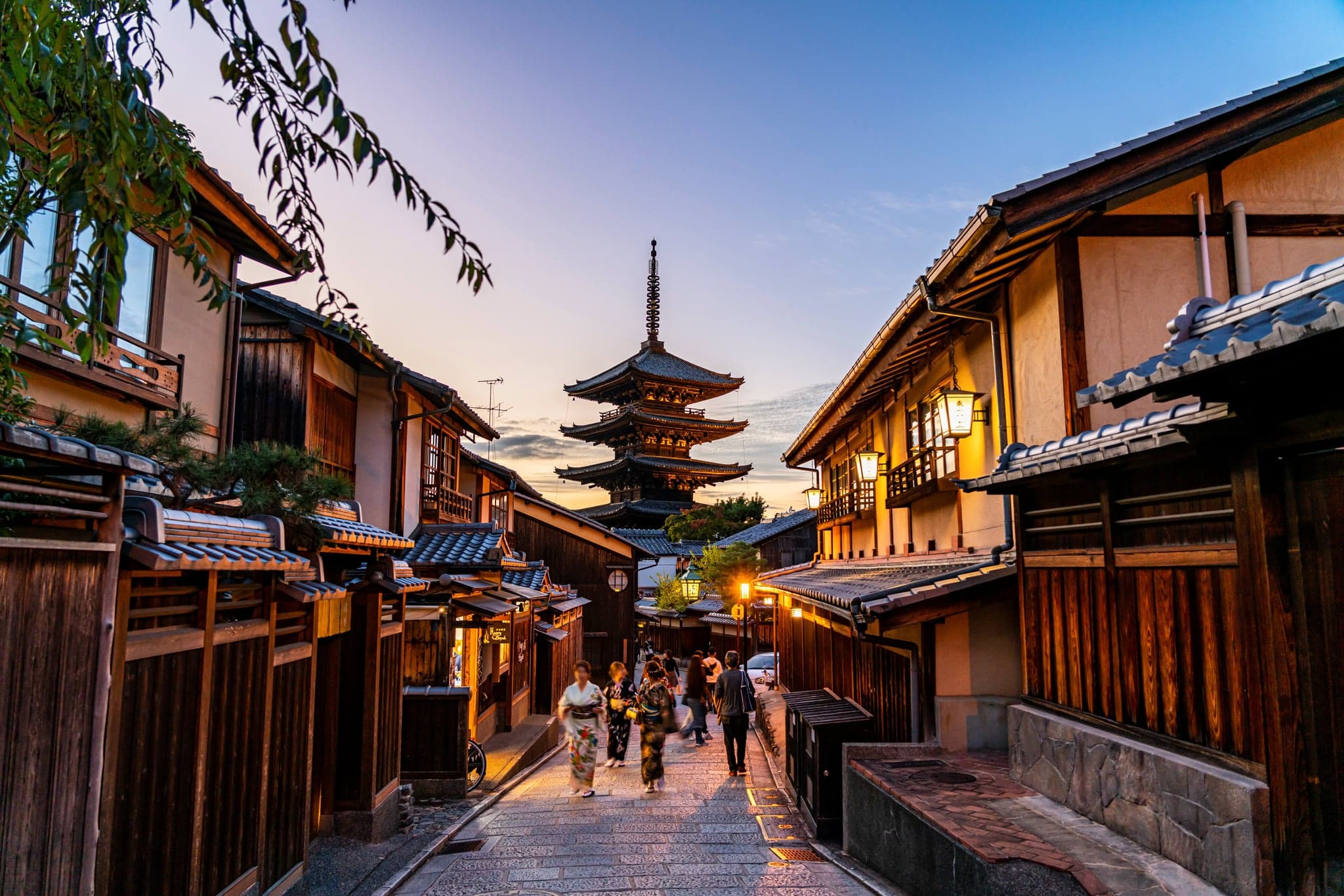
Local culture is concentrated in Kyoto, and entrance fees at temples and shrines add up — budget ¥3,000-4,000 per day for sightseeing if you are visiting many paid sites. Bus passes (¥700/day) are particularly good value since Kyoto's subway network is limited.

Osaka

Osaka is consistently slightly cheaper than Tokyo and Kyoto. Hotel costs run 10-20% lower; food costs are the same price or slightly cheaper. Osaka's reputation as Japan's food capital means you can eat extraordinarily well at very reasonable prices — particularly for street snacks at Dotonbori and Kuromon Ichiba market.

Other Cities

Other cities (Sapporo, Fukuoka, Hiroshima, Nagoya, Sendai) typically run 20-35% cheaper than Tokyo across the board. Mid-range hotels in these other cities often cost ¥10,000-14,000 — what would be ¥18,000+ in Tokyo.

For budget conscious travelers, basing in Osaka, Fukuoka, or Hiroshima rather than Tokyo can stretch travel costs significantly.

Cash, Credit Cards, and ATMs

Japan's cash-friendly culture is changing fast, but cash still matters for many daily expenses.

When You Need Cash

You will need cash for: small restaurants and izakaya, vending machines (some), local trains in rural areas, traditional ryokan, smaller shops, market stalls, temple offerings, and most taxi rides outside major cities.

When Credit Cards Work

Credit cards work at: most major hotels, chain restaurants, department stores, large retailers, modern attractions, JR ticket machines, bullet trains, IC card top-ups, and most bookings through international platforms like Booking.com or Agoda.

ATMs in Japan

Most Japanese bank ATMs do not accept foreign cards. Use 7-Eleven ATMs (in 7-Eleven convenience stores everywhere) or Japan Post ATMs (in post offices). Both accept all major foreign cards and have English menus.

Withdraw ¥30,000-50,000 at a time to minimize transaction fees. Most foreign banks charge $3-5 per international ATM withdrawal plus a 1-3% currency conversion fee.

Tipping in Japan: There Is Not Any

There is no tipping culture in Japan. Restaurants, taxis, hotels, and tour guides all expect zero tips — and trying to leave one is sometimes considered rude.

This is a meaningful daily cost saving compared to North America. Restaurant prices listed on menus are exactly what you pay (plus 10% consumption tax, usually included in displayed prices). Taxi fares are exactly what the meter shows. Hotel staff do not expect anything beyond the room rate.

For travelers used to budgeting 15-20% extra for tips, Japan's no-tipping culture saves $20-50 per day depending on travel style.

Hidden Costs Most Travelers Miss

A few categories that catch budget conscious travelers off guard:

Coin lockers fill up fast. During peak season, lockers at Tokyo Station, Shinjuku, and Kyoto Station regularly run out by 10 AM. Backup luggage storage runs ¥600-1,000 per bag — budget for it.

IC card top-up minimums. When you first buy a Suica or Pasmo card, the minimum charge is ¥500 plus a ¥500 deposit (refundable). Plan to put at least ¥3,000 on your IC card to avoid frequent top-ups.

Tax-free shopping minimums. Japan offers tax-free shopping for foreign visitors on purchases over ¥5,000 at participating stores. You will need your passport. Below ¥5,000, you pay the 10% tax.

Cherry blossom season hotel surcharges. Beyond just higher base prices, many hotels add explicit "spring premium" surcharges to nightly rates during cherry blossom season — often ¥3,000-5,000 extra per night.

Convenience store ATMs charge fees at certain times. 7-Eleven ATMs charge ¥110 fees outside business hours; Japan Post ATMs are free during normal hours but charge fees on weekends.

Other Daily Expenses

A few smaller categories shape the total daily expenses budget.

Physical SIM cards and internet. Physical SIM cards for Japan cost ¥3,000-6,000 for the duration of a 1-2 week trip. eSIMs from Airalo or Ubigi are slightly cheaper at $15-30. Pocket WiFi rentals run ¥800-1,500 per day. For most foreign visitors, an eSIM activated on arrival at the airport is the cheapest, simplest option.

Travel insurance. Travel insurance for Japan costs $50-150 for a two-week trip depending on age and coverage. Worth it: medical emergencies in Japan are excellent but not free for foreigners. A simple ER visit can run ¥30,000-80,000.

Luggage storage and vending machines. Luggage storage at train stations costs ¥300-700 per locker per day. Most major train stations have lockers in three sizes. Japan's vending machines deserve their own mention — they are everywhere, accept IC cards, and sell drinks for ¥130-160. A budget hot/cold drink habit costs ¥300-500 per day.

Sample Daily Budgets by Travel Style

Here is what real daily expenses look like across travel styles.

Single Traveler Daily Budget (Budget)

Capsule hotel¥4,500
Convenience store breakfast¥500
Ramen lunch¥1,200
Casual dinner at chain¥1,800
Subway / local trains¥800
One paid attraction¥1,500
Vending machine drinks¥400
Total per day¥10,700 (~$72 USD)
A solo traveler with long hair walking across the Shibuya pedestrian crossing in Tokyo
Solo travelers in Japan can comfortably manage on ¥10,700/day — more if going mid-range.

Single Traveler Daily Budget (Mid-Range)

Business hotel¥10,000
Hotel breakfast included-
Restaurant lunch¥2,000
Restaurant dinner¥4,500
Subway + one taxi¥2,000
Two paid attractions¥3,500
Drinks / snacks¥800
Total per day¥22,800 (~$155 USD)

Just a Couple Daily Budget

Just a couple sharing a private room benefits from accommodation efficiency. Budget plan for two travelers:

  • Business hotel double room: ¥10,000 (¥5,000/person)
  • Convenience store + casual restaurant meals: ¥3,000/person
  • Subway: ¥800/person
  • One attraction each: ¥1,500/person
  • Total per person: ¥10,300 (~$70 USD)

This is why couples typically come out cheaper per person than solo travelers in Japan.

Sample Trip Budgets (Excluding Flights)

Total trip budgets, excluding flights, look like this.

One Week in Tokyo (Budget, Single Traveler)

  • Accommodation (capsule × 7): ¥31,500
  • Food (¥3,500/day × 7): ¥24,500
  • Transportation: ¥6,000
  • Attractions: ¥10,500
  • Misc: ¥3,500
  • Total: ¥76,000 (~$510 USD)

Two Week Trip Across Multiple Cities (Budget, Single Traveler)

  • Accommodation: ¥63,000
  • Food: ¥49,000
  • Local transportation: ¥10,000
  • Bullet trains between major cities: ¥35,000
  • Attractions: ¥18,000
  • Misc + SIM + insurance: ¥15,000
  • Total: ¥190,000 (~$1,275 USD)

For 2-week itinerary specifics, see our 2 week Japan itinerary guide; for 7-day plans, see our 7 day Japan itinerary.

Two Week Mid-Range Trip (Per Person, Couple)

  • Hotels (¥18,000-25,000/night × 14): ¥140,000/person
  • Food: ¥98,000/person
  • Local transportation + taxis: ¥18,000/person
  • Bullet trains: ¥40,000/person
  • Attractions: ¥25,000/person
  • Misc + SIM + insurance: ¥18,000/person
  • Total per person: ¥339,000 (~$2,275 USD)

Peak Season vs Off-Peak Pricing

Travel dates dramatically affect total costs.

Cherry Blossom Season and Golden Week

Cherry blossom season (late March through early April) and Golden Week (late April through early May) are Japan's two highest peak season windows. Hotel costs surge 40-80%. Flights jump 30-50%.

Spring cherry blossom season is the year's most expensive travel window. If your travel dates have flexibility, target the weeks before or after. See our Japan in May 2026 guide for the post-Golden Week sweet spot.

Slightly Cheaper Off-Peak Windows

Slightly cheaper off-peak windows include:

  • Mid-January to early March (cold, but cheap)
  • Mid-May to mid-June (post-Golden Week, before rainy season)
  • September to mid-October (post-summer, pre-foliage)
  • Early December (pre-winter holidays)

A budget conscious visitor traveling in early March or post-Golden Week can save 30-50% on accommodation prices alone. The June rainy season window is also excellent value if you do not mind the rain.

Want a budget-aware itinerary?

Tell us your daily budget and travel dates. We will tell you honestly what is realistic, where to splurge, and where to save — without sacrificing the parts of Japan you actually came for.

Money-Saving Tips for Budget Conscious Travelers

A few proven money-saving tips for any trip to Japan:

Use IC cards for everything. Suica or Pasmo cards work on every major train, bus, and even some convenience stores. They save time and small transaction fees add up.

Eat lunch sets. Japanese restaurants offer significant discounts at lunch — the same dish that costs ¥3,500 at dinner often runs ¥1,500 at lunch. Budget travelers eat their main restaurant meal at lunch and supplement with cheaper dinners.

Skip Tokyo-Kyoto by Shinkansen if you have time. Long distance buses are 60-70% cheaper for the same route.

Visit free major attractions early. Meiji Shrine, Senso-ji, and city parks are free and beautiful in the early mornings before crowds arrive.

Use vending machines and convenience stores liberally. Drinks, snacks, and full meals are cheaper than equivalent restaurant or cafe purchases.

Stay at business hotels near train stations. They are cheaper than central tourist-area hotels and offer the same walking distance access to subways.

Book accommodations 3-6 months in advance for trips during peak season. Peak-season hotel costs surge once availability tightens.

Use luggage storage instead of dragging bags. Coin lockers at train stations let you sightsee without your suitcase between hotels.

Skip the Japan Rail Pass for short itineraries. Individual train tickets are slightly cheaper for most one-week trips. Calculate your specific route on the JR website before buying.

Get a 7-day or 14-day regional pass if you are staying in one area. JR West Pass, JR Tokyo Wide Pass, and similar options can be cheaper than the full national rail pass.

Common Budget Mistakes to Avoid

A few costly mistakes that catch budget travelers and mid-range travelers alike:

Buying the JR Pass before doing the math. Many travelers buy the rail pass on autopilot from old advice. Run your specific itinerary through Hyperdia or the JR website first.

Ignoring regional rail passes. A 5-day JR Kansai Pass at ¥17,000 covers Kyoto, Osaka, Nara, and Kobe — far cheaper than a national pass for travelers staying in one region.

Booking hotels last-minute during peak season. Cherry blossom season hotel costs surge 50-80% in the final 30 days before arrival. Book 4-6 months out.

Underestimating airport transfers. Narita Express to central Tokyo costs ¥3,250 (¥6,500 round trip). Haneda to central Tokyo via monorail and subway is ¥600. The choice of airport matters more than travelers expect.

Missing free major attractions. Tokyo Metropolitan Government Building observation decks, the Imperial Palace East Gardens, Meiji Shrine, and Senso-ji Temple are all free. Travelers who buy paid Tokyo Skytree or Tokyo Tower tickets without checking the free options often regret it.

Eating at hotel breakfasts when convenience stores are next door. Hotel breakfasts typically cost ¥2,000-3,500. A complete convenience store breakfast costs ¥500-800. The hotel breakfast is rarely worth the difference.

Taking taxis when subways exist. A ¥2,000 taxi ride often replaces a ¥250 subway trip. Worth it occasionally when tired or in a hurry, but not as a routine.

Forgetting tax-free shopping. Significant purchases at major retailers qualify for tax-free pricing with your passport. The 10% savings adds up across souvenirs and electronics.

Final Thoughts: How Much Does It Cost?

How much does it cost to visit Japan in 2026? For most foreign visitors, a realistic budget excluding flights is:

  • One week budget trip: ¥75,000-90,000 (~$500-600)
  • One week mid-range trip: ¥150,000-200,000 (~$1,000-1,350)
  • Two week trip (mid-range, multiple cities): ¥300,000-400,000 (~$2,000-2,700)
  • Two week trip (luxury): ¥600,000+ (~$4,000+)

Add round trip flights to those totals based on your home country.

Is Japan cheap to visit in 2026? Compared to Western Europe and other developed countries, yes — particularly good value, with incredible food, world-class public transportation, and unforgettable Japan experiences at every budget tier.

Whether you are a budget traveler stretching every yen or a luxury visitor looking for the country's best, Japan in 2026 delivers some of the best travel value of any major destination on the planet. Start planning, book early during peak season, and prepare for a trip that consistently exceeds expectations.

Related Articles

Have Questions? We're Here to Help.

Not sure where to start? Our Japan travel experts can recommend the perfect tour based on your interests, budget, and schedule. It's completely free.

schedule24hr responsethumb_upNo commitmentverifiedExpert advice