The Shimakaze Train: Route, Seats, Tickets & How to Book
A practical guide to Kintetsu's sightseeing limited express from Osaka, Kyoto, and Nagoya to Ise-Shima: routes, premium seats, the front observation car, the cafe menu, ticket rules, and personal picks from our team.
If you are planning a self-guided trip through central Japan and want to swap a standard limited express for something slower, prettier, and frankly more fun, the Shimakaze train should be on your shortlist.
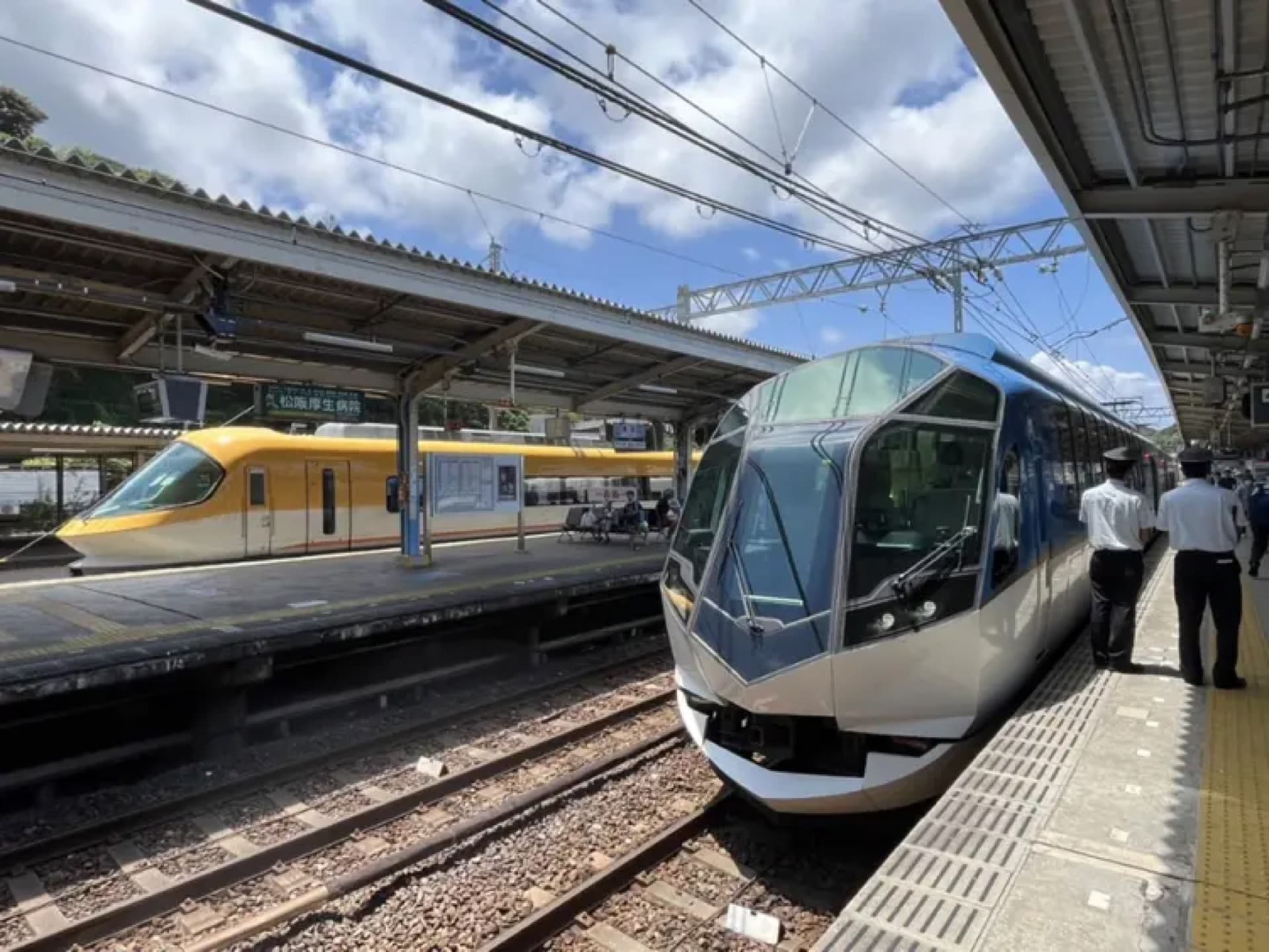
The Shimakaze is not just transport to Ise-Shima. It is a sightseeing limited express where the ride itself becomes part of the trip: premium seats, huge windows, private rooms, salon seating, and a two-story cafe car serving regional food from the Kintetsu Railway network.
Quick Answer: Shimakaze Train
The Shimakaze train is Kintetsu Railway's luxury sightseeing limited express connecting Osaka-Namba, Kyoto, and Kintetsu Nagoya with Kashikojima in Mie Prefecture. It runs once daily each way on three routes, requires reserved limited express tickets, and is best booked exactly one month before travel.
Operator
Kintetsu
Destination
Kashikojima
Best For
Ise-Shima
Booking
1 month out
What Is the Shimakaze?
The Shimakaze, meaning "Island Wind," is a luxury sightseeing train operated by Kintetsu Railway, Japan's largest private rail company. It connects the Ise-Shima region with Osaka, Kyoto, and Nagoya, and was created to make the journey to Japan's spiritual coast feel special before you even arrive.
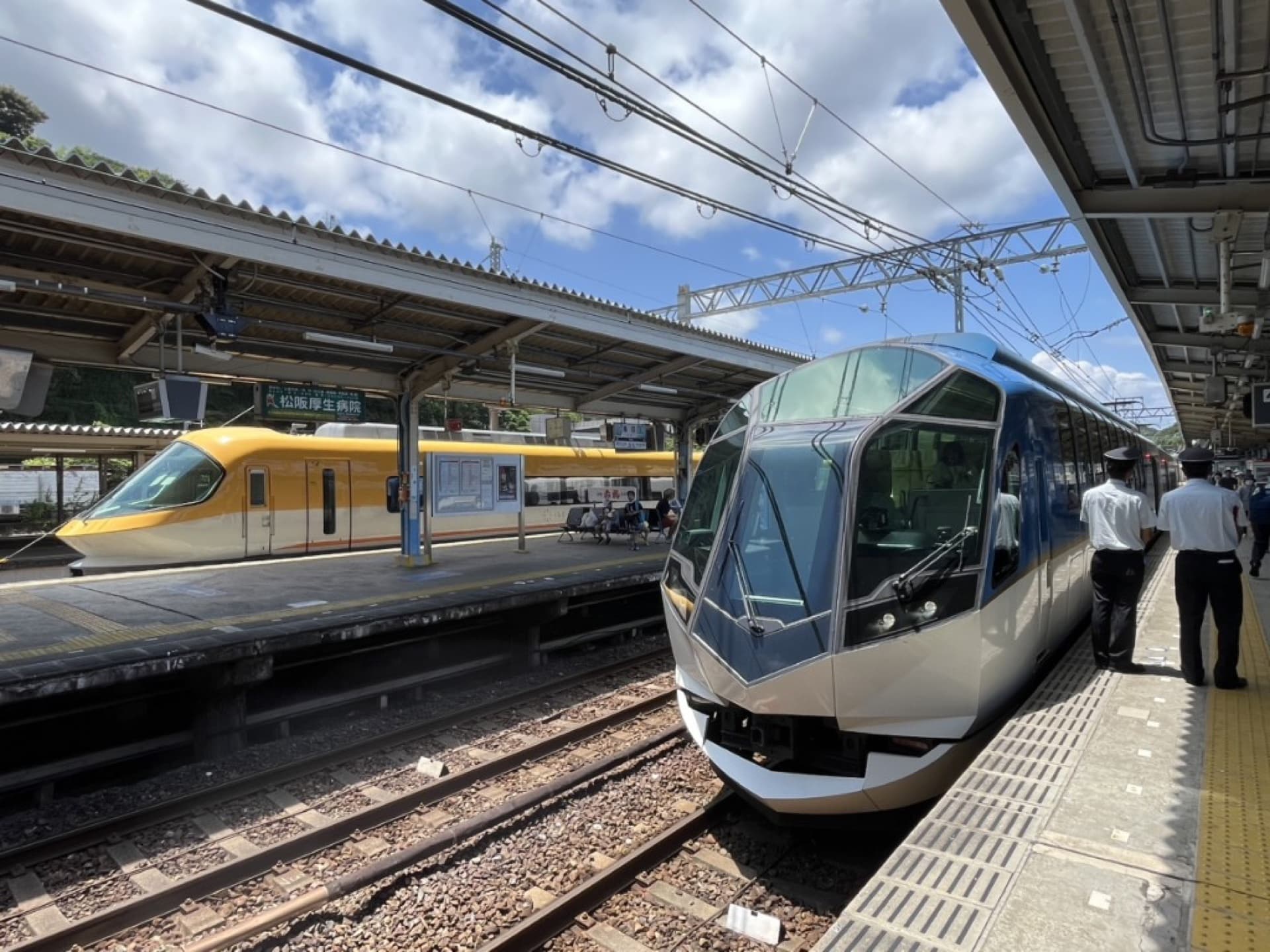
The train entered service in March 2013 and won the Blue Ribbon design award the following year. Its blue-and-white livery nods to the sea and sky of the Ise-Shima coast. For travelers who like trains, design, or slow travel, it is one of the most enjoyable ways to reach Mie Prefecture.
For a more destination-led look at the same region, pair this guide with our Shimakaze and Ise-Shima luxury travel guide.
The Shimakaze Train Route Explained
Here is the bit many travelers get wrong. There is not one Shimakaze train route. There are three, and each runs once a day in each direction.
Main Shimakaze routes to Kashikojima
| Route | Best For | Planning Note |
|---|---|---|
| Osaka-Namba to Kashikojima | Kansai travelers | Easy add-on after Osaka or Nara. |
| Kyoto to Kashikojima | Kyoto plus Ise-Shima | Useful after temple days in Kyoto. |
| Kintetsu Nagoya to Kashikojima | Central Japan loops | Often the most convenient Nagoya-Mie link. |
All three routes terminate at Kashikojima Station on the Shima Peninsula. From there, you can reach Ago Bay cruises, Toba, Mikimoto Pearl Island, Ise Jingu, ryokan stays, and coastal viewpoints around Ise-Shima.
A few practical notes matter. Each route normally has only one train daily in each direction, and each route has scheduled operating exceptions. Check the official Kintetsu service schedule before locking in hotels, especially if you are planning around a Tuesday or Wednesday departure.
Inside the Train: Seats, Rooms, and the Cafe Car
Premium Seats
Most passengers ride in premium seats. They are arranged in three rows across the car, with a spacious 125 cm seat pitch, genuine leather upholstery, electric reclining, and large windows. Once you have settled into one, a regular limited express train can feel cramped by comparison.
Observation Cars: Aim for Car 1 or Car 6
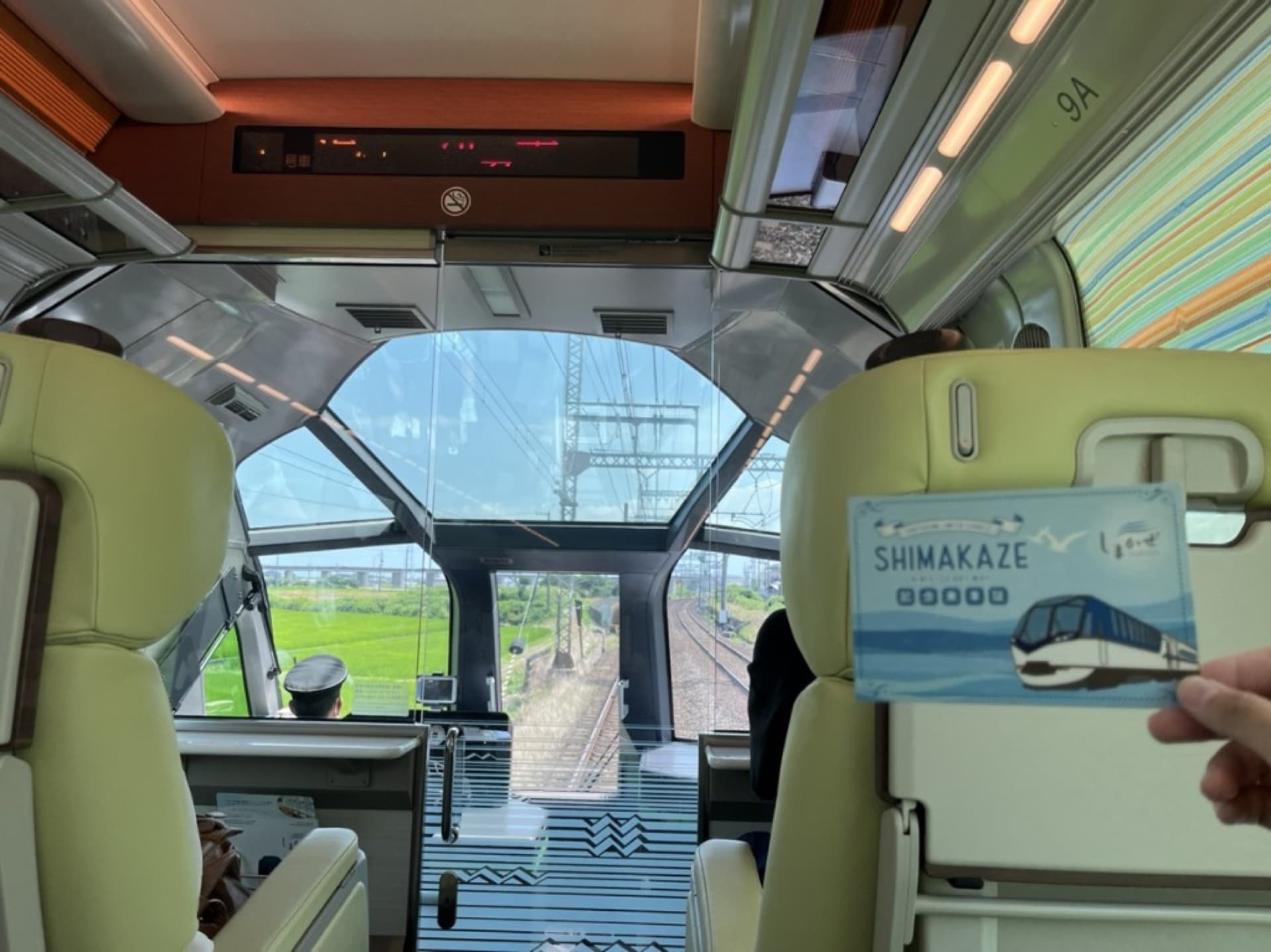
The first and last cars are high-deck observation cars with large glass windows and a near-driver's-cab perspective. If scenery matters to you, these are the seats to target when availability allows.
Our team's recommendation, after riding it: book Car 1 or Car 6. They sit higher than the rest of the train and the panoramic glass at the front (or back) of the cabin lets you watch the line stretch out ahead, almost like sitting behind the driver. Once the train gets close to Toba, the windows fill with views of Ago Bay, the inlet famous for pearls and oysters. That stretch is, honestly, the best part of the whole route.
Private Rooms and Salon Seats
Traveling as a family or small group? The Shimakaze offers Japanese-style private rooms, Western-style compartments, and salon seats. Private rooms are generally sold to groups of three to four and require a separate room fee, while salon seats suit groups of four to six around a larger table.
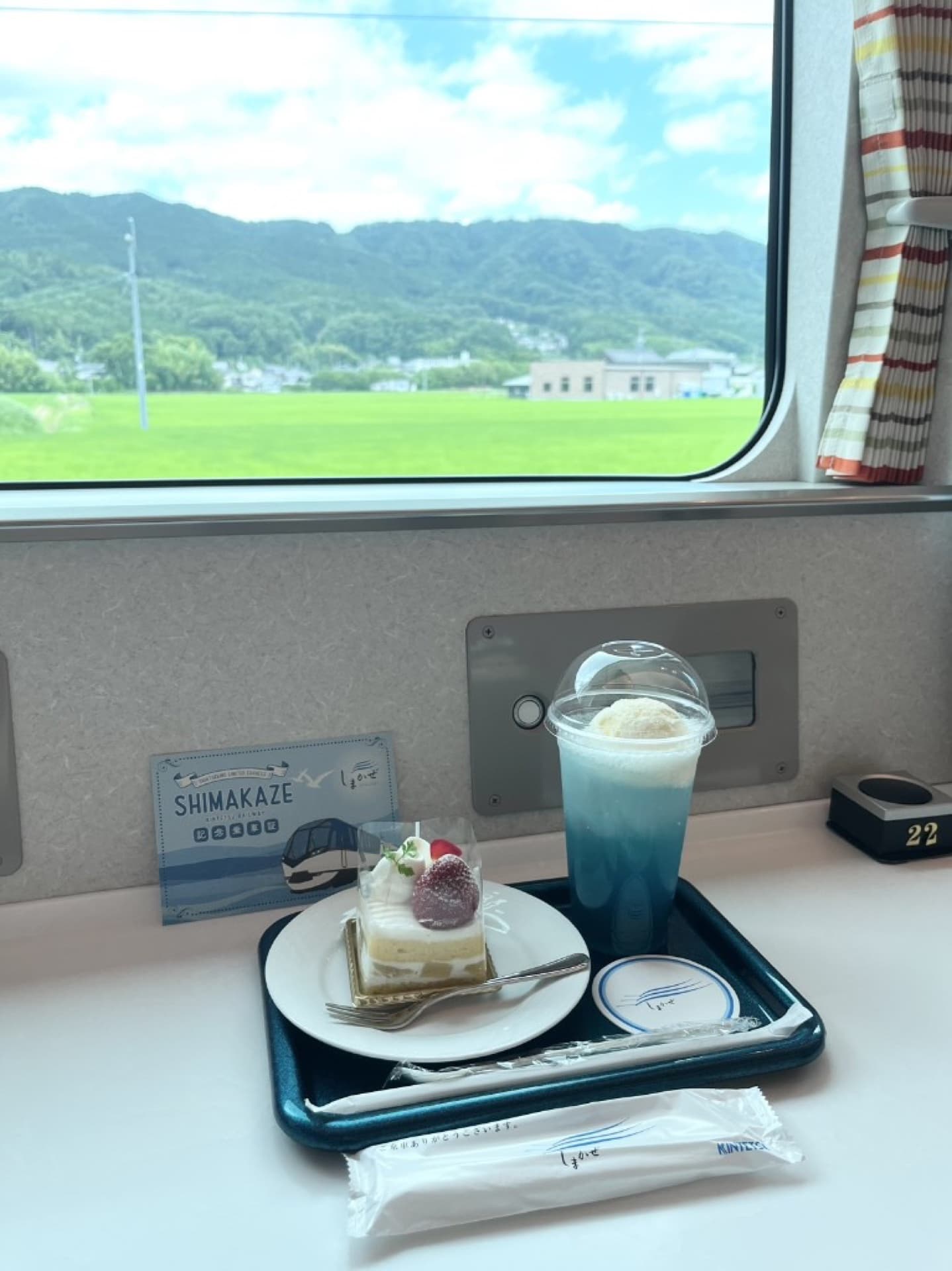
The Two-Story Cafe Car
This is the part everyone photographs. The upstairs cafe has counter seating along the windows, while the lower level has softer sofa-style seating. The menu leans into regional specialties: seafood pilaf, Matsusaka beef curry, local beer, wine, Japanese sake, juices from along the Kintetsu line, and sweets tied to Ise-Shima.
A couple of menu tips from our team. The cakes in the cafe car are made by the pastry team at the Sheraton Miyako Hotel Osaka, and they punch well above what you expect from a train cafe. For something more hearty, the Matsusaka beef menu is the one to pick: Matsusaka is a local Mie Prefecture specialty famous well beyond Japan, and tasting it on the way to its home region feels appropriate. Order something, take it back to your seat or stay at the window counter, and it adds a nice rhythm to the journey.
Other useful touches include free Wi-Fi, large luggage lockers, screens showing front and rear views from driver's-cab cameras, and dedicated powder-room facilities.
Personal Picks From Our Team
The general guide above is the practical version. This shorter list is the personal version, written from the seat:
Choose Car 1 or Car 6
Both are high-deck observation cars. The view is genuinely better up there, and if you can pick the front car you get something close to a driver's perspective through the panoramic glass.
Watch the windows around Toba
The stretch around Toba Station is the scenic highlight. Ago Bay, the pearl- and oyster-farming inlet, opens up alongside the train. Have your camera ready before the line bends to the coast.
Order at the cafe car at least once
The cakes are made by the Sheraton Miyako Hotel Osaka pastry team, and the menu uses local Matsusaka beef. Even if you only stop in for a single drink and a slice, it is part of why people remember this train.
Fares, the Kintetsu Rail Pass, and How Tickets Work
Shimakaze pricing combines three pieces: the basic fare, the limited express ticket, and the Shimakaze surcharge. If you book a private room, add the separate room fee on top.
Rough one-way adult fare examples for regular premium seats
| Route | Approx. Total | Includes |
|---|---|---|
| Osaka-Namba to Kashikojima | JPY 5,460 | Fare + limited express + surcharge |
| Kyoto to Kashikojima | JPY 6,150 | Fare + limited express + surcharge |
| Nagoya to Kashikojima | JPY 5,060 | Fare + limited express + surcharge |
The Kintetsu Rail Pass can help if you are combining the Shimakaze with broader Kintetsu travel around Osaka, Kyoto, Nara, Nagoya, and Mie. Important catch: the pass covers the basic fare only. You still need to pay the limited express ticket and Shimakaze surcharge separately.
How to Book Shimakaze Tickets
Limited express tickets can be purchased at major Kintetsu stations and through Kintetsu's limited express ticket web reservation service. Reservations usually open at 10:30 a.m. Japan time one month before the date of boarding.
For foreign visitors, the cleanest path is to reserve online through the Kintetsu website, then pick up or display the required ticket according to the reservation instructions. Weekends, Japanese holidays, cherry blossom season, and autumn foliage dates can sell out fast, so book as soon as the window opens.
For wider train planning, see our JR Pass 2026 guide. The Shimakaze is not a JR train, but the decision often sits inside the same broader rail-budget question.
Fitting the Shimakaze Into a Real Itinerary
Because the train runs only once a day in each direction, you should build the Ise-Shima portion around the Shimakaze departure rather than treating it like a turn-up-and-go train.
Sample 3-Day Plan from Osaka
- Day 1: Morning Shimakaze from Osaka-Namba to Kashikojima. Afternoon Ago Bay cruise. Overnight in Toba or Kashikojima.
- Day 2: Visit Ise Jingu, walk Okage Yokocho, and stay in Ise or Toba.
- Day 3: Return on the afternoon Shimakaze, or continue onward toward Nagoya or Kyoto.
Sample 2-Day Loop from Nagoya
The Nagoya route is convenient for a short central Japan escape. Ride down to Kashikojima, spend the night near Ago Bay or Toba, then return the next afternoon. If you are planning a broader route, you can also ride one direction from Osaka and return via Kyoto or Nagoya.
For a done-for-you route, the Hidden Gems of Japan: Ise-Shima Escape (GR001) includes Tokyo, Nagoya, Kashikojima, Osaka, and Kyoto, while From Sacred Mountains to Coastal Calm (KM001) pairs Ise Grand Shrine and Ago Bay with Koyasan and other spiritual stops.
Common Mistakes to Avoid
- Booking too late. Premium seats and private rooms can vanish first, especially during weekends and peak seasons.
- Assuming the rail pass covers everything. The Kintetsu Rail Pass can cover the basic fare, but not the limited express ticket or Shimakaze surcharge.
- Picking the wrong day. Each route has service exceptions. Always check the official schedule before booking hotels.
- Skipping the cafe car. Do not stay glued to your seat. The upstairs cafe counter and lower sofa area are part of the experience.
- Underestimating Kashikojima. Ago Bay, pearls, coastal ryokan, and Ise Jingu reward at least one overnight.
Is the Shimakaze Train Worth It?
Yes, if you care about the texture of the journey. The Shimakaze is not the fastest way to reach Ise-Shima, and it is not the cheapest. But it gives you something a regular limited express cannot: a train ride that feels like a calm, scenic part of the holiday.
If your Japan itinerary is already too packed, skip it. If you have one or two nights for Ise-Shima and want the travel day to feel memorable, build the route around the Shimakaze.
Want a self-guided Ise-Shima route with the Shimakaze built in?
We can plan the train timing, Kintetsu connections, luggage strategy, Ise Jingu visit, Ago Bay stay, and onward travel so the one-a-day departure works cleanly with the rest of your trip.
Want to ride the Shimakaze as part of a trip to Ise? Get in touch through Plan My Trip on our self-guided tours site, and we'll suggest the tours that best fit your dates and plans.
FAQ
Is the Shimakaze train worth it over a regular limited express?
For the ride itself, yes. The premium seats, observation cars, private rooms, salon seats, and two-story cafe car make the Shimakaze a different category from standard Kintetsu limited express trains.
Can foreign visitors use the Kintetsu Rail Pass on the Shimakaze?
Yes, but only for the basic fare portion. You still need to pay for the limited express ticket and Shimakaze surcharge separately.
How early should I book Shimakaze tickets?
Reservations usually open at 10:30 a.m. Japan time one month before boarding. For weekends, holidays, cherry blossom season, or autumn foliage season, book as soon as the window opens.
Where does the Shimakaze train go?
Shimakaze trains run from Osaka-Namba, Kyoto, and Kintetsu Nagoya to Kashikojima Station in Mie Prefecture, the gateway to Ago Bay and the Ise-Shima coast.
Are there private rooms for couples?
Private rooms are generally sold to groups of three to four, so couples usually book premium seats unless they are willing to pay for the room as a group.
Is there Wi-Fi on board?
Yes. The Shimakaze offers free Wi-Fi service, and onboard screens also show front and rear views from cameras near the driver's cab.