Grand Sumo Tokyo September 2026: The Result, and How to See the Next Tournament
The Aki Basho ran at Ryogoku Kokugikan from September 13 to 27, 2026 — sold out every day — and Yokozuna Onosato won his sixth title. How sumo tickets work, and how to see the next tournaments: Kyushu in November (on sale now) and Tokyo in January (on sale December 5).
The September 2026 grand sumo tournament — the Aki Basho — ran from September 13 to 27, 2026 at Ryogoku Kokugikan in Tokyo, and Yokozuna Onosato won it with 12 wins and 3 losses, his sixth top-division title. Tickets went on general sale on August 8 and the entire tournament sold out — all 15 days, with no same-day sales at the door. If you are planning a trip around sumo now, the next tournaments are Kyushu in November and Tokyo in January.
This is a practical planning guide, not a history lecture. Below we cover what a day of grand sumo actually feels like, how to buy tickets in 2026 without overpaying or getting shut out, which seats are worth the money, how to reach the arena, and how to fold the whole thing into a realistic self-guided itinerary. The short version: it's one of the easiest big cultural experiences to add to a Tokyo trip — the venue sits a two-minute walk from a JR station, and you don't need a guide, just a plan.
🥋 Quick Answer: Grand Sumo Tokyo, September 2026
- Over: September 13–27, 2026 — 15 days, Sunday to Sunday — at Ryogoku Kokugikan, Sumida City, Tokyo.
- Result: Yokozuna Onosato won with a 12–3 record, beating Ozeki Aonishiki on the final day when both were 11–3.
- Tickets: sold out. All 15 days sold through in the general sale, and there were no same-day tickets.
- Face value in 2026: chair seats roughly ¥3,500–¥8,500, tatami box seats around ¥8,000–¥15,000 per person, ringside (tamari) about ¥20,000. Same-day general admission is about ¥2,200 in a tournament that has not sold out.
- Getting there: Ryogoku Station on the JR Sobu Line (about a two-minute walk to the west exit), or the Toei Oedo subway line.
- No ticket? Follow it anyway: NHK World-Japan's English Grand Sumo Highlights, daily results on the Japan Sumo Association's English site, and the streets around the Kokugikan (details below).
- Next tournaments: the November 2026 Kyushu Basho in Fukuoka (November 8–22), on sale since September 19, and the January 2027 Hatsu Basho in Tokyo (January 10–24), on sale from December 5.
🏆 The tournament is over — result and what comes next
- Result: Yokozuna Onosato won the Aki Basho with 12 wins and 3 losses — his sixth top-division title and his first in a year. He and Ozeki Aonishiki went into the final day, 27 September, level at 11–3, and Onosato won their bout.
- Sold out: all 15 days sold out in the general sale, and there were no same-day tickets at the box office.
- Next: Kyushu, November 8–22, 2026. Tickets for the Kyushu Basho in Fukuoka have been on sale since September 19. Weekends and the final days go first.
- Then Tokyo, January 10–24, 2027. Tickets for the January Hatsu Basho go on sale on December 5, 2026 — set a reminder rather than checking daily.
Watching Sumo Without a Ticket
A sold-out arena doesn't mean you have to miss a tournament. These options work for any basho, including the next ones:
- NHK World-Japan's Grand Sumo Highlights. A roughly 30-minute program with English commentary covering the top-division (makuuchi) bouts, usually shown the day after each day of the tournament on NHK World-Japan's TV channel and online. It is the easiest way to follow the storylines from your hotel.
- Live in Japanese. NHK's domestic channels broadcast the tournament live every afternoon, and most hotel rooms receive them — you don't need the commentary to follow a bout that lasts ten seconds.
- Daily results. The Japan Sumo Association's English site posts each day's matches and the leaders list as the tournament goes on.
- Around the Kokugikan. Ryogoku is worth an afternoon even without a seat: the colored nobori banners outside the arena, wrestlers arriving for their bouts, and the neighborhood's chanko-nabe restaurants — the hearty stew the wrestlers themselves live on.
- Morning practice — with a caveat. Stables train more lightly during a tournament and some close to visitors, so treat practice viewing as a between-tournament plan and check each stable's own notice before you go (more on stables below).
If you want to be in the arena next time, the next two tournaments are already fixed: the November 2026 Kyushu Basho in Fukuoka (November 8–22), with tickets on sale since September 19, and the January 2027 Hatsu Basho in Tokyo (January 10–24), on sale from December 5, 2026. Weekends and the final days go first, so be ready on the morning sales open.
September 2026 at a Glance
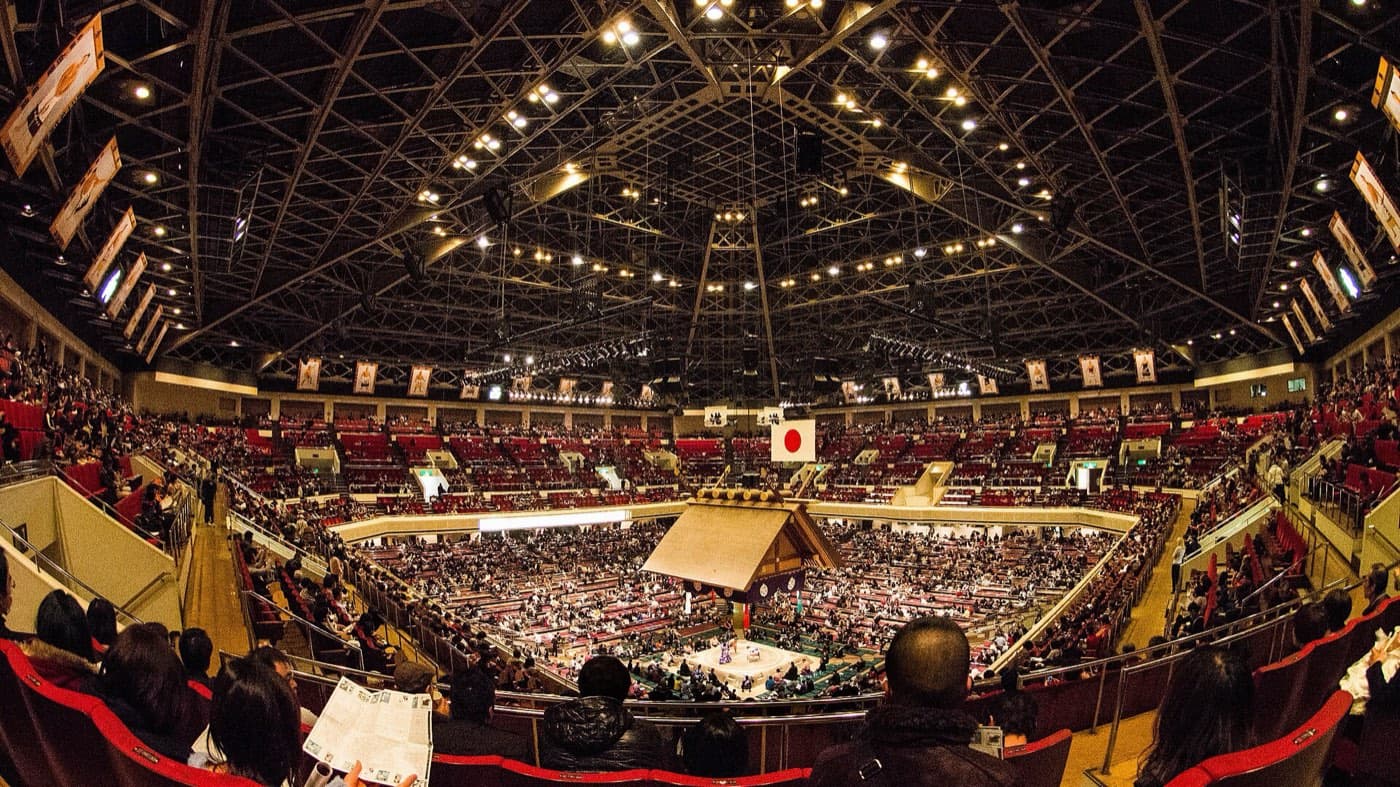
The Aki Basho — the "Autumn Tournament" and the last of Tokyo's three annual grand tournaments (honbasho) — took over Ryogoku Kokugikan from Sunday, September 13 to Sunday, September 27, 2026. Like every honbasho it ran for 15 straight days, opening and closing on a Sunday, with the ranking table shifting a little after each day of bouts.
📋 The essentials
- Venue: Ryogoku Kokugikan, 1-3-28 Yokoami, Sumida City, Tokyo 130-0015
- Dates: September 13–27, 2026 (15 days)
- Doors: typically around 8:45 am, with later openings on the final days — confirm on the official schedule
- Top-division bouts: roughly 3:45 pm to about 6:00 pm
- Nearest station: Ryogoku (JR Sobu Line, ~2-minute walk; also Toei Oedo Line)
Bouts run all day, from the lowest divisions in a near-empty morning hall to the top-division showdowns that finish around 6:00 pm. You don't have to sit through the whole thing — but bring water, pace yourself, and plan to settle in for the afternoon, which is when the arena really comes alive.
Why the September Basho Is Worth Timing Around
Japan stages six grand tournaments a year, and each one reshuffles the rankings that define a wrestler's career. Three are held in Tokyo — in January, May and September — while Osaka, Nagoya and Fukuoka host the other three. The September edition lands late enough in the calendar that promotions and demotions are genuinely on the line: wrestlers are fighting to lock in rank before the year-end Kyushu tournament, and in a strong year someone may be pushing for a rare run at yokozuna, the sport's highest rank. In short, the bouts carry real weight.
There's also a comfort argument. By mid-to-late September, Tokyo's worst summer heat has usually broken, which makes the Aki Basho one of the more pleasant tournaments to sit through — you're not queuing for same-day tickets in August humidity. For the wider picture of what the month is like, see our guide to Japan in September 2026, and if it's your first time in the city, is Tokyo safe to visit covers the basics.
The Full 2026 Sumo Calendar
If your travel dates aren't locked to September, here's the whole 2026 honbasho calendar so you can pivot to another city or month:
🗓️ 2026 grand tournaments
- January 11–25 — Ryogoku Kokugikan, Tokyo
- March 8–22 — EDION Arena, Osaka
- May 10–24 — Ryogoku Kokugikan, Tokyo
- July 12–26 — IG Arena, Nagoya
- September 13–27 — Ryogoku Kokugikan, Tokyo
- November 8–22 — Fukuoka Kokusai Center, Fukuoka
A note if you're comparing venues: the July tournament moved into Nagoya's brand-new IG Arena in 2025, replacing the old Aichi Prefectural Gymnasium. It's a striking modern space, but for a first grand sumo experience the September Tokyo basho is still the easiest — central, well-signed in English, and a short hop from everything else you'll want to see.
Buying Sumo Tickets in 2026
The September 2026 sell-out
General tickets went on sale on August 8, 2026 and the entire tournament sold through within weeks — every day gone, and no tickets sold at the box office. The sections below describe how the general sale normally works, which is what matters for November and January.
Where to buy
The official channel is Ticket Oosumo (ticket.sumo.or.jp), run by the Japan Sumo Association. In recent years it has added English-language registration and started accepting international credit cards, which makes the process far less painful than it once was — though note it takes card payment only, not cash or bank transfer. If the official site has sold out, established resale and agency services such as buysumotickets.com list seats (usually at a markup), and once you're in Japan you can also try the ticket machines at Lawson and other convenience stores. If you buy through the official site and choose convenience-store collection, print your tickets at a Seven-Eleven at least a day in advance rather than leaving it to the morning of the bout.
⚠️ Before you check out
- Seats are assigned when you buy, not at the door — check your confirmation email for the section and row.
- Once purchased, tickets generally can't be changed, cancelled or refunded, so book with intent.
- Reselling or transferring tickets without the organiser's permission is prohibited — don't count on offloading a spare if plans change.
Same-day tickets at the door
In a normal tournament, a limited batch of same-day general-admission tickets is sold at the Kokugikan box office on tournament mornings — small numbers, cash only, first-come, with the queue forming from around 7:45 am. The rule people miss: the same-day window only exists while advance inventory remains. September 2026 had none, so there were no same-day sales at all. Keep this in mind for the November and January tournaments instead.
Seats and Prices: Ringside, Box, or Chair?
Ryogoku Kokugikan offers three reserved seat types plus the same-day option, and the differences are as much about the experience as the price. Here's how they stack up:
🎫 Sumo ticket types (approximate)
| Type | What it is | Rough price (per person) | How to buy | Best for |
|---|---|---|---|---|
| Ringside (tamari) | Floor cushions at the ring's edge; no cameras, phones or food allowed | ~¥20,000 | Official site (often by lottery) | Fans who want to feel the impact |
| Box (masu-seki) | Small tatami boxes on the arena floor; shoes off, sold as a set for four | ~¥8,000–¥15,000 | Ticket Oosumo, resale agencies | Groups of up to four |
| Chair / arena | Western-style seats in the upper tiers with a full view of the ring | ~¥3,500–¥8,500 | Ticket Oosumo, Lawson kiosks | Best value; solo travelers & couples |
| Same-day general | Limited unreserved tickets sold at the door each morning, cash only | ~¥2,200 | Box office, from ~7:45 am on the day | Flexible, budget, off-peak weekdays |
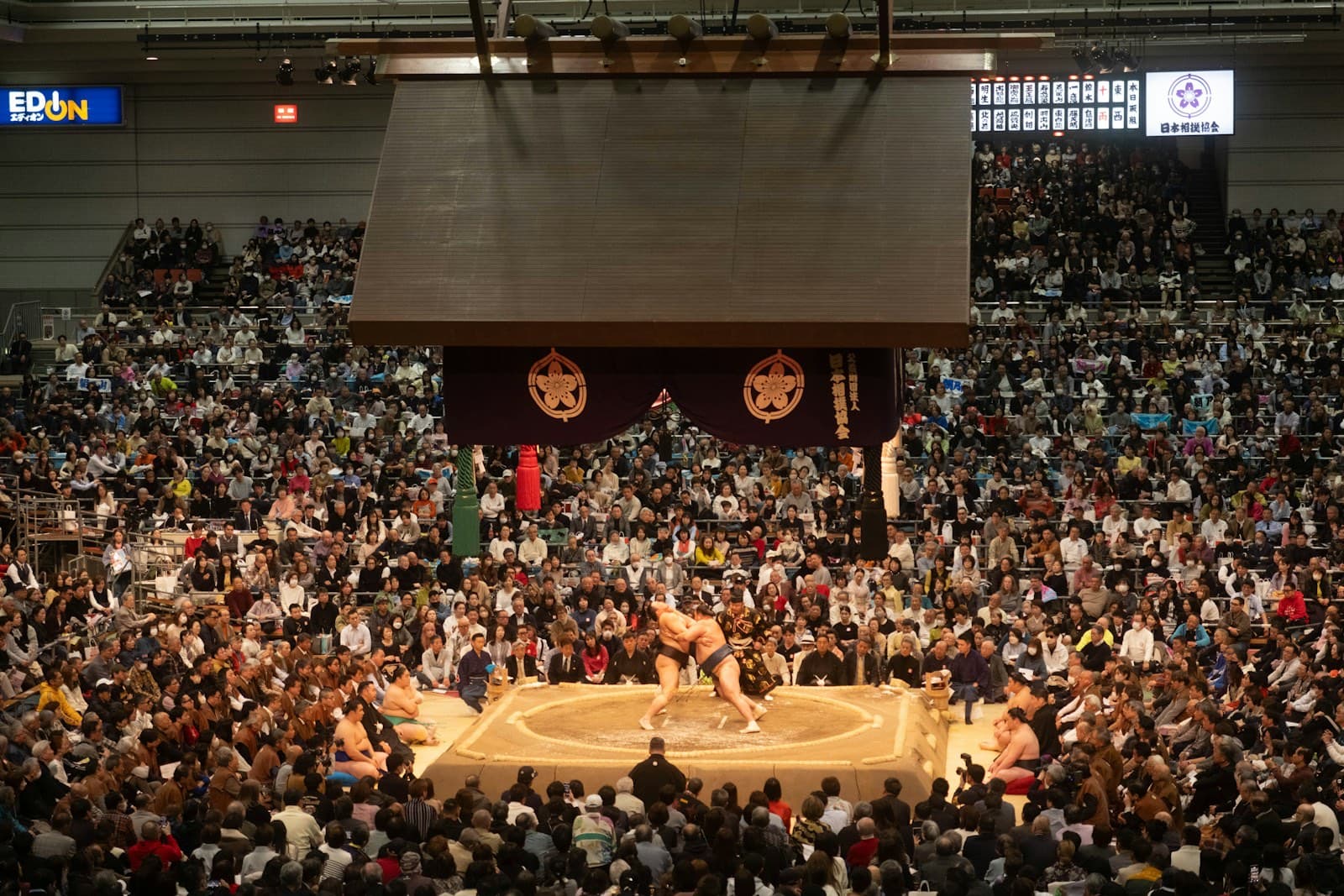
Ringside (tamari) seats put you on floor cushions right at the edge of the ring — close enough that a tumbling 150-kilo rikishi can genuinely land in your lap. They're the priciest and hardest to get, often allocated by lottery, and cameras, phones and food are off-limits down there. Box seats (masu-seki) are the traditional choice: small tatami boxes on the arena floor where you take your shoes off and sit on cushions, sold as a set for a group of four. Great for a foursome; awkward for solo travelers, since you pay for the whole box either way. Chair seats in the upper tiers are the sensible pick for most visitors — a clear view of the ring and both entrances, actual back support, and the best value on the board.
One caveat on the numbers above: prices swing with the seat tier and with weekday-versus-weekend demand, and the exact bands are confirmed for each tournament. Treat the figures as a guide and check the official site for current rates before you book.
A Realistic Day at the Kokugikan
Here's the rough shape of a tournament day, so you can decide when to show up. Times are approximate and shift earlier on the final days:
⏱️ How a tournament day unfolds
| Time (approx.) | What's happening |
|---|---|
| ~8:45 am | Doors open; lowest-division bouts (Jonokuchi, Jonidan) begin in a near-empty hall |
| Late morning | Sandanme and Makushita bouts — a quiet, low-key time to explore the arena |
| ~2:15 pm | Juryo ring-entering ceremony (dohyo-iri) and second-division bouts; seats start filling |
| ~3:40 pm | Makuuchi (top-division) dohyo-iri, followed by the yokozuna ring-entering if one is active |
| ~3:55–6:00 pm | Top-division bouts, building to the highest-ranked matchup of the day |
| ~6:00 pm | Yumitori-shiki (bow-twirling ceremony) closes the day |
If you only care about the marquee wrestlers, roll in around 2:00 pm, grab a bento and a beer inside, and settle in — the atmosphere ratchets up through the afternoon and peaks in the final hour. One logistical note: re-entry is usually allowed only once, and you're expected back by about 5:00 pm, so don't wander off during the top-division build-up. When the yumitori-shiki ends the day, spill out into Ryogoku and find a restaurant serving chanko-nabe, the protein-loaded hot pot that fuels the wrestlers themselves — it's the classic post-basho meal, and our Japan street food guide has more to graze on afterward.
Sumo Basics: Rules and Ranks
You don't need to study up to enjoy it, but a few basics help. Two wrestlers, each wearing only a mawashi (the heavy belt), face off inside the dohyo, a raised clay ring. The first to step out of the ring, or to touch the ground with anything other than the soles of his feet, loses. Most bouts are over in seconds — the drama is in the charge, the grip and the sudden throw.
Ranks matter, too. There are six divisions, from Makuuchi at the top down through Juryo, Makushita, Sandanme, Jonidan and Jonokuchi. The one to watch is Makuuchi, whose internal order runs Yokozuna, Ozeki, Sekiwake, Komusubi and Maegashira. Wrestlers can't leapfrog the ladder — a winning record over the 15 days nudges you up, a losing one drags you down — which is exactly why the September basho, sitting late in the year, carries so much promotion-and-demotion pressure.
Beyond the Tournament: Morning Practice and Stables
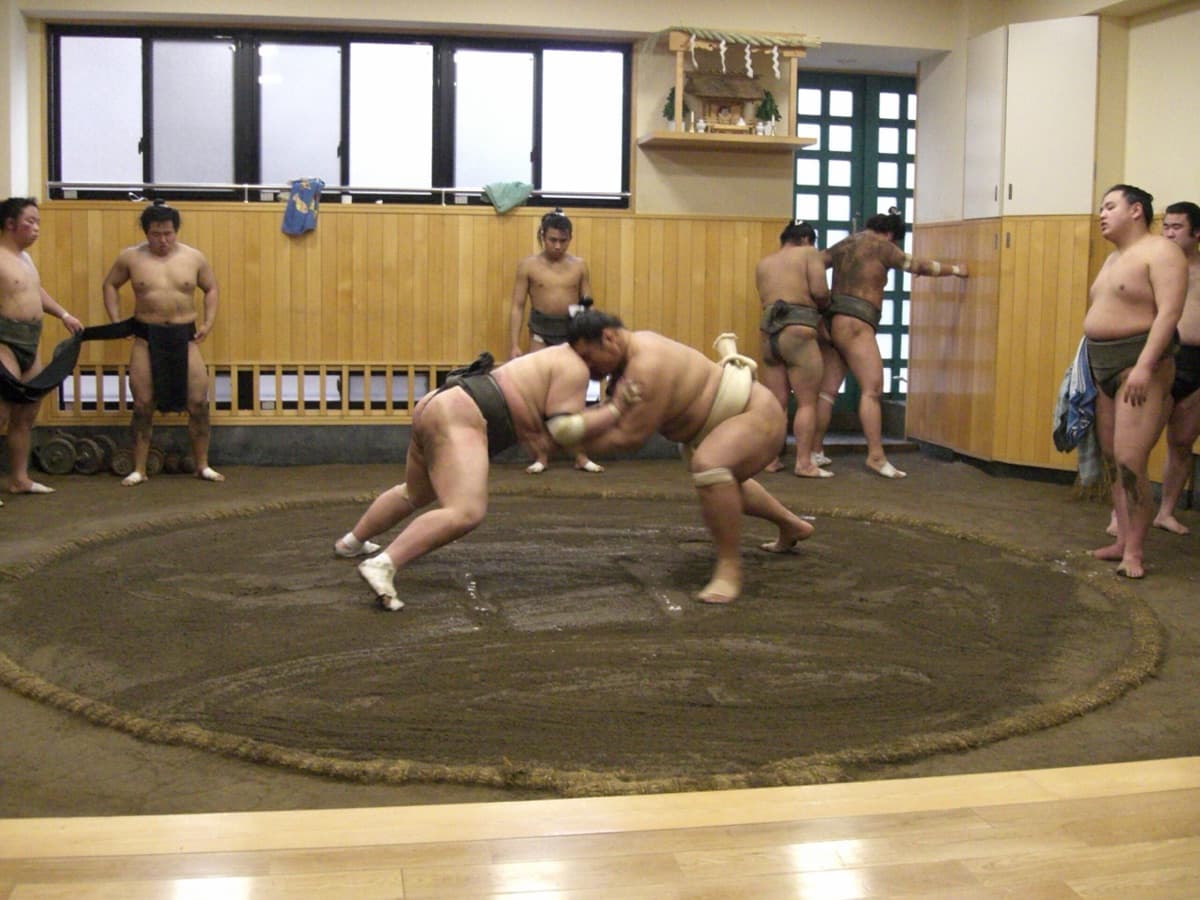
Not in Tokyo during a basho? You've still got options. Several sumo stables (heya) let visitors watch morning practice, and it's a rawer, closer look at the sport than the arena gives you. Arashio Stable in Ryogoku is the easiest to reach: as of writing, you can watch its early practice through a street-facing window for free, with no reservation needed, on most weekday mornings. Other stables such as Kasugano and Isegahama accept visitors but require arranging it in advance — and policies do change, so confirm before you turn up.
Etiquette here is strict and non-negotiable: stay silent, no flash photography, dress respectfully, and remember this is a working gym, not a show. If your dates miss both a tournament and stable practice, look for a jungyo — the regional exhibition tours the association runs between the official tournaments, generally in the even-numbered months, in cities around the country.
Watching practice between tournaments
If your trip falls outside the six tournament windows — or you simply want sumo at closer range than an arena seat allows — asageiko is the best way to see the sport: the stamping, the bellowing, the repeated collisions that fill a room the size of a classroom. Our self-guided tours include free mornings in Tokyo, which is when the stables practice, so a visit slots in without rebuilding your route — check the stable's visitor rules first, and feel free to ask us if you'd like help fitting one in.
What makes the difference is a guide. Watching through Arashio's window is free and atmospheric, but nobody explains what you are looking at. Several local operators run guided practice visits with English explanation, and with a guide alongside you, the drills stop being a blur of bodies and start making sense — why the same charge is repeated a hundred times, what the ranking hierarchy in the room means, where the sport's rituals come from. It turns twenty minutes of watching into a genuine lesson in sumo's history and culture.
Getting to Ryogoku Kokugikan
Reaching the arena is almost comically easy, which is half the reason it slots so neatly into a Tokyo trip. Ryogoku Kokugikan sits at 1-3-28 Yokoami in Sumida City, about a two-minute walk from the west exit of Ryogoku Station on the JR Sobu Line. The Toei Oedo subway line also stops at Ryogoku, a slightly longer walk from its own exit. From Tokyo Station the trip is well under 20 minutes; from Shinjuku it's a straight shot on the Sobu Line.
Because the venue is so central, it pairs with almost anything. Base yourself nearby using our where to stay in Tokyo guide, build the rest of the day around it with our Tokyo itinerary, and if you want to escape the city on a non-tournament day, our day trips from Tokyo guide has Kamakura, Nikko and Hakone options.
Fitting Sumo Into a Real Japan Itinerary
Here's how self-guided travelers usually work the tournament into a trip.
Option 1: Tokyo-focused, 5 days
- Day 1 — Arrive; check into a hotel near Ryogoku or Asakusa.
- Day 2 — Asakusa, Senso-ji and a Sumida River walk.
- Day 3 — Grand sumo (aim for a mid-week day to save money and dodge the crowds).
- Day 4 — Shibuya, Harajuku and Meiji Shrine.
- Day 5 — A day trip to Kamakura or Nikko.
Option 2: Multi-city with a sumo anchor
Book your sumo day first, then build outward. Because the venue and dates are fixed, the tournament makes a clean anchor for a two-week loop — Kyoto and Osaka slot in cleanly before or after your Tokyo stint via Shinkansen, and you can time your Tokyo nights around the day you want to be at the Kokugikan. This is exactly the kind of fixed-date puzzle we solve for travelers who'd rather not juggle it themselves.
💬 From our Japan travel team
Our self-guided tours include free days in Tokyo, so if your dates line up with a Tokyo basho (January, May or September) you can slot a sumo day in without rebuilding your whole itinerary. Tell us which day you want to be at the Kokugikan and we'll shape the rest of the trip around it.
Common Mistakes to Avoid
- Waiting until you land to buy tickets. For September 2026, sales opened August 8 and the whole tournament sold through before the end of the month.
- Assuming you can walk up on the day. The box office only sells on the day when advance inventory is left over — in September 2026 there was none, so there were no same-day tickets at all.
- Booking a box seat solo. Masu boxes are sold as a set of four — you'll pay for all of them.
- Showing up only for the top bouts. The ring-entering ceremonies and the yokozuna dohyo-iri are half the spectacle.
- Forgetting the re-entry rule. You typically get one re-entry and need to be back by around 5:00 pm.
- Counting on reselling a spare. Transferring tickets without permission is against the rules.
FAQ: Grand Sumo Tokyo, September 2026
Who won the September 2026 sumo tournament?
Yokozuna Onosato, with 12 wins and 3 losses — his sixth top-division title. He and Ozeki Aonishiki were level at 11–3 going into the final day, 27 September, and Onosato won their bout.
Were September 2026 sumo tickets sold out?
Yes. Every one of the 15 days sold out in the general sale, and there were no same-day tickets at the box office.
When is the next sumo tournament I can see?
The Kyushu Basho in Fukuoka runs 8–22 November 2026, with tickets on sale since 19 September; see our November 2026 guide. The next Tokyo tournament is 10–24 January 2027, with tickets on sale from 5 December 2026; see our January 2027 guide.
How can I watch sumo without a ticket?
NHK World-Japan shows a roughly 30-minute Grand Sumo Highlights program with English commentary covering the top-division bouts, usually the day after each day of the tournament, and NHK's Japanese channels broadcast it live every afternoon. The Japan Sumo Association's English site posts daily results, and the streets around Ryogoku Kokugikan are worth an afternoon on their own.
How much do sumo tickets cost?
These are the face-value tiers from the 2026 general sale: roughly ¥2,200 for a same-day general-admission ticket, about ¥3,500–¥8,500 for a reserved chair seat, ¥8,000–¥15,000 per person for a tatami box, and around ¥20,000 for ringside (tamari). Exact tiers vary by day, so check the official site before booking.
Is the September tournament a good one to attend?
Yes — it's in Tokyo, the easiest venue for first-timers; the late-September weather is comfortable; and the stakes are high heading into the year-end Kyushu tournament.
Do I have to stay for the whole day?
No. The lower divisions wrestle all morning to a near-empty hall. If you only want the stars, arrive around 2:00 pm for the top-division build-up and leave whenever you fade.
Can I bring children?
Yes, families are welcome. Each child who needs their own seat requires a ticket; a small child on your lap in a box seat generally does not.
What if my dates don't line up with a tournament?
Watch morning practice at a sumo stable, catch a jungyo regional-exhibition day, or pick a different city — the calendar moves through Nagoya in July, Tokyo in September and Fukuoka in November.
Plan Your Self-Guided Sumo Trip
Building a Japan trip around a fixed-date event takes a bit of choreography — ticket windows, hotel nights near the right station, and a backup plan when a session sells out — as all 15 days of the September 2026 basho did. You source your own tournament tickets (the official Ticket Oosumo site for November and January), and we handle everything around them: we turn a fixed date like a basho into a full self-guided itinerary, with the right hotel nights and rail booked early. And if your dates miss the basho entirely, our self-guided tours leave free mornings in Tokyo for a stable visit instead.
Dates and ticket on-sale timing per the Japan Sumo Association; seat tiers and prices vary by tournament and by weekday versus weekend, so confirm current figures on the official Ticket Oosumo site (ticket.sumo.or.jp) before you book. Prices shown are per the official Ticket Oosumo September 2026 listing and subject to change; availability changes daily during the sales window. Availability re-checked against the official Ticket Oosumo listing on August 24, 2026 — all dates sold out, no same-day sales. Last updated: September 28, 2026 — the tournament is over; the result as reported by NHK on September 27, and the November and January on-sale dates as listed on the official ticket site.