
Mount Fuji Autumn Leaves 2026: A Self-Guided Guide to Kawaguchiko in Fall
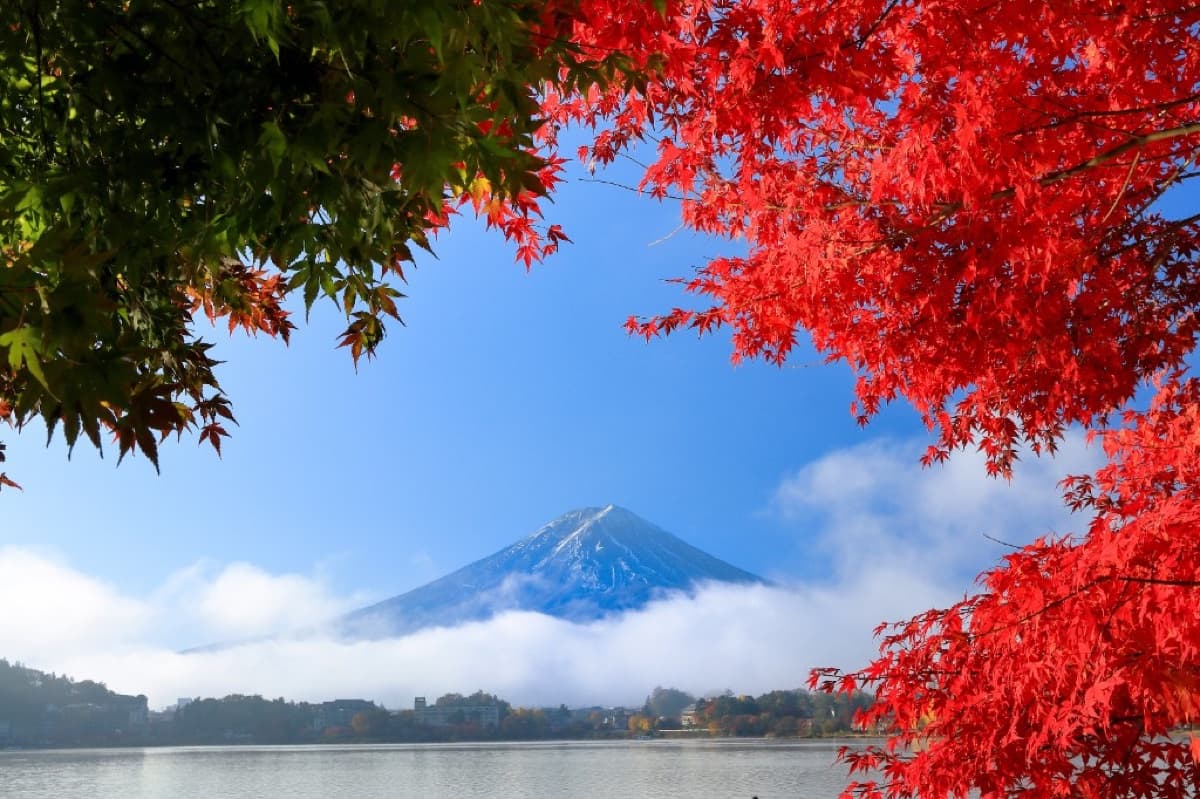
Fiery red maples, a snow-dusted volcano behind them, and lakes glassy enough to double the whole scene. Here's how to time the Kawaguchiko peak, get there from Tokyo, and fold it into a self-guided autumn trip that doesn't feel rushed.
If you're planning a Japan trip built around one iconic view, autumn at Mount Fuji is hard to beat. This guide is for independent travellers who want to see the Mount Fuji autumn leaves 2026 without booking a big group tour — and who need practical details that actually hold up when you're standing at Kawaguchiko Station with a backpack.
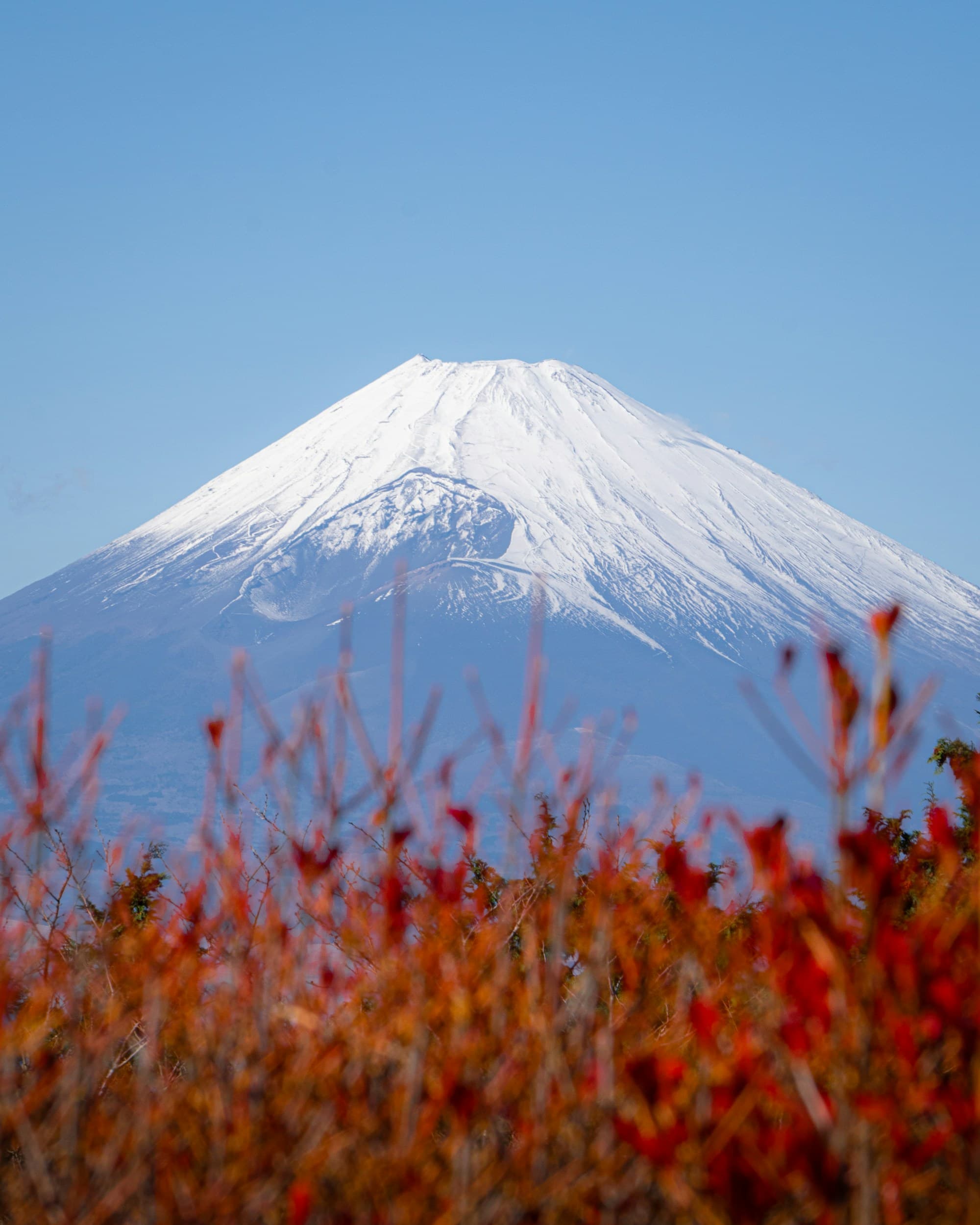
The short answer on timing: aim for early to late November 2026, with mid-November as your safest bet for peak colours around Lake Kawaguchi. The period from mid-October to late November is the most magnificent stretch for Mt Fuji autumn leaves, and the Fuji Five Lakes see the red maples peak around mid-November. The signature event you're planning around is the Fujikawaguchiko Momiji Festival, which historically runs the full month of November.
Below, you'll find how to time your visit, how to get there, which spots to hit, and how to fold everything into a self-guided itinerary. For the national picture, our Japan autumn leaves forecast 2026 tracks the whole koyo front, and Tokyo autumn leaves 2026 covers pairing Kawaguchiko with the city.
🍁 Quick Answer: Mount Fuji Autumn Leaves 2026
Peak is early-to-mid November 2026 around Lake Kawaguchi. The Fujikawaguchiko Momiji Festival runs the full month of November, with free entry and nightly illuminations at the Maple Corridor until 9:30 p.m. Stay overnight for the sunrise Fuji view — day-trippers miss it.
🍁 Peak
Mid-November
🎪 Festival
Nov 7–29
🚌 From Tokyo
~2 hrs bus
🎟️ Bus pass
¥1,500 / day
Why Kawaguchiko Is the Go-To Spot for Japan Fall Foliage
Lake Kawaguchi sits on the north side of Mt. Fuji, and that geography matters. Each of the Five Lakes offers a different view of the mountain, but only Lake Kawaguchi delivers the most complete and symmetrical cone reflected in the water — and in autumn you get maple trees layered in front of it.
The Fuji Five Lakes region — Kawaguchiko, Saiko, Yamanakako, Shojiko and Motosuko — all display fall colours, but Kawaguchiko has the highest concentration of viewing spots, food stalls and public transport. It's the easiest base for a first-time visitor to central Japan. Honestly, if it's your first autumn trip to Japan and you want that postcard shot, this is where you go.
When Do Autumn Leaves Peak at Mt Fuji?
Peak dates shift year to year — warm autumns push everything a week later; cold snaps pull it earlier. Here's how the season typically unfolds around the lake:
🍂 Kawaguchiko foliage, week by week
| Window | What to expect |
|---|---|
| Early–mid October | Too early. Lakeside maples are still green; only higher elevations start to turn. |
| Late October | First blushes, especially at elevation. Fewer crowds, but colours aren't at full strength. |
| Early–mid November | The sweet spot. North-shore maples turn vibrant and Fuji is often snow-capped. |
| Late November | Still gorgeous — more scattered, fallen leaves, a more symbolic mood. |
| Early December | Winding down. Some late colour in sheltered spots, but the festival has ended. |
💡 Check Japanese foliage maps and recent visitor reports in late October 2026 to fine-tune your dates.
Kawaguchiko Autumn Leaves 2026: Festival Dates and Details
The Fujikawaguchiko Momiji Festival is the main event. Based on recent years' patterns, the town has confirmed it for November 7–29, 2026, featuring the maple corridors, night illuminations, Fuji views and local food stalls. Always confirm the official dates on the Fujikawaguchiko tourism site before locking in accommodation.
Momiji Corridor: The Main Venue
The festival centres on the Momiji Corridor (Momiji Kairo) — a 150-metre stream lined with around 60 maples, with photo angles from the small bridge that crosses the canal. Across the main venue's Momiji Street and Momiji Road, some 400–500 maples grow densely, blending with the surrounding trees into a beautiful autumn gradation.
Night Illuminations
The festival's night illuminations are worth planning around. They're held daily at the Maple Corridor from sunset until 9:00 p.m. After dark, the red maples take on a completely different mood — warmer, more theatrical.
Food Stalls and Atmosphere
The main venue gets busy for a reason. Stalls line up around the corridor with one-hand foods like grilled potatoes and kebabs, plus hearty local dishes — Hoto (thick wheat noodles in a miso-and-pumpkin stew) and Fujinomiya yakisoba. Perfect for a chilly November evening.
How to Get to Kawaguchiko From Tokyo
🚆 Tokyo → Kawaguchiko at a glance
| Option | Time | One-way fare | Notes |
|---|---|---|---|
| Highway bus (Shinjuku) | ~2 hrs | ¥2,200 (¥2,000 online) | Cheapest & most direct; ~2 buses/hr. Book ahead in November. |
| Train via Otsuki | ~2.5 hrs | from ¥2,580 | JR Chuo Line to Otsuki, then Fujikyu Railway (¥1,170). One transfer. |
| Direct limited express | ~2 hrs | ¥4,200 | A few per day, seat reservations mandatory. |
💡 The Fujikyu Railway leg is not covered by the JR Pass. Bus travel times can stretch during autumn foliage season due to expressway traffic.
For the full transport rundown — every bus and train option, the Kawaguchiko sightseeing bus lines and a two-day plan — see how to get to Kawaguchiko from Tokyo.
For most self-guided travellers, the bus wins on price and simplicity. The train wins if you have a JR Pass covering the Chuo Line portion and don't mind the transfer at Otsuki Station. Book Shinjuku–Kawaguchiko tickets online in advance — seats fill fast on November weekends.
💬 From our Japan travel team
Kawaguchiko sits right at the foot of Mount Fuji and is a year-round favourite — and in autumn the foliage makes it especially spectacular. On our self-guided tours you can add a Kawaguchiko day-trip bus tour as an option: use one day of your Tokyo free time to head out from Shinjuku and enjoy Mount Fuji without any of the planning hassle. Get in touch and we'll set it up.
Getting Around Once You Arrive
Kawaguchiko is spread out. You can walk between the good spots, but you'll waste hours — use the sightseeing buses instead.
The Sightseeing Buses (Red, Green, Blue Lines)
Three Omni bus lines start from Kawaguchiko Station: the red Kawaguchiko Line (every 15 min) runs the eastern and northern shores; the green Saiko Line (every 30 min) covers the southern shore and Lake Saiko; the blue Narusawa–Shojiko–Motosuko Line (every 1–2 hrs) serves the western lakes. The red line is the one you'll use most for autumn leaves — it hits Oishi Park and stops within reach of the Momiji Corridor.
The Bus Pass
The Kawaguchiko–Saiko–Motosuko Bus Pass (1-day ¥1,500; 2-day ¥2,000) is valid on all three Omni lines and other regular buses across the lakes. Buy it at Kawaguchiko Station, or the 1-day pass on board. If you're doing more than three rides, the pass pays for itself.
A Word on Crowds
Autumn weekends are brutal. The buses get so packed that you sometimes can't board and end up waiting a long time. Go on a weekday if you can. If you can't, start early.
Top Autumn Foliage Spots Around Lake Kawaguchi
Momiji Corridor (Maple Corridor)
The main venue for the Kawaguchiko festival, and the photo you probably came for — covered in detail above.
Oishi Park
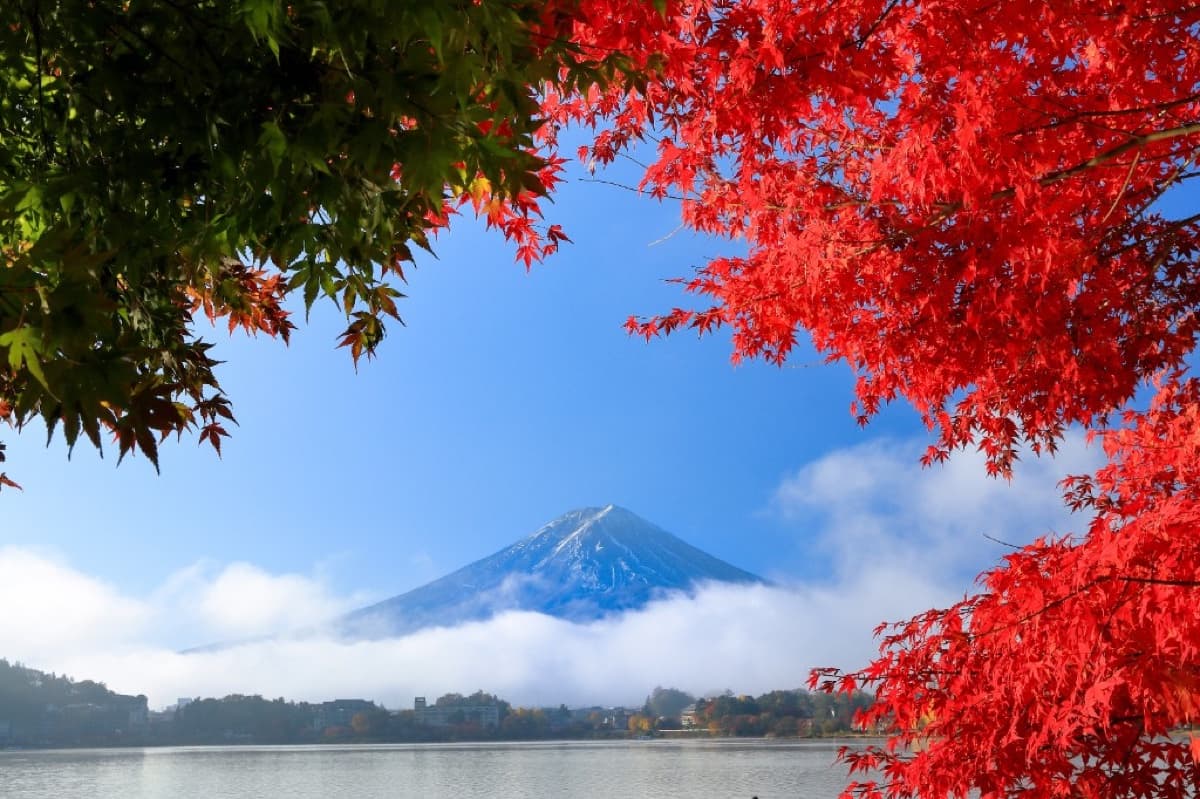
On the north shore, the last stop on the red-line bus, with an open view of Mt. Fuji across the lake. From here you get both Lake Kawaguchi and the mountain in one frame — that magnificent landscape shot with autumn colours in the foreground and Fuji behind.
Momiji Tunnel
A famous photo spot about 15 minutes by car from the festival venue — a stretch of road canopied by maple trees. Gorgeous, but cramped with photographers on peak weekends.
Koyodai Observation Deck
For a wider view of the sea of trees around Fuji, head up to Koyodai. Its best viewing period is early October to early November — a little earlier than the lakeshore, so it's a good option if you arrive in late October.
Chureito Pagoda (Fujiyoshida City)
Not directly on Lake Kawaguchi, but close. Famous for Fuji framed with cherry trees in spring — and in autumn those same cherry trees turn copper-red, adding to the maple colour. A classic add-on if you have a third day.
Mt. Fuji Panoramic Ropeway
A bird's-eye view of the lake and fall colours from an observation deck above the shore. Easy to reach on foot from Kawaguchiko Station or by red-line bus.
Building a Real Itinerary: 2 Days in Kawaguchiko
This assumes you stay overnight — which you should. Day-trippers miss the illuminations and the early-morning Fuji view.
🗓️ Two days, paced for the light
| When | What you're doing |
|---|---|
| Day 1 — midday | Highway bus from Shinjuku, arrive around lunch, drop bags at your ryokan (many have onsen). |
| Day 1 — afternoon | Red-line bus to Oishi Park; walk the north-shore promenade. |
| Day 1 — evening | Momiji Corridor for hoto or yakisoba, then stay for the night illuminations. |
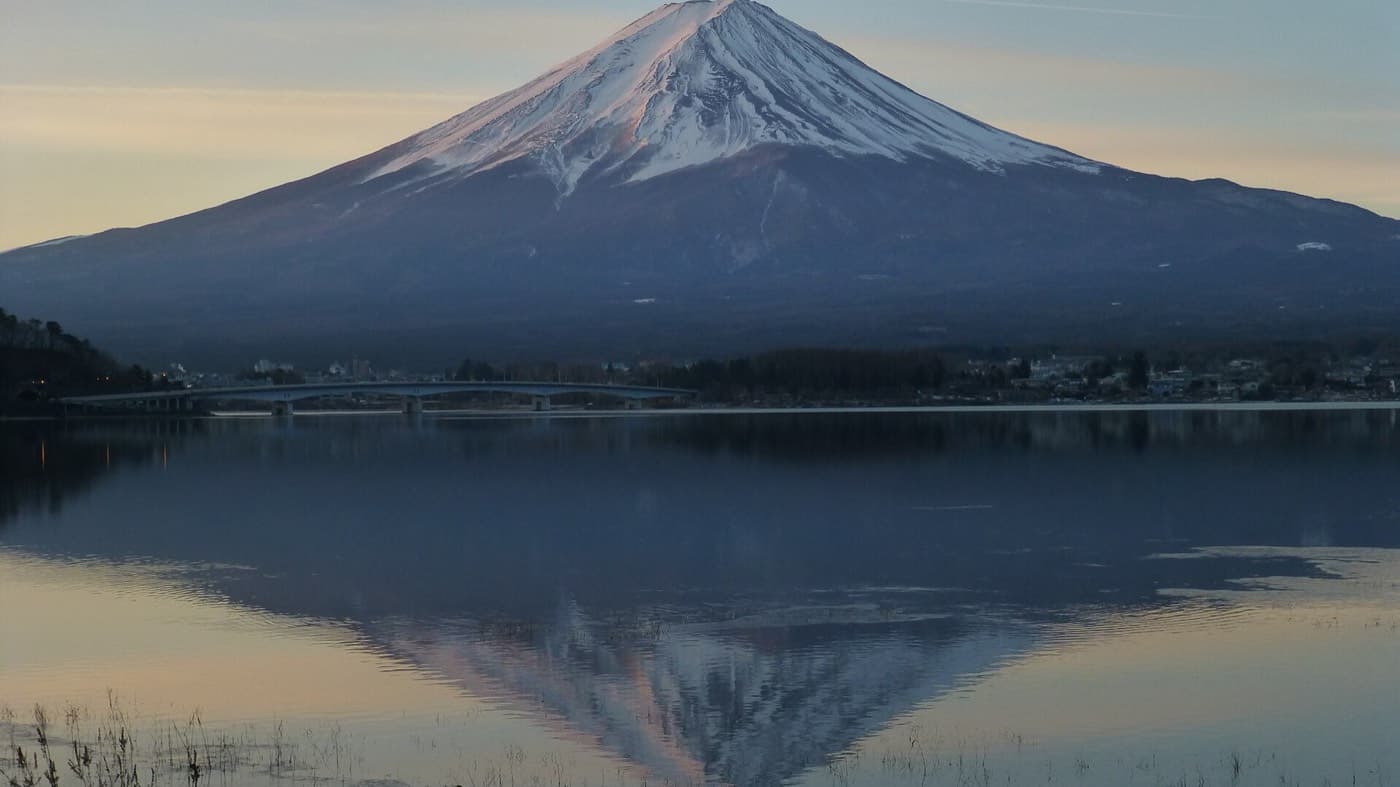
| Day 2 — early AM | The move: 6–7 a.m. lakeshore for the mirror-reflection Fuji shot before clouds roll in. |
| Day 2 — late AM | Ride the ropeway to the observation deck, lunch, then bus back to Tokyo. |
💡 With a third day, add Chureito Pagoda in Fujiyoshida or loop down to Lake Saiko for fewer crowds.
Common Mistakes to Avoid
- Going on a weekend. Weekends during the festival are packed, and buses fill beyond capacity. Weekdays are far smoother.
- Not checking foliage forecasts. Peak dates shift year to year. Check Japanese weather-service foliage maps and recent visitor reports in late October.
- Assuming you can see Fuji anytime. Fuji hides behind clouds a lot; mornings are your best shot. Build in flexibility so you get a second attempt if day one is cloudy.
- Skipping the bus pass. If you're hitting more than two spots, buy it at Kawaguchiko Station the moment you arrive.
- Underestimating the cold. November averages ~7°C (highs ~13°C, lows near 1°C), and it's colder by the lake at night during illuminations. Bring layers.
Autumn vs Other Seasons at Mount Fuji
- Spring (cherry trees): beautiful but brief; Chureito Pagoda with blossoms is iconic, but no red maples or reliable snow cap.
- Summer: green everywhere and hiking season on Fuji itself, but hazier views and often a bare, snowless peak.
- Autumn foliage: peak colours plus a snow-capped Fuji — the visual feast most photographers want.
- Winter: crisp air and the best Fuji visibility, but no foliage. Hot springs feel extra good.
Autumn hits the sweet spot for scenery lovers — which is exactly why the Fuji area gets so busy from October to mid-November. Our autumn in Japan 2026 guide has the wider seasonal picture, and Japan in November 2026 covers the month in detail.
Turning This Into Your Wider Japan Trip
Japan's fall foliage rolls south from northern Hokkaido starting in September, sweeps through the Japanese Alps in October, then hits central Japan and Tokyo in November. If Kawaguchiko is your anchor, sequence the rest north-to-south to chase the colour wave:
- Fly into Tokyo (Haneda or Narita); spend two or three days.
- Head to Kawaguchiko for two nights, hitting peak foliage on a weekday.
- Continue to Hakone or Kyoto — both extend the fall-colour experience with different scenery.
- Return via Tokyo for late-November foliage in the city parks — see our Tokyo autumn leaves 2026 guide.
Self-guiding this route is very doable. What you need is a solid rail-and-bus plan, booked accommodation, and a rough day-by-day sketch that leaves room for weather. That's exactly what we build.
Self-Guided Routes for the 2026 Autumn Colour Season
The colour moves south for six weeks — Hokkaido in early October, the Japan Alps and Takayama in late October, Kyoto and Nara in the second half of November. These are the routes we run that follow it, with the month each one is built for.
| Route | Length | From (per person) | Why this autumn |
|---|---|---|---|
| Discover Hokkaido: Nature & Scenic Views (HD001) | 7 days | $3,700–4,300 | Sounkyo Gorge, Lake Akan and Shiretoko peak in early to mid October — the first colour of the season. |
| Spirit of Tradition: Shirakawa-go & Cultural Japan (GR009) | 14 days | $4,100–5,900 | Takayama for its Autumn Festival (9–10 October), Shirakawa-go in late October, Kyoto and Nara in November. |
| Japan Highlights & World Heritage (GR002) | 12 days | $3,300–4,800 | Kyoto and Nara at peak colour in the second half of November. |
| Cultural Essence: Kyoto & Kanazawa Short Escape (GR006) | 12 days | $2,800–4,200 | Kenrokuen and Kyoto within the same fortnight; the lowest-priced twelve-day route we run. |
| Koyasan: Sacred Sites and Quiet Beauty (KM003) | 12 days | $3,500–5,200 | Koyasan’s maples turn in early November. Departures run April to November. |
| Hot Springs & Highlights: Kinosaki & Gero (HS002) | 14 days | $4,300–5,700 | Kinosaki’s crab season opens on 7 November — colour by day, crab and the outdoor baths by night. |
Interested in a tour? Click the route name above, or search by route code in the top-right Search bar.
For the month itself, see Japan in October 2026 and Japan in November 2026; for the beds that sell out first in colour season, where to stay in Kyoto names the hotels our routes actually book.
Prices are per person on a twin-share basis from our current price list and move with the departure date; departure windows are as the catalogue listed them on 22 September 2026. Ask us for an exact quote for your dates.
Japan Trip Cost Calculator (2026)
Set your trip below — the estimate updates instantly. Yen prices are converted at a rounded ¥150 to the dollar; the market rate is about ¥157 in September 2026, which makes yen costs a few percent cheaper than shown.
Intercity is priced as point-to-point tickets unless you add the pass — on the Tokyo–Kyoto–Osaka route the pass usually costs more than the tickets.
Estimated total
$4,530
$2,265/person · $453/day · 2 travelers, 10 days
Your trip settings and estimate will be copied into an editable inquiry. Add your travel dates to ask for a free quote.
This is a DIY planning estimate, not a package price. Our tours have set itineraries and include the hotels and transport listed on each tour page. International flights are extra; meals, sightseeing and room arrangements vary by route.
Planning an autumn trip with a day at Kawaguchiko and Mount Fuji? Get in touch through Plan My Trip on our self-guided tours site, and we’ll suggest the tours that best fit your dates and plans.
FAQ: Mount Fuji Autumn Leaves 2026
When exactly will autumn leaves peak at Kawaguchiko in 2026?
Most years, peak colour lands in mid-November around Lake Kawaguchi. Check foliage forecasts in mid-October 2026 to refine your dates, since warm autumns push the peak later.
Is the Kawaguchiko Momiji Festival free?
Yes. Entry to the main venue and the illuminations is free. You only pay for food, drinks, and any museums or attractions you enter.
Can I do it as a day trip from Tokyo?
Technically yes, but you'll miss the illuminations and the sunrise Fuji view. Even one overnight makes a big difference.
Do I need a car?
No. The red-line sightseeing bus covers the main spots. A car helps for the Momiji Tunnel or exploring beyond Kawaguchiko, but it's not required.
What if it's cloudy and I can't see Fuji?
The foliage is still beautiful on its own. Try again the next morning — clouds often clear by 6–7 a.m. One more reason to stay overnight.
Are the buses hard to catch during the festival?
On weekends, yes — expect delays, though extra buses are often added on the red line. Weekdays are much smoother.
Is Kawaguchiko good for hot springs?
Yes. Many ryokan and hotels around the lake have onsen baths, some with Fuji views from the tub — exactly what you want after a cold day chasing colour.
Turn This Into a Real Itinerary
Timing Fuji is one thing. Building a working itinerary with trains, the right bus pass, a lakeside ryokan and backup days for cloud cover is another. That's what we do: match your dates to the foliage, lay out a self-guided route, and flag the crowd traps so you're not stuck in a Kawaguchiko bus queue at 11 a.m.
💬 From our Japan travel team
Lakeside rooms with a Fuji view are the first to sell out — book at least two months ahead for a peak-November weekend, and aim for a weekday if your dates flex. Talk to us early and we'll build the route with a buffer day in case the forecast slides.
Fujikawaguchiko Momiji Festival dates, Maple Corridor illumination hours and bus-pass fares per Fujikawaguchiko town tourism information; Shinjuku–Kawaguchiko bus and Otsuki train fares per Fujikyu / Keio operators. Festival dates and foliage timing shift with weather — confirm the current-year schedule and the Japan Meteorological Corporation koyo forecast before booking non-refundable travel. Last updated: July 2026.
Related Articles
Kawaguchiko: The Practical Guide to Seeing Mount Fuji from Tokyo
17 min read
Japan Autumn Leaves Forecast 2026: Latest Dates City by City, and Where the Colors Are Now
14 min read
Hakone Autumn Leaves 2026: A Self-Guided Traveler's Guide to Fall Foliage Near Tokyo
13 min read