Grand Sumo January 2027: How to See the Hatsu Basho on a Self-Guided Japan Trip
January 10–24, 2027 at Ryogoku Kokugikan — 15 straight days of top-division sumo, with tickets on general sale from December 5, 2026. Dates, seat types and prices, the daily rhythm, etiquette, and how to build a January trip around it.
The Hatsu Basho is the first grand sumo tournament of the year, and for a lot of independent travelers it is the single most electric thing you can do in Tokyo in winter. If you are planning a January trip and wondering whether to build your itinerary around it, this guide covers the dates, tickets, seating, etiquette, and how to slot it into a wider self-guided route.
🏆 Quick Answer: Grand Sumo January 2027
- Dates: January 10–24, 2027 — 15 straight days.
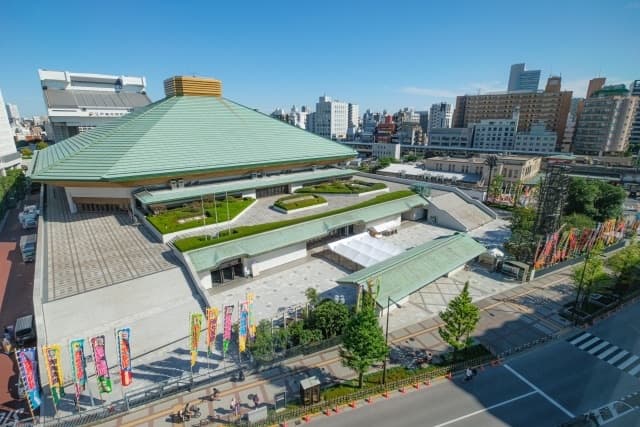
- Venue: Ryogoku Kokugikan, 1-3-28 Yokoami, Sumida-ku, Tokyo — two minutes from JR Ryogoku Station.
- Tickets on sale: December 5, 2026 for general public sale. The New Year tournament frequently sells out on day one.
- Prices: arena (chair) seats from about ¥3,500, realistically ¥5,000–¥10,000; box seats (masu-seki) from around ¥40,000 for four people.
- Best time to arrive: from about 2 p.m. — the top division enters the ring around 3:45 p.m. and the biggest bouts run after 4 p.m.
When and Where the January Tournament Happens
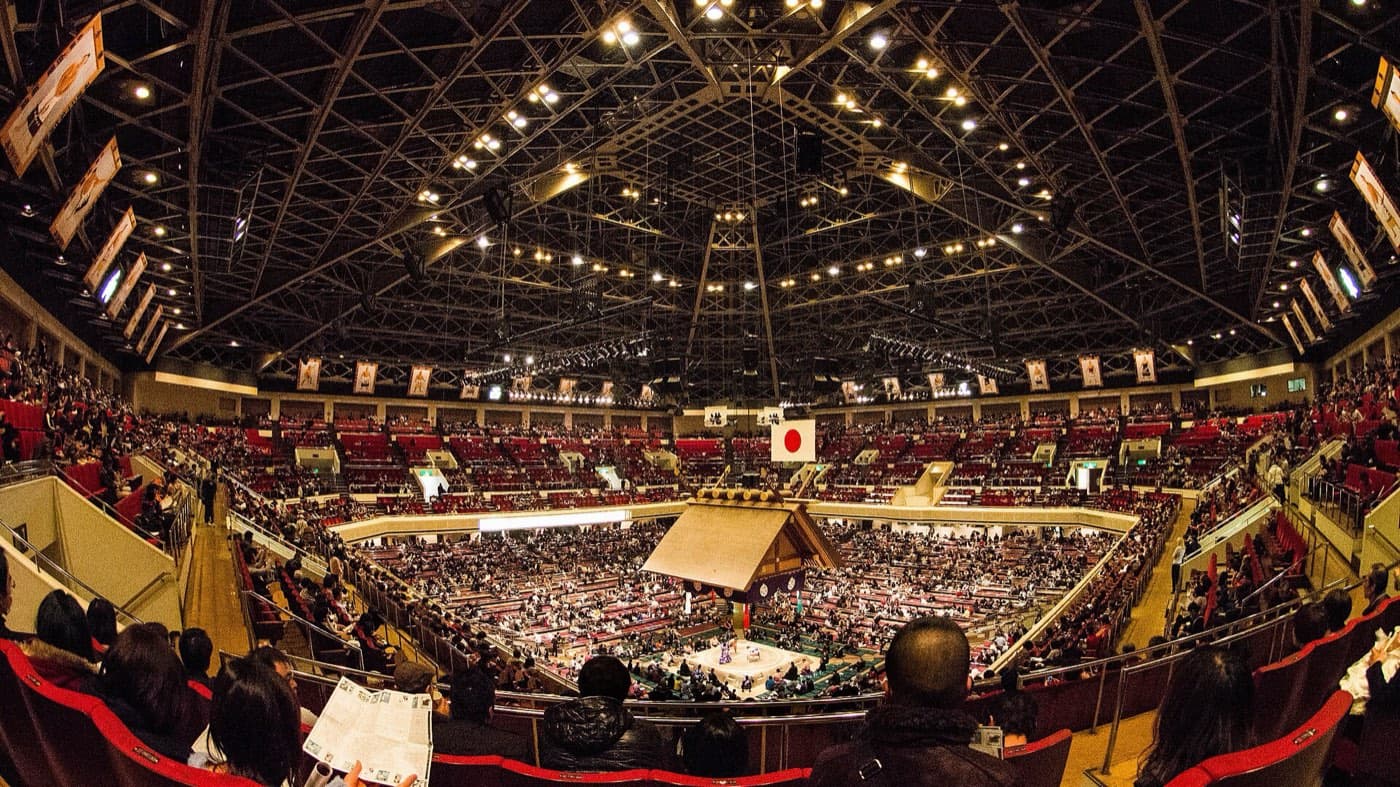
The January tournament, the Hatsu Basho, runs January 10 to January 24, 2027 — 15 straight days of matches at Ryogoku Kokugikan, the sport's spiritual home, in Tokyo's Sumida ward just east of the Sumida River. Tickets go on general sale from December 5, 2026, and pre-orders through some resellers open earlier, in late August of the previous year.
The venue address is 1-3-28 Yokoami, Sumida-ku, Tokyo. It is a two-minute walk from the West Exit of JR Ryogoku Station on the Sobu Line, and five minutes from Exit A3 of Ryogoku Station on the Toei Oedo Line. From Shinjuku, Shibuya or Tokyo Station you are looking at 20–30 minutes on public transport.
The Daily Schedule
Doors open at 8:45 a.m. on most days, later on the final weekend (10:30 a.m. on the closing Friday, 10:00 a.m. on the closing Sunday). Bouts run until around 6 p.m.
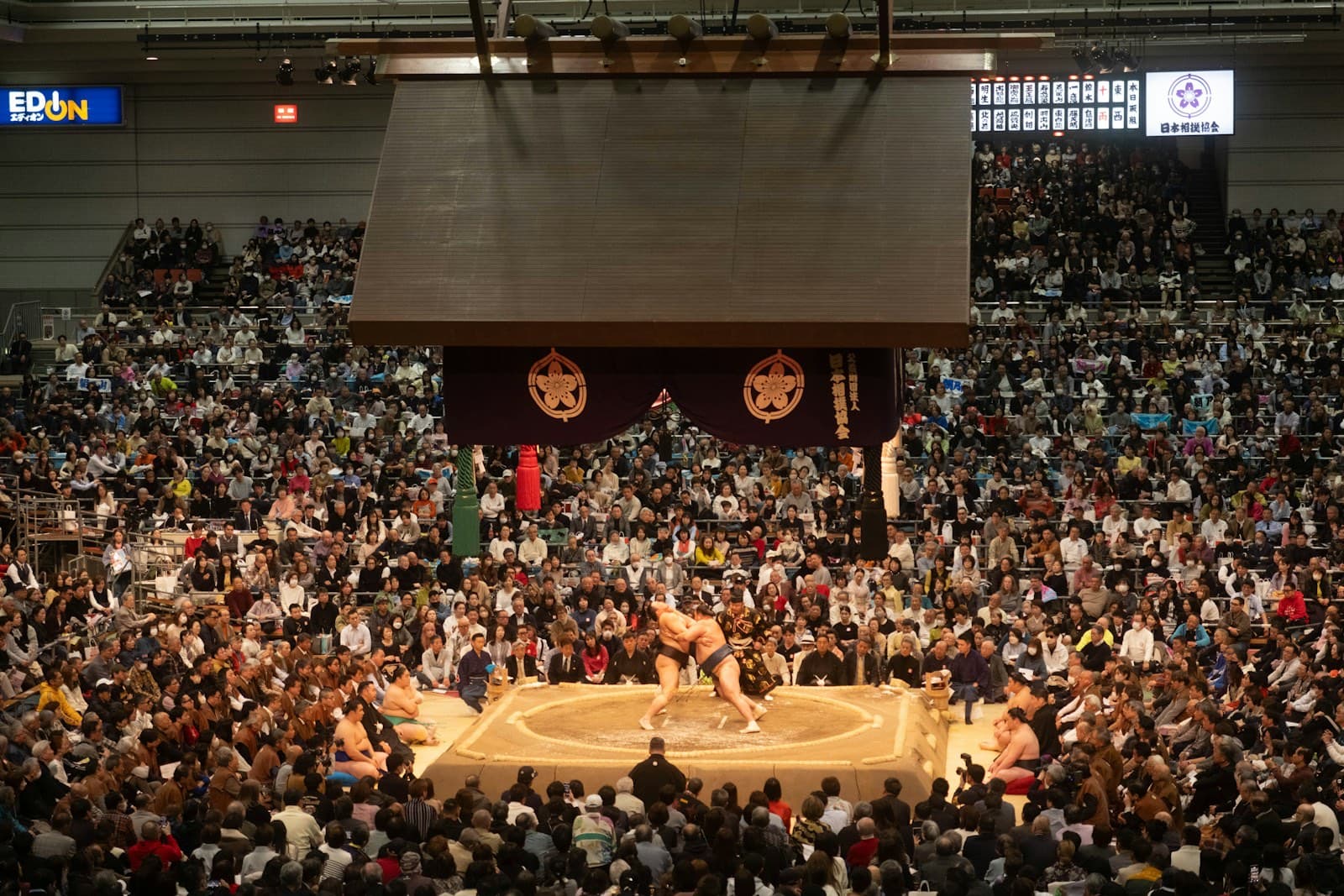
The excitement builds slowly. Morning bouts feature lower-ranked wrestlers from the bottom four divisions; juryo comes on around 2 p.m., and the top makuuchi division enters the ring at roughly 3:45 p.m. The biggest names and the fullest house come after 4 p.m. If you only have an afternoon, arriving at 2 p.m. gets you the whole build-up.
How the Sumo Rankings Work
Sumo runs on a strict hierarchy called the banzuke, republished before every tournament. There are six divisions, from lowest to highest: Jonokuchi, Jonidan, Sandanme, Makushita, Juryo and Makuuchi.
The critical dividing line sits between Juryo (second division) and Makushita (third) — the boundary between paid professionals and unpaid trainees. Only on promotion to juryo does a wrestler earn a salary and get to wear the formal topknot.
Within makuuchi, the internal ranks from the top down are yokozuna, ozeki, sekiwake, komusubi, then the numbered maegashira. Yokozuna is the highest rank in the sport and is only awarded to wrestlers who win two major tournaments in a row.
One practical consequence for ticket-buyers: wrestlers in the top two divisions compete every single day of the tournament, while the bottom four divisions fight on just seven of the fifteen days. Whichever day you pick, you will see makuuchi.
Who to Watch at Hatsu Basho 2027
The January banzuke is confirmed in late December 2026, so treat any earlier prediction as provisional — injuries and the November results move everything. That said, these are the names shaping the top of the sport going into 2027:
- Onosato — reached sumo's highest rank for the May 2025 tournament, a record-fast 13 tournaments after his professional debut, and only the second college-trained wrestler to make yokozuna after Wajima.
- Hoshoryu — promoted to yokozuna in January 2025.
- Aonishiki — Ukrainian-born, of the Ajigawa stable, and the young ozeki charging up behind them after back-to-back titles.
Two yokozuna on the banzuke plus an ozeki in form is what gives a tournament real bite: when there is more than one yokozuna, the final Sunday tends to deliver a genuinely tense finish.
Tickets: How to Actually Get In
Tickets for the January tournament go on general sale in early December — December 5, 2026 for this edition. New Year tickets are the most sought-after of the Tokyo tournaments and frequently sell out on the first day of public sale. Set a calendar reminder, create your account beforehand, and be ready to check out fast.
Where to Buy
- The Japan Sumo Association's official ticket site (sumo.pia.jp) — the primary route
- Ticket Oosumo (English site)
- Licensed resellers that ship internationally
- The box office at Ryogoku Kokugikan for same-day tickets on quieter weekdays
Two practical warnings. Online purchases are often collection-only at a Seven-Eleven in Japan — check the confirmation screen and email for the pickup method. And tickets cannot be changed or cancelled once purchased, for any reason. Organizers can also alter schedules at short notice, so check the official site before you travel.
🎫 Seat Types and Prices
| Seat | Price | What it is |
|---|---|---|
| Arena (chair) seats | from ~¥3,500; realistically ¥5,000–¥10,000 | Upper-level Western seating. Easiest option for solo travelers and the best value for a first visit. |
| Box seats (masu-seki) | from ~¥40,000 for 4 people | Tatami squares. Shoes off, cushions provided, four guests per box as the basic rule. |
| Ringside (tamari-seki) | rare and expensive | Cushions at the edge of the dohyo. No eating or drinking — but you feel every impact. |
💡 For a first-timer, a mid-tier arena seat is the sweet spot.
A Day at the Kokugikan
The tournament day runs on a rhythm, from the early-morning lower divisions to the top-division entrance in embroidered kesho-mawashi aprons. The moments worth timing your visit around:
- ~2:15 p.m. — the juryo ring-entering ceremony
- ~3:45 p.m. — the makuuchi ring-entering ceremony, the most photogenic moment of the day
- ~4:00–5:55 p.m. — the top-division bouts, when the arena is fullest and loudest
- End of day — the yumitori-shiki, the bow-twirling ceremony that closes proceedings
One thing that surprises first-timers: the fastest top-division bout can be over in under three seconds. Blink and you miss it.
💬 From our Japan travel team
Sumo is Japan's national sport, and Ryogoku Kokugikan is where it lives. If your trip overlaps a Tokyo tournament, go — there is nothing else quite like a full house on the second Sunday.
And if your dates fall outside the tournament calendar, you are not out of luck: one of our self-guided itineraries includes a guided sumo training session, where you watch a stable practise and get the traditions and etiquette explained by an English-speaking guide. Departures for it are limited, so if that is the experience you want.
The Grand Sumo Calendar in Context
There are six tournaments a year, each 15 days: three in Tokyo (January, May, September), one in Osaka (March), one in Nagoya (July) and one in Fukuoka (November). Our guides to the September Tokyo tournament and the November Kyushu basho cover the other two you can realistically build a trip around.
The January tournament sets the tone for the year. A wrestler who wins here starts building his case for the next promotion — two consecutive strong tournaments with a title is often what gets an ozeki promoted, and eventually a yokozuna crowned.
Etiquette and Fun Facts
- Cushion throwing. When a maegashira beats a yokozuna, the crowd hurls the flat arena cushions. It is officially discouraged, and it still happens.
- Grip-locked bouts. When two wrestlers dig in on the mawashi belt, a match runs far past the average — and the hall goes quiet.
- No flash, no tripods, no big luggage. Box seats have room for one cushion per person, so a suitcase simply will not fit.
- The Emperor's Cup is presented to the makuuchi champion on the final day. The closing ceremony is worth staying for.
Food and Drink
You can eat inside the venue — bento, yakitori, beer. But the better move is chanko-nabe near the station: the hot pot that sumo stables cook by the vat, served at restaurants around Ryogoku, some of them run by retired wrestlers.
Winter vs Other Seasons for a Sumo Trip
January in Tokyo is cold but dry and sunny — good walking weather. You miss the cherry blossoms of late March (see our Tokyo cherry blossom 2027 guide if that is your priority), the June rainy season, the humid July–August months, and the Golden Week crush. If you want sumo plus culture without fighting crowds, Hatsu Basho beats the May and September Tokyo tournaments. Our Japan in January 2027 guide sets the wider month in context.
Worth knowing: outside tournament windows Ryogoku can feel deserted. The neighbourhood only really comes alive during a basho.
Building a Real Itinerary Around Hatsu Basho 2027
🗓️ A 7-Day Frame
| Days 1–2 | Arrive Tokyo. Base near Ueno, Asakusa, or Ryogoku itself. |
| Day 3 | Sumo day — a full afternoon session (arrive 2 p.m., stay to the close). |
| Day 4 | Sumo Museum inside the Kokugikan, the Edo-Tokyo Museum area, chanko lunch. |
| Day 5 | Day trip to Nikko or Kamakura. |
| Day 6 | Optional second sumo day for the middle-weekend energy, or Yanaka and Nezu. |
| Day 7 | Depart. |
If you can only pick one day, aim for the second Saturday or Sunday — the busiest days, with the most drama and the fullest house. Weekdays in the first week are far easier for last-minute tickets.
Common Mistakes to Avoid
- Turning up at 4 p.m. with no ticket. The good seats went in December.
- Assuming everything takes a credit card. Bring cash.
- Booking a hotel far out and leaving early — you miss the closing ceremonies.
- Ignoring the lower-ranked wrestlers. Some of the best sumo of the day happens in juryo.
- Forgetting that online tickets cannot be refunded or changed once purchased.
Plan Your Self-Guided Japan Trip
If you would rather skip the guesswork on rail passes, hotel neighbourhoods, and how to combine Hatsu Basho 2027 with the rest of Japan, that is what selfguidejapan.com does: practical, well-paced itineraries for independent travelers — from the sumo ring to the mountains — without the tour-bus feel.
FAQ
When exactly is Grand Sumo January 2027?
The Hatsu Basho 2027 runs January 10–24 at Ryogoku Kokugikan in Tokyo — 15 consecutive days.
When do tickets go on sale?
General public sales open December 5, 2026, through the official Japan Sumo Association ticket portal. The New Year tournament often sells out on the first day.
How much are tickets?
Arena seats run from about ¥3,500 at the top of the upper deck to around ¥10,000 for lower rows. Box seats for four start around ¥40,000.
Do I need to speak Japanese?
No. The official site has English, English audio guides are available on site, and the venue has bilingual signage.
Can I bring food and drink?
Yes in most seat categories. Ringside tamari-seki seats do not allow eating or drinking.
What if the tournament sells out?
Try same-day tickets at the box office on a weekday, or a licensed reseller. Sumo stable morning practice viewings are another way to see the sport in the same window.
Is Hatsu Basho better than the other tournaments?
For international visitors, yes: January weather is stable, Tokyo is easy to base in, and the New Year atmosphere adds something you do not get in Nagoya or Fukuoka.
Planning a January 2027 Trip Around the Basho?
Tickets open December 5 and the New Year tournament routinely sells out that day — so the trip needs to be shaped before then. Our self-guided itineraries handle the rail and hotels around your tournament day.
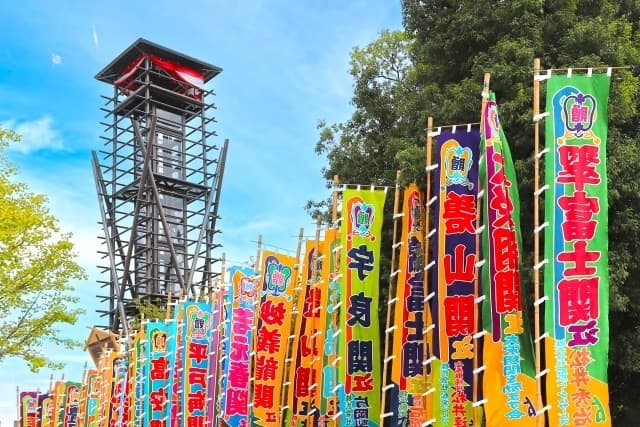
Tournament dates (January 10–24, 2027), venue and the December 5, 2026 general on-sale date per the Japan Sumo Association's published 2027 honbasho schedule and ticketing announcements; the banzuke for this tournament is published in late December 2026, so rankings and the wrestlers named here are provisional until then. Seat prices are indicative and vary by day and row — confirm on the official ticket site before booking. Photo: Ryogoku Kokugikan during the January tournament, via Wikimedia Commons (CC BY 2.0). Last updated: August 2026.