
Aomori Nebuta Matsuri 2026: A Self-Guided Traveler's Plan for Japan's Wildest Summer Festival
August 2–7, 2026: around 20 giant illuminated floats light up Aomori over six nights. The full schedule, reserved seats, how to dance as a haneto, where to stay, and how to weave Nebuta into a wider Tohoku trip.
If you're trying to lock down dates for Aomori Nebuta Matsuri 2026, here's the short answer: the festival runs on fixed dates every year, August 2 to 7. The 2026 edition has just finished; the next is August 2–7, 2027, when around 20 giant illuminated floats will again light up the streets of Aomori over six nights. Mark it in your calendar. Book everything early.
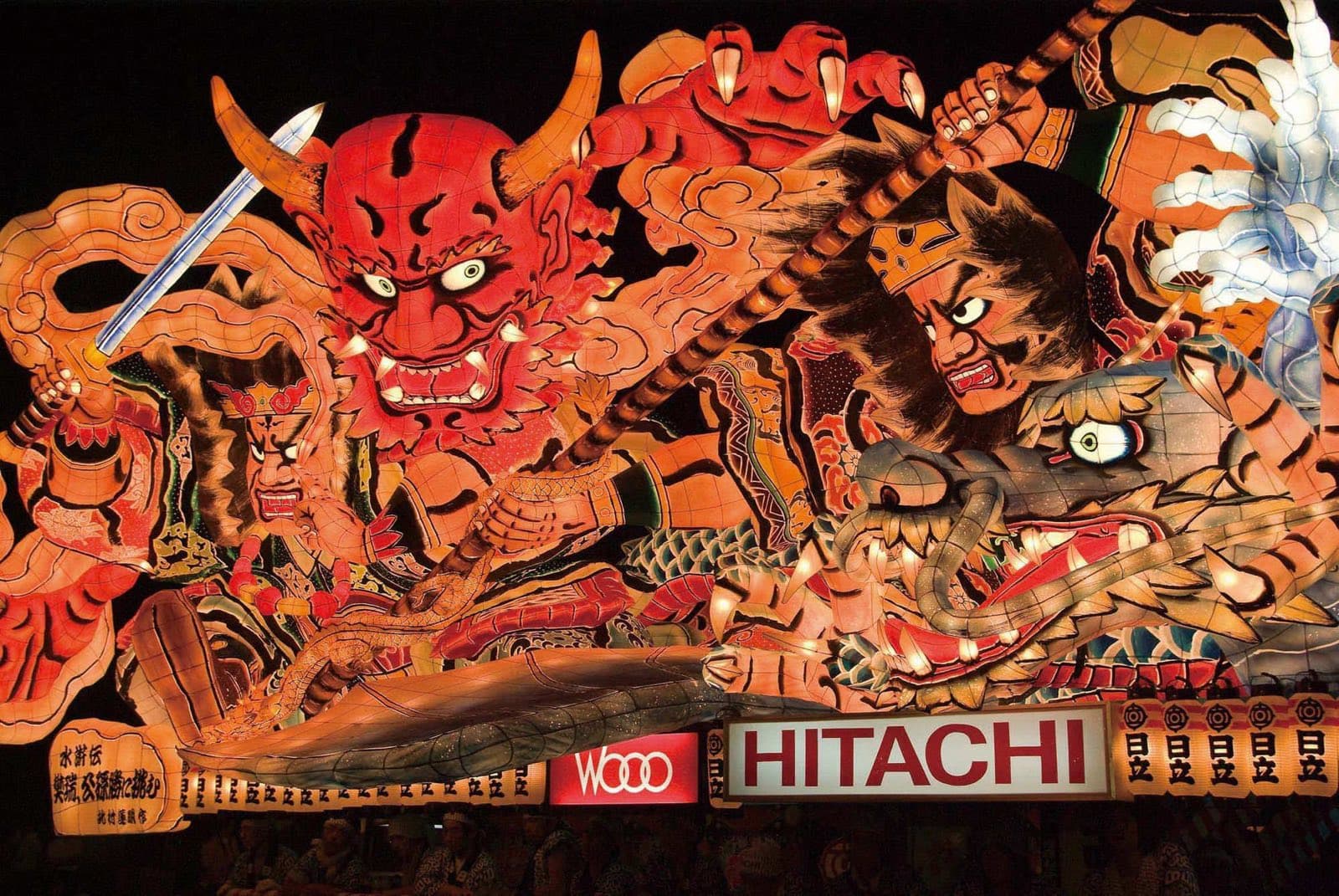
This is the big one. The Nebuta Matsuri is one of the Three Great Festivals of Tohoku, and for six days in early August, Aomori City becomes the loudest, brightest place in Japan. Massive paper-and-wire warriors glide through the streets, taiko drums shake the pavement, and thousands of dancers chant "Rassera, Rassera" until you can't help but join in. This guide is built for independent travelers putting together their own itinerary — the 2026 schedule, how to get reserved seats, how to dance as a haneto, where to stay, and how to weave Nebuta into a wider Tohoku trip without it eating your whole holiday.
🏮 Quick Answer: Aomori Nebuta Matsuri 2026
- Dates: August 2–7, 2026 (same dates every year).
- Peak nights: Aug 4–6, evening parades from 6:45 PM with the full lineup of large floats.
- Finale: Aug 7 — daytime parade from 1:00 PM, then a sea parade with ~11,000 fireworks over Aomori Bay.
- Reserved seats: on sale June 28, ¥3,500 + ¥1,000 admin fee (covers Aug 2–6 only).
Nebuta Festival 2026 Dates & Schedule
The dates are fixed every year, and 2026 is no exception. The festival starts at 7:00 PM on August 2 (Sun) and 3 (Mon), and at 6:45 PM from August 4 (Tue) to 6 (Thu). On the final day, August 7 (Fri), there is a daytime parade from 1:00 PM and an evening sea parade with fireworks from around 7:15 PM.
🗓️ Aomori Nebuta 2026 night-by-night
| Date | Start | What to expect |
|---|---|---|
| Sun Aug 2 | 7:00 PM | Evening parade, smaller crowds, child + some large floats |
| Mon Aug 3 | 7:00 PM | Evening parade, warm-up night |
| Tue Aug 4 | 6:45 PM | Peak — full lineup of large nebuta |
| Wed Aug 5 | 6:45 PM | Peak night |
| Thu Aug 6 | 6:45 PM | Peak night |
| Fri Aug 7 | 1:00 PM + 7:15 PM | Daytime parade, then sea parade + ~11,000 fireworks over Aomori Bay |
💡 If you only have one night, aim for Aug 4, 5, or 6. For the fireworks finale, you need Friday.
What Actually Happens Each Night
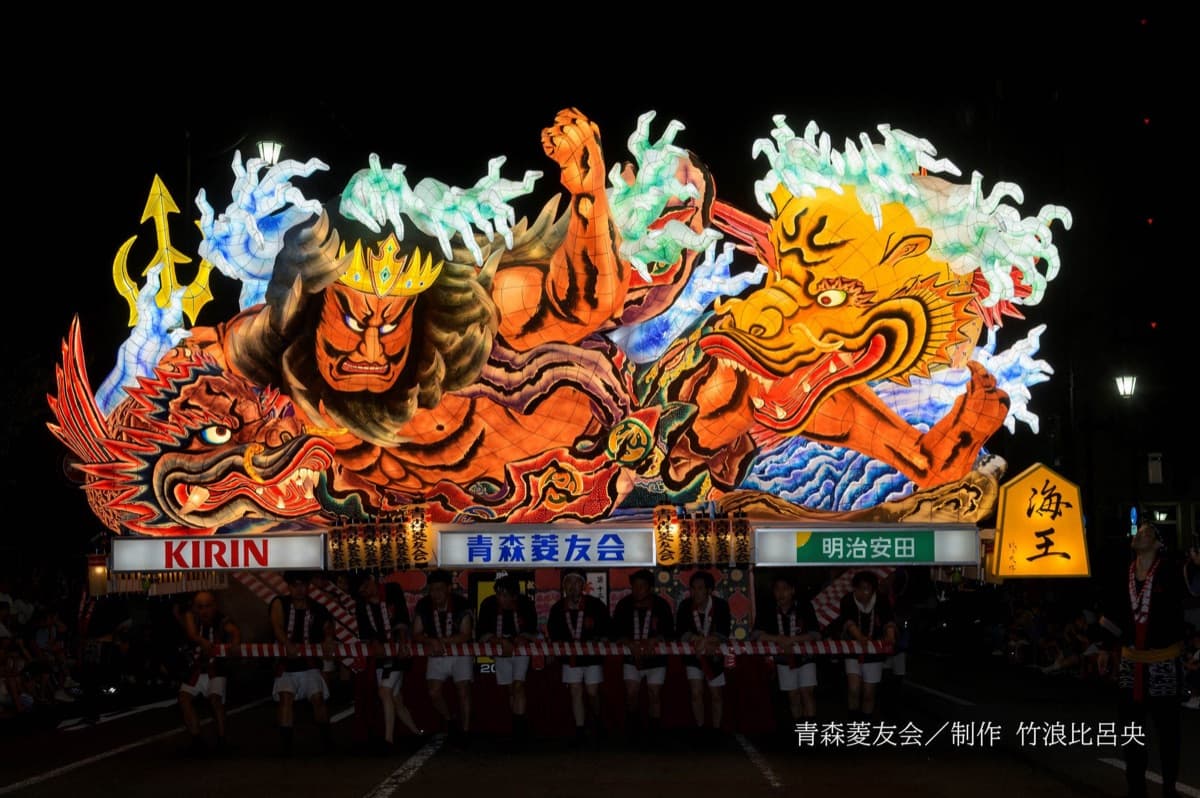
The parade route runs through central Aomori City in a loop, and the highlight is the daily parade of gigantic, colorful lantern floats with taiko drums, musicians, and dancers. The floats aren't small — over twenty nebuta, each about nine meters long and five meters high, parade through the city.
Each float group moves as a unit: the haneto dancers leap and chant in front, fan bearers spin the float to face the crowd, hikite teams haul it forward, and at the back come the musicians — taiko, flutes, and hand cymbals all at once. The noise is enormous, and the lanterns glow against the night sky in deep reds, golds, and indigos. On August 7 the rules change: a daytime parade (13:00–15:00), then an evening ocean parade with the award-winning floats lifted onto boats and roughly 11,000 fireworks over Aomori Bay. It's the only afternoon parade, and the only night you'll see floats on water.
How to Get There from Tokyo
Aomori is further north than most foreign visitors realize, but the train makes it manageable. The Hayabusa Shinkansen — the fastest scheduled train in Japan at up to 320 km/h — runs Tokyo to Shin-Aomori in about 3 hours 10 minutes, stopping only at major stations. From Shin-Aomori you switch to a short local JR Ou Line train to JR Aomori Station, the central festival hub; the parade route is a 10-minute walk from the station.
One important detail for Japan Rail Pass users: the Hayabusa has no non-reserved seating, so a seat reservation is mandatory. It's free with your pass — make it at any JR ticket office or reservation machine before boarding. During festival week these sell out fast, so book your seat the moment your pass is activated, not the day before you travel.
Reserved Seats vs Free Viewing
You have two real choices: pay for a reserved seat along the route, or stake out a kerbside spot hours early. For 2026, general reserved seats went on sale in two phases — June 27 and July 18, both at 10 a.m. — at ¥4,000 per seat for every parade (Aug 2–6 evenings and the Aug 7 daytime parade), or ¥9,500 for the Aug 7 parade-plus-fireworks combination, plus booking fees, through Ticket Pia, Lawson Ticket and Pomit. Expect the same late-June timing for 2027. Individual paid viewing seats can also be bought online or at convenience stores nationwide, with sales expected from late June.
One thing to note: the ¥3,500 ticket only covers Aug 2 to 6. The Aug 7 fireworks evening is sold separately through different operators, often bundled with a bento dinner. If you go the free route, ground seating is available along the 3 km parade route — bring a small mat and show up by late afternoon for a good spot on peak nights.
Joining as a Haneto Dancer
This is the part most international visitors don't realise they can do: you can actually be in the parade. Unlike many festivals where participation is restricted to set groups, anyone is welcome to join the dancing as long as they wear the official haneto costume — colorful sashes and small bells (suzu). No registration, no Japanese needed, just the costume and a willingness to jump and chant "Rassera."
You can rent the haneto costume at the venue for about ¥4,000, and department stores around Aomori sell sets if you want to keep yours. Honestly, this is the difference between watching Nebuta and experiencing it. If you've got the energy, do it once.
Where to Stay (and Why You Should Book Now)
This is the single biggest mistake first-time visitors make. Accommodation in Aomori during Nebuta week is extremely difficult — hotels book out well in advance, many reserved for all-inclusive package tours out of Tokyo or Osaka. Translation: book your hotel six months out, minimum.
If Aomori City is full, look at Shin-Aomori, Hirosaki, or Hachinohe and commute in by train. Hachinohe hosts its own Sansha Taisai festival in late July/early August, so that area can be a viable double-feature base if your dates line up. Whichever you choose, check the last train back from Aomori before booking — they run earlier than you think.
The Wa Rasse Museum: Worth a Visit Either Way
If you arrive a day early, or want to understand what you're looking at, the Nebuta Museum Wa Rasse is right next to JR Aomori Station. It displays a revolving exhibit of four Nebuta floats from the most recent festival, alongside related media. May–August hours are 09:00–19:00 (last admission 18:30); admission is ¥620 for adults, ¥460 high-school students, ¥260 elementary/junior-high. Plan an hour — there are live taiko and chant demonstrations during the day that give you a head-start on the music before the streets come alive.
Festival Origins and Why It Matters
The festival has roots. The Aomori Nebuta Matsuri originated from Tanabata traditions meant to wash away "sleepiness" (nemuri-nagashi) before the harvest, and evolved into one of Japan's most visually stunning festivals, famous for massive humanoid floats depicting mythical gods, legendary warriors, and kabuki characters. The artists who design these floats — the nebutashi — are local celebrities, and each year the best float wins an award and the honour of riding into Aomori Bay on the final night.
Building Nebuta Into a Real Tohoku Itinerary
Here's where independent planning pays off. The first week of August is the single densest week of summer festivals in Japan — Nebuta in Aomori overlaps with Kanto Matsuri in Akita and Tanabata in Sendai. A well-planned Tohoku tour can hit all three in five days. A sample five-night self-guided route:
- Aug 2 (Sun): Tokyo → Sendai by Hayabusa. Tanabata streamers in town.
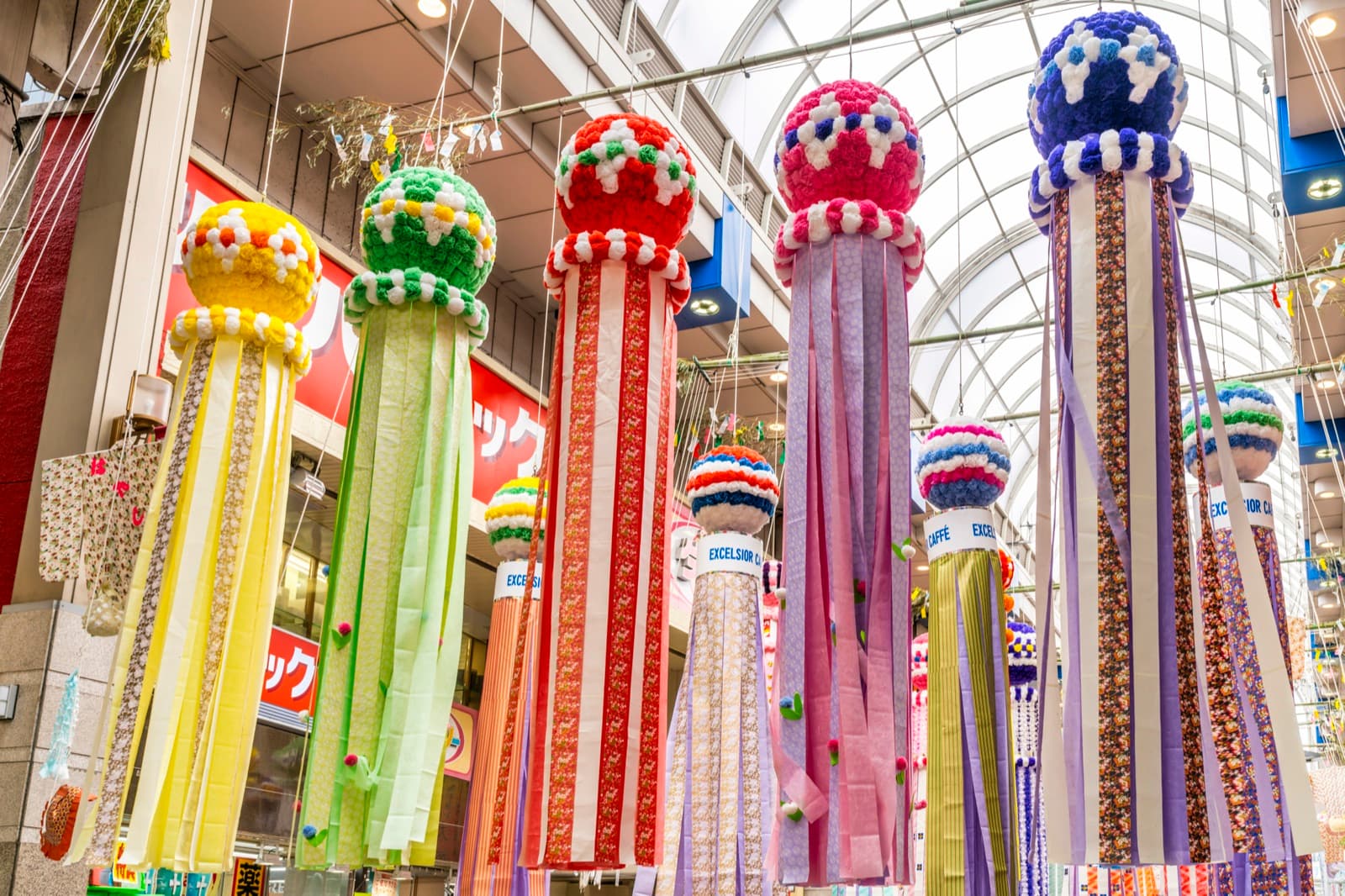
- Aug 3 (Mon): Sendai — the Tanabata streamers are already up along the arcades, though the festival itself runs Aug 6–8.
- Aug 4 (Tue): Sendai → Akita. Catch the Akita Kanto evening parade.
- Aug 5 (Wed): Akita → Aomori. Peak-night Nebuta with a reserved seat.
- Aug 6 (Thu): Second Nebuta night; daytime explore Wa Rasse and Aomori Bay.
- Aug 7 (Fri): Daytime parade + fireworks finale on the bay.
That uses your Japan Rail Pass hard, but you'll see three of the biggest matsuri in Japan back to back. Few group tours pull this off because the hotel logistics are brutal — but as a self-guided traveler, you can chase availability city by city. See our Japanese summer festivals guide and Japan in August for the wider season.
The Five Great Festivals of Tohoku
Nebuta doesn't happen in isolation. It anchors the busiest festival week in all of Japan. Alongside the Three Great Festivals of Tohoku — Aomori Nebuta, Akita Kanto, and Sendai Tanabata — two more complete the set the locals call the Five Great Festivals of Tohoku: the Yamagata Hanagasa Matsuri and Iwate's Morioka Sansa Odori. They run on back-to-back dates in early August, and together they are the high point of the entire year in the region — hugely popular with Japanese travelers, not just overseas visitors. If you're coming all the way to Japan, this is a rare chance to experience several of the country's greatest festivals in a single trip.
🏮 Five Great Festivals of Tohoku — 2026 (usual fixed dates)
| Festival | City (Prefecture) | 2026 Dates |
|---|---|---|
| Morioka Sansa Odori | Morioka (Iwate) | Aug 1–4 |
| Aomori Nebuta Matsuri | Aomori (Aomori) | Aug 2–7 |
| Akita Kanto Matsuri | Akita (Akita) | Aug 3–6 |
| Yamagata Hanagasa Matsuri | Yamagata (Yamagata) | Aug 5–7 |
| Sendai Tanabata Matsuri | Sendai (Miyagi) | Aug 6–8 |
💡 Dates are the usual fixed schedule each year. Confirm on each festival's official site before booking non-refundable travel.
Here is the catch: because this is the biggest week of the year in Tohoku, the things you need most become premium, hard-to-get tickets. Hotels, Shinkansen seats, and the reserved grandstand (sajiki) seats along each parade route all sell out fast, and prices climb. The festivals running on consecutive days is what makes a multi-city circuit possible, but it also means thousands of travelers are chasing the same rooms and trains on the same dates.
So the planning rule is simple: check the schedule early, and the moment sales open, buy your hotel, your Shinkansen seats, and your reserved festival seats right away. Reserved-seat sales for each festival open on different dates through June and July, so mark them in your calendar and be ready the day they go live. For a self-guided traveler this is an advantage, not a burden — you can lock in each city one at a time as availability opens, instead of waiting on a single packaged departure.
🎫 Self-guided festival ticket sets
For our self-guided travelers we offered a limited number of reserved-seat ticket sets for the Three and Five Great Festivals of Tohoku, bundled with the trickiest logistics handled for you. Sales for 2026 are now closed, but seats are strictly limited each year, so if you want to ride the Tohoku festival circuit in 2027 or beyond, register your interest early and we will reach out when the next round opens.
Common Mistakes to Avoid
- Treating Aug 2 like the main event. It isn't — the first two nights are warm-ups.
- Assuming you can buy a ticket on the day. Reserved seats sell out, especially for Aug 4–6.
- Eating dinner at 6 PM. Street vendors are everywhere — grab yakisoba and gyutan skewers as you wander, and save sit-down meals for lunch.
- Skipping the costume. If you have any interest in joining, just do it. It's the memory you'll keep.
- Booking in Hirosaki without checking train times back. Last trains run earlier than you think.
FAQ: Aomori Nebuta Matsuri 2026
When is the Aomori Nebuta Festival in 2026?
The festival runs August 2–7 every year (2026 is now over; 2027 uses the same dates). Evening parades take place August 2–6 (from 7:00 PM on Aug 2–3, and 6:45 PM on Aug 4–6). August 7 has a daytime parade (13:00–15:00) and an evening ocean parade with floats on boats and roughly 11,000 fireworks over Aomori Bay.
Do I need a reserved seat?
No, but it helps on Aug 4–6. Free standing room is available along the 3 km parade route, and reserved seats start at ¥3,500 plus a ¥1,000 admin fee (covering Aug 2–6; the Aug 7 finale is sold separately).
Can foreigners participate as haneto dancers?
Yes. Wear the official haneto costume — rental is around ¥4,000 at the venue — and you can join the dance procession. No registration required.
How do I get from Tokyo to Aomori?
Take the Hayabusa Shinkansen from Tokyo to Shin-Aomori (about 3 hours 10 minutes), then transfer to a local train to JR Aomori Station. The Hayabusa requires a seat reservation, free with a Japan Rail Pass.
What if I can't book a hotel in Aomori City?
Look at Hirosaki, Hachinohe, or Shin-Aomori as commuter bases, and check last-train times back from Aomori before booking.
Is one night enough?
For most travelers, yes — one of Aug 4, 5, or 6 captures the full experience. If you can stay for Aug 7, the bay fireworks finale is worth the extra night.
Plan Your Self-Guided Nebuta Trip
Nebuta rewards independent travelers — you decide which night to attend, whether to dance or sit, where to eat, when to slip away. We map the trains, hotels and ticket timing so the pieces actually fit, in Tohoku and across the rest of Japan.
Schedule and prices per the Aomori Nebuta Matsuri official information; confirm exact timings and ticket dates on the official site before booking. Last updated: June 2026.
Hero photo: © Aomori Tourism and Convention Association ((公社)青森観光コンベンション協会).
Related Articles
Japanese Summer Festivals 2026: The Best Matsuri & How to See Them
14 min read
Akita Kanto Matsuri 2026: The Self-Guided Traveler's Guide to Tohoku's Pole Lantern Festival
11 min read
Sendai Tanabata Matsuri 2026: Dates, Logistics, and How to Fit It Into a Self-Guided Japan Trip
11 min read