 Self Guide Japan travel image library
Kyoto or Osaka for Three Nights? Where to Stay on Your First Japan Trip
Use your hotel quotes and your first and last train rides to choose one base for three nights in Kansai.
Itineraries and regular package prices checked November 21, 2026.
Three nights, two cities, one hotel. If you're visiting Japan for the first time and flying in and out of Kansai Airport (KIX), this is the choice you'll face.
Short version: if your days are mostly Kyoto temples, and especially if you want an early start at Kiyomizu-dera, stay near Kyoto Station. If your trip is more about food, late nights and an early flight home, stay in Osaka's Namba area. If you want both, split the stay once.
Below are the travel times, the room math and the trade-offs, so you can check them against your own dates. All facts were checked on November 21, 2026. Yen room figures are illustrative budgets, not hotel quotes. Travel times are planning windows built from official sources. They aren't timetable promises.
Quick Answer: Should I Stay in Osaka or Kyoto?
For a first trip, two adults, three nights in Kansai:
- Stay near Kyoto Station if you'll spend most days in Kyoto, want to reach Kiyomizu-dera close to its 6:00 a.m. opening, or like quiet evenings.
- Stay in Namba, Osaka if Dotonbori dinners, nightlife, a Nara day trip by Kintetsu or an early KIX flight matter more.
- Split two nights and one night, Kyoto first and Namba last, if you want dawn temples and an easy airport morning.
Here's the side-by-side. Both columns use the same sample stay: February 1–4, 2027, two adults in one standard twin room with private bathroom, with the same cancellation and meal terms in both cities.
| Kyoto Station area | Osaka Namba area | |
|---|---|---|
| Best for | Dawn temples, two or more Kyoto days | Dotonbori dinners, nightlife, early KIX flights |
| Hotel door to Kiyomizu-dera gate (planning window) | About 45–60 min | About 1 hr 45 min–2 hr |
| Hotel door to Dotonbori (planning window) | About 70–80 min each way | About 10–15 min on foot |
| Rail time to KIX (official approximate) | Haruka, about 75 min | Rapi:t α about 34 min; Airport Express about 43 min |
| Illustrative room budget | ¥16,000/night, ¥48,000 for 3 nights | ¥13,000/night, ¥39,000 for 3 nights |
| Local lodging tax at that sample rate | ¥2,400 | ¥1,200 |
| Total including lodging tax only | ¥50,400 | ¥40,200 |
The room budgets are there to show the math. You can't book them, and they aren't quotes. The sections below explain each number in more detail.
A Kansai route with nights in both cities
Kansai Essentials: Osaka, Nara, and Kyoto
Discover West Japan: Osaka Roundtrip
Ready to Book. Pay Within 7 Days to Confirm.
Black Friday Sale20% comes off these prices when you book online by November 30. The discount is already in the total shown on the tour page.See sale tours
Kyoto Station, Namba, Umeda or Shin-Osaka: Know Which Base You Mean
"Stay in Osaka" can mean at least three very different neighborhoods. For Kyoto, this guide uses the Kyoto Station area, because it's the transport hub most first-timers pick.
Kyoto Station Area: The Transit Pick
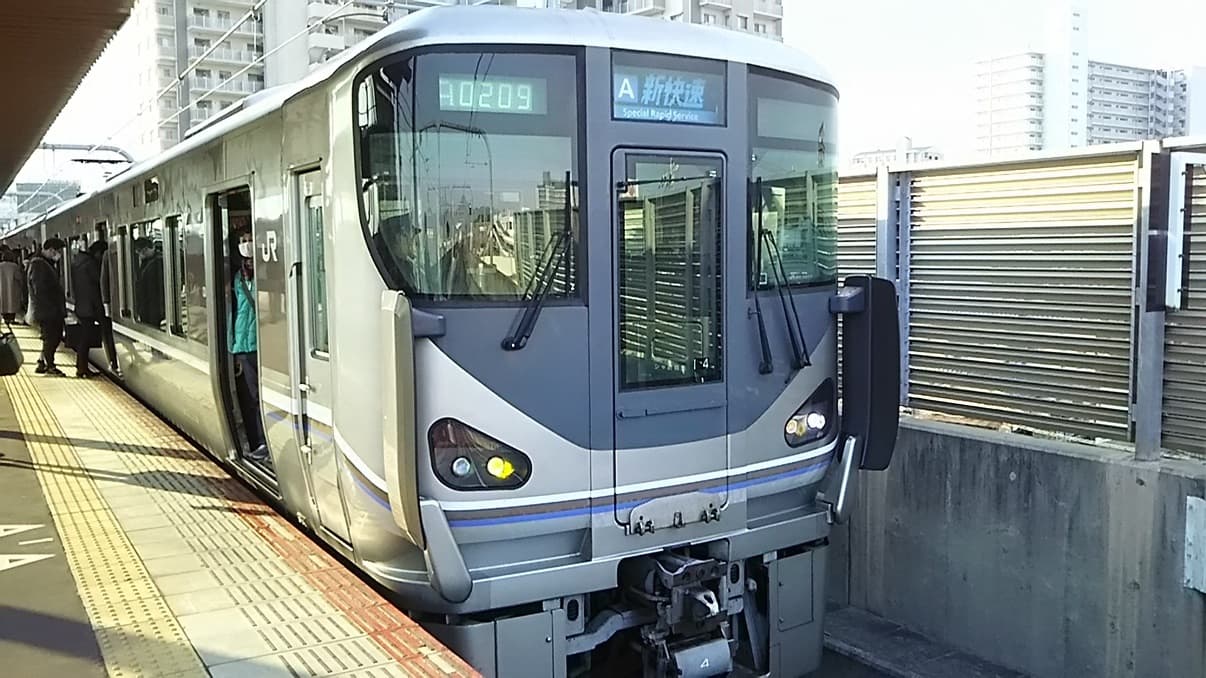
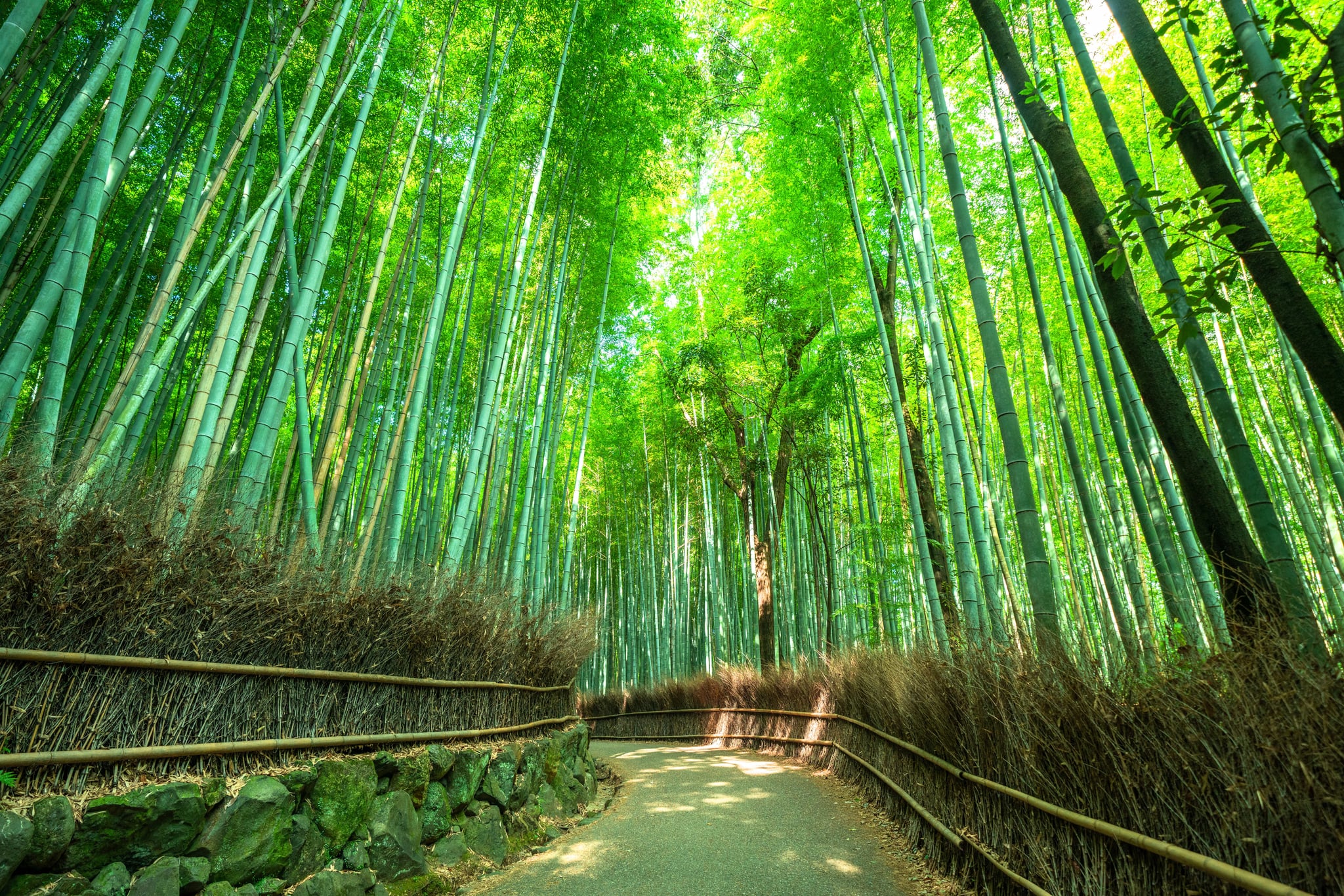
Kyoto Station brings together the Haruka airport express, the JR Special Rapid to Osaka, the Shinkansen, the Karasuma subway line and the main city bus terminal. That makes it a strong base for popular day trips. Fushimi Inari Shrine is a few minutes away on a JR Nara Line local train to Inari Station, which sits right in front of the shrine. The JR Sagano Line reaches Saga-Arashiyama, the stop for the bamboo forest, in about 15 minutes. Nijo Castle is a short subway ride: take the Karasuma Line to Karasuma Oike, then go one stop on the Tozai Line to Nijojo-mae.
What the station area doesn't have is atmosphere. You'll find modern hotels and shopping, not traditional buildings. Gion and Pontocho are a bus, subway or taxi ride away.
Namba Area: The Food-and-Night Pick
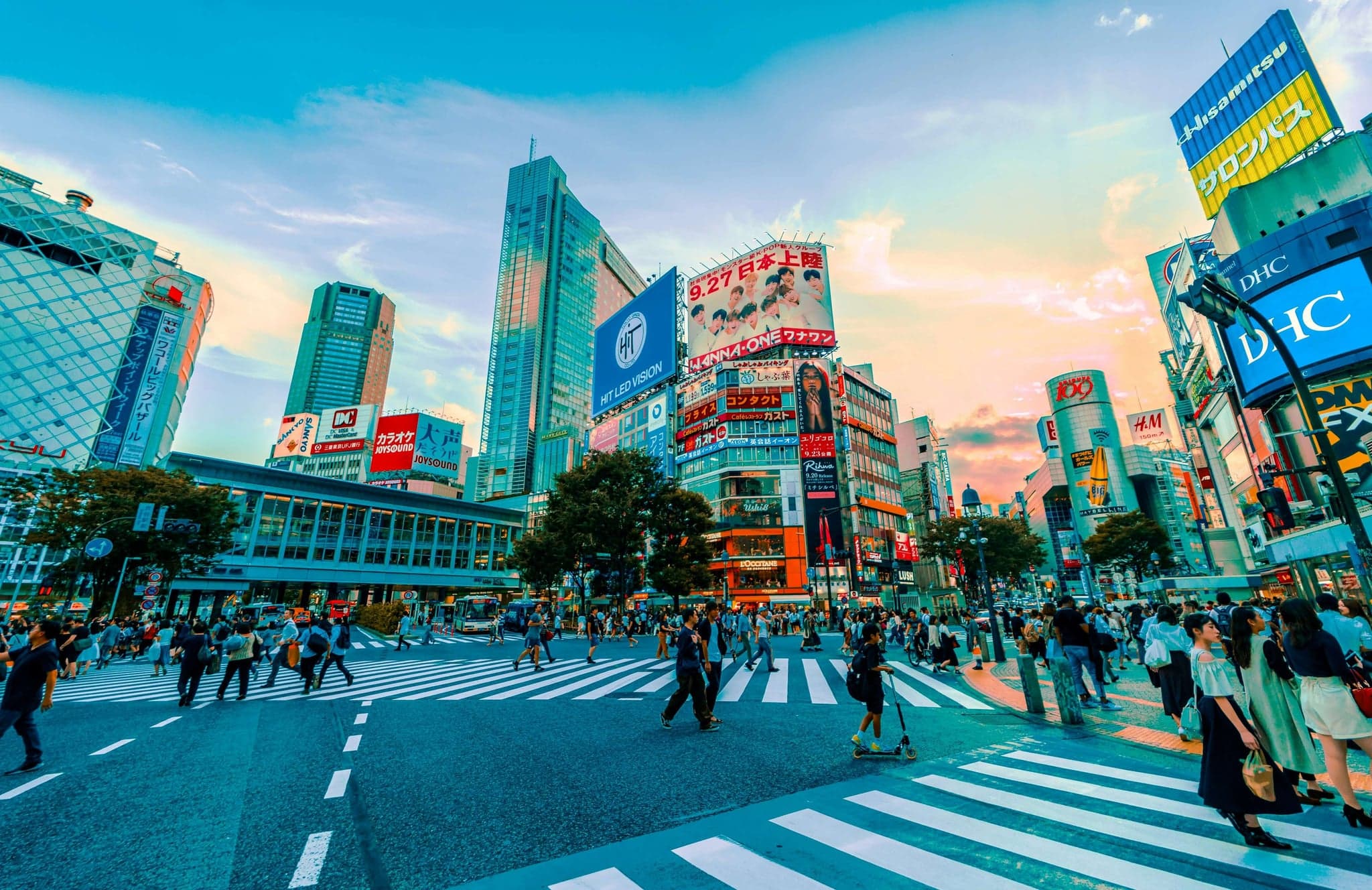
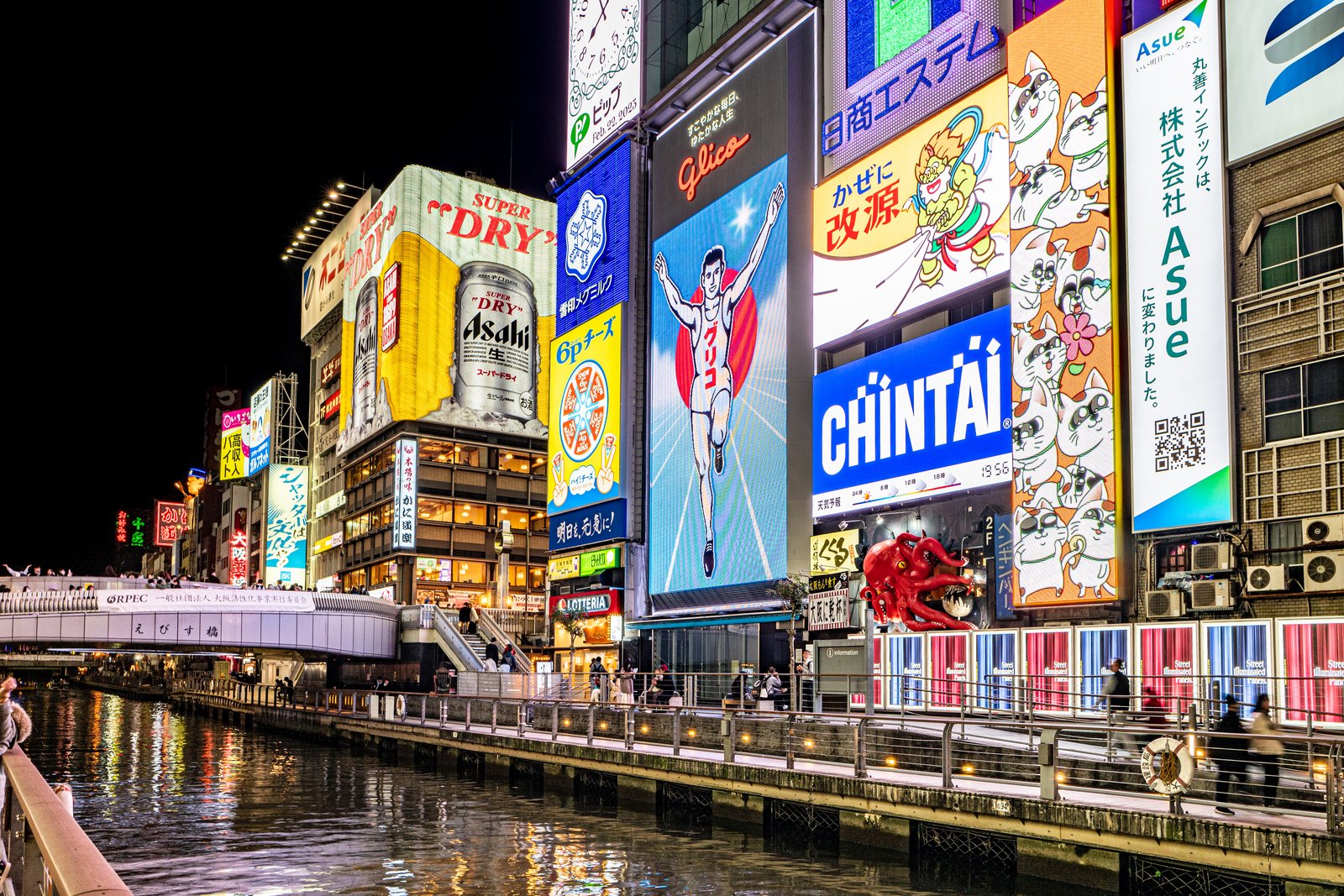
From Namba you can walk to Dotonbori, the canal-side strip of neon lights, giant signboards and street food. The back lanes of Ura-Namba add countless bars and small counters. Nankai Namba Station runs straight to KIX, and Kintetsu trains from Osaka-Namba reach Kintetsu-Nara in roughly 40 minutes on a rapid express.
One catch: "Namba" is several separate stations run by Osaka Metro, Nankai, Kintetsu/Hanshin and JR. Check which one your hotel is close to.
Umeda and Shin-Osaka Are Not Namba
Umeda is Osaka's northern hub, built around JR Osaka Station. It's the better Osaka base if you'll go to Kyoto often. The JR Special Rapid reaches Kyoto Station in about 30 minutes, and Hankyu trains from Osaka-umeda reach Kyoto-Kawaramachi in about 45. Hankyu also serves Kobe and other cities nearby. You can explore department stores full of international brands, and the Umeda Sky Building is about a 7-minute walk from JR Osaka Station, according to Osaka's official tourism site.
Shin-Osaka is different again. It's the Shinkansen station, one JR stop north of Osaka Station. The Midosuji subway line runs north from Namba through Umeda to Shin-Osaka, so getting around is easy, but the area is mostly offices and hotels. It's handy if you arrive from Tokyo by Shinkansen. It isn't where you'll want to spend time in the evening.
Door-to-Door Planning Windows From Each Hotel
The times you see online run from station to station. Your real day starts at the hotel door. The windows below assume the hotel is no more than about 10 minutes' walk from the station named. They include walking, transfers and a reasonable wait.
The sample dates, February 1–4, fall on weekdays. Kyoto’s EX100 and EX101 sightseeing buses run on weekends and holidays. For a weekday bus from Kyoto Station, look for the 206 toward Higashiyama and get off at Gojozaka. For a 6 a.m. visit, compare the first bus plus the uphill walk with a prearranged taxi. Kyoto’s official Kiyomizu-dera access guide
| From hotel door | To | Route and connections | Walking and waiting | Planning window |
|---|---|---|---|---|
| Kyoto Station area | Kiyomizu-dera gate | Weekday city bus 206 toward Higashiyama to Gojozaka (about 16 min), then walk east uphill | 10 min to the stop, 5–15 min wait, about 10 min uphill | 45–60 min |
| Namba area | Kiyomizu-dera gate | Midosuji Line to Yodoyabashi, Keihan Main Line to Kiyomizu-Gojo, then walk | 10 min to the station, 10 min transfer, about 25 min uphill | 1 hr 45 min–2 hr |
| Kyoto Station area | Dotonbori | JR Special Rapid to Osaka Station (about 30 min), walk to Umeda, Midosuji Line to Namba, walk | About 20 min walking, 10 min waiting | 70–80 min each way |
| Namba area | Dotonbori | Walk | Not applicable | 10–15 min |
| Kyoto Station area | KIX Terminal 1 check-in | Haruka (about 75 min), then walk from the station to check-in (about 10 min) | 10 min to the platform; Haruka departures can be 30 min or more apart | About 2 hr |
| Namba area | KIX Terminal 1 check-in | Nankai Rapi:t α (about 34 min) or Airport Express (about 45 min), then walk (about 10 min) | 10 min to the platform, 10–20 min for tickets and the next train | 1 hr 10 min–1 hr 20 min |
| Namba area | Kyoto Station, for Fushimi Inari or Arashiyama | Midosuji Line to Umeda, walk to JR Osaka Station, Special Rapid (about 30 min) | About 20 min walking, 10 min waiting | 60–75 min |
Why "30 Minutes to Kyoto" Doesn't Apply From Namba
The JR Special Rapid between Kyoto Station and Osaka Station really does take about 30 minutes. But it doesn't start in Namba, and it doesn't end at a temple. From a Namba hotel, you first ride the subway to Umeda and walk to JR Osaka Station. At the Kyoto end, you still need a bus or a walk to wherever you're going.
People also quote Hankyu. According to Kyoto's official guide to getting to Kyoto, Hankyu from Osaka-umeda reaches Kyoto-Kawaramachi in about 45 minutes. That puts you downtown near Pontocho, not at Kyoto Station. Keihan trains from Yodoyabashi reach Gion-Shijo in about 48 minutes. Both are private railways, so the Japan Rail Pass doesn't cover either one.
Getting to Kiyomizu-dera for the 6:00 a.m. Opening
Kiyomizu-dera's official visitor guide shows the approach from the Gojozaka stop, followed by a walk of about ten minutes uphill. The temple's English FAQ says it opens at 6:00 a.m. Closing times vary by season and special events, so check the page for your date.
If the 6 a.m. opening matters, check the first weekday bus and add the uphill walk. Prearrange a taxi if that first bus would arrive too late.
From Namba, it's harder. The Keihan route ends at Kiyomizu-Gojo, which Kyoto's tourism site puts about a 25-minute walk from the temple. Faster Keihan trains may not stop there, so check before you board. Whether you can make a 6:00 opening at all depends on first-train times for your date. Realistically, most guests coming from Namba arrive later, when the lanes are busier.
Getting to Dotonbori for Dinner
From Namba, you walk. Super easy.
From Kyoto Station, plan about 70–80 minutes each way, and check your last convenient train back before you order another round. If you don't mind paying for the Shinkansen, the hop from Kyoto to Shin-Osaka takes about 13–15 minutes and connects to the Midosuji Line, which runs straight down to Namba. That's quicker, but the Special Rapid is fine for a dinner trip.
Getting to Kansai Airport for Your Flight Home
Use the operator timetables to compare station-to-station times. Nankai airport train services and JR West’s Haruka service
- Kyoto: about 75 minutes on the JR Haruka.
- Namba: as little as 34 minutes on Nankai’s Rapi:t. The stopping pattern changes with the train.
- Namba: about 45 minutes on Nankai’s Airport Express.
Rapi:t needs a reserved-seat ticket on top of the fare.
Ride time is only part of the picture. Haruka trains don't come every few minutes, so plan around a specific departure. At KIX, the walk from the station to Terminal 1 check-in takes about 10 minutes. If your airline uses Terminal 2, add the shuttle bus. Check-in deadlines vary by airline, and the airport itself just tells you to allow plenty of time. Plan backward from your airline's deadline, not from the train timetable.
A Concrete 3-Night, 4-Day Plan
This plan works from either base. Travel times come from the planning-window table above.
Day 1: Land at KIX and Settle In
Leave time for immigration, customs and buying tickets. Kyoto Station guests take the Haruka, and Namba guests take Nankai. If you land in the afternoon, a Namba base means a Dotonbori dinner on the first night with no extra travel. A Kyoto base means an early night, which isn't a bad idea before a dawn start.
Day 2: Kiyomizu-dera Early, Higashiyama, Then Gion
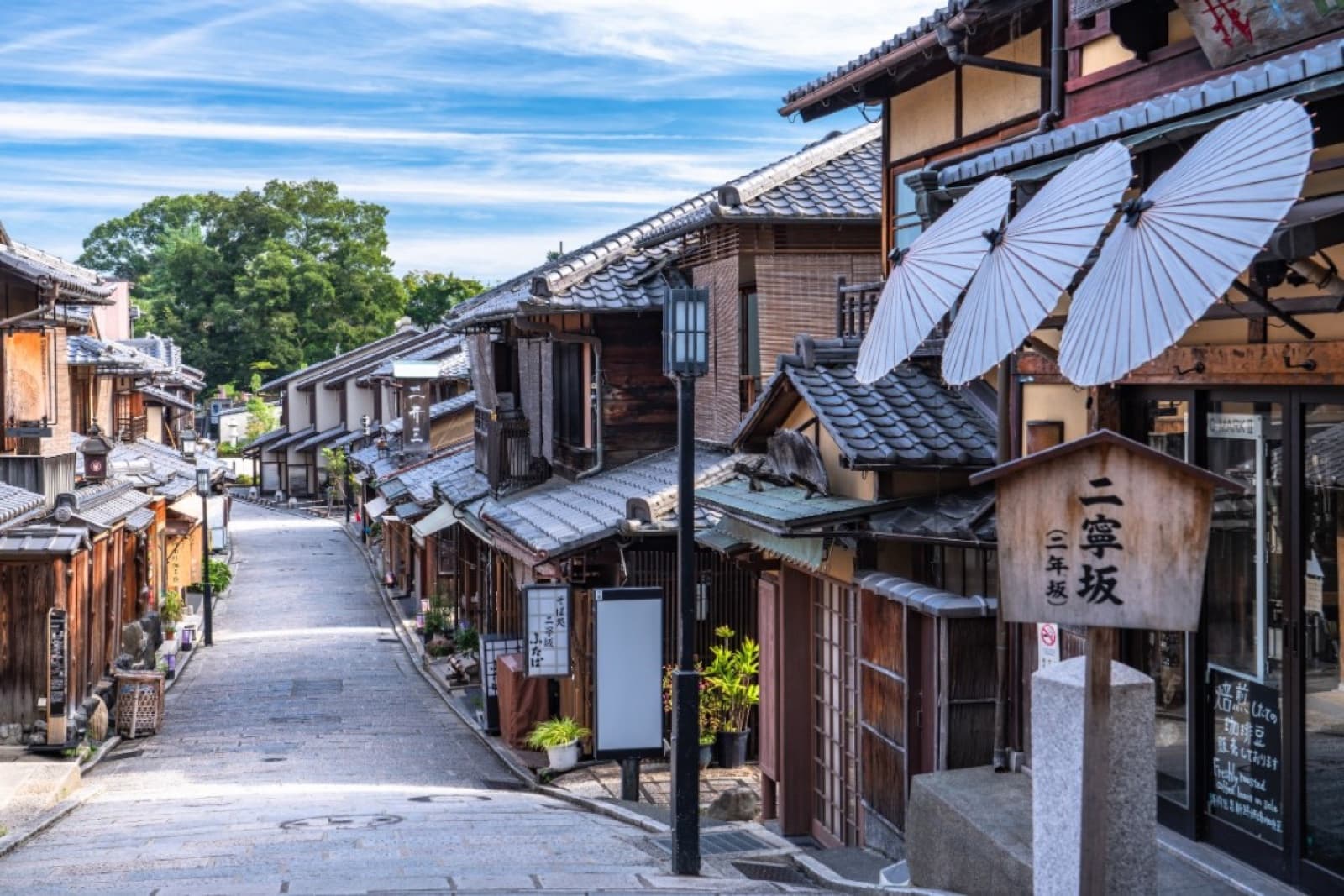
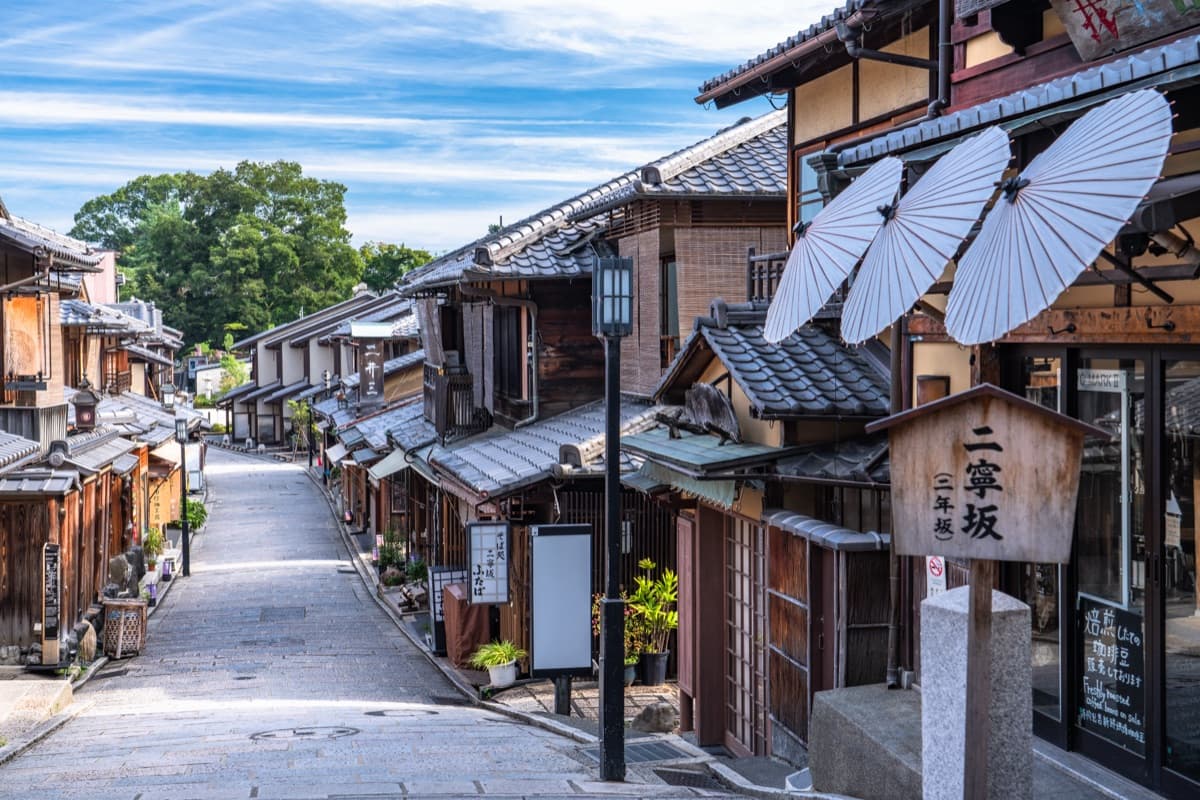
Visit Kiyomizu-dera close to opening, then explore Higashiyama on foot through Sannenzaka and Ninenzaka while the traditional shops are still opening. Kyoto's tourism office publishes a "Higashiyama at dawn" walking itinerary built around the same idea. In the afternoon, try a tea ceremony or head west to Nijo Castle. In the evening, walk Gion, Kyoto's best-known geisha district, and Pontocho alley.
From a Kyoto Station hotel, you're back in a short bus or taxi ride. From Namba, allow about an hour or more.
Day 3: More Kyoto, or a Nara Day Trip
Option A: Fushimi Inari Shrine in the morning, then the Arashiyama bamboo forest by JR Sagano Line. Kyoto's tourism site warns that the Sagano Line gets crowded and suggests boarding toward the back of the platform.
Option B: Nara. From Namba, Kintetsu gets you to Kintetsu-Nara in roughly 40 minutes, with time left to explore Nara Park. From Kyoto, JR and Kintetsu both go to Nara. Check times for your date.
Option C (Kyoto base): Fushimi Inari in the morning, then Osaka Castle in the afternoon. It's about a 10-minute walk from JR Osakajokoen Station on the Osaka Loop Line. Finish with dinner in Dotonbori and ride back late.
Day 4: Kansai Airport Departure
Morning flight? Namba wins clearly. Evening flight? From a Kyoto base, you can check out, ride to Namba, put your bags in a coin locker if one is free, have an early Dotonbori dinner and take Nankai to KIX. That replaces the Haruka ride instead of adding a round trip. Do it only if there's a comfortable buffer before your airline's check-in deadline.
A nine-day Tokyo to Osaka trip
Tokyo, Hakone & Kyoto: Japan’s Classic Escape
The Golden Route: Tokyo Start, Osaka Finish
Ready to Book. Pay Within 7 Days to Confirm.
Black Friday Sale20% comes off these prices when you book online by November 30. The discount is already in the total shown on the tour page.See sale tours
The Lodging Math for February 1–4, 2027
Compare the same dates, the same room type and the same terms: two adults, one standard twin with private bathroom, identical cancellation and meal terms, priced before local lodging taxes.
- Kyoto Station area: ¥16,000 × 3 nights = ¥48,000
- Namba area: ¥13,000 × 3 nights = ¥39,000
- Difference: ¥9,000
These are illustrative figures, not quotes. Real hotel prices change with dates and demand.
Count Only the Extra Cross-City Trips
The cheaper base has a cost of its own: getting to the other city. This guide uses a planning allowance of ¥1,200 per person for each cross-city round trip. That isn't a published fare. Replace it with real fares once you know your routes.
In the plan above, a Namba base makes two Kyoto round trips (Day 2 and Day 3) that a Kyoto base doesn't need:
- 2 travelers × 2 round trips × ¥1,200 = ¥4,800
- ¥9,000 − ¥4,800 = ¥4,200 still in Namba's favor, before you count time
Two rules keep the comparison honest:
- Count only the trips that differ between the two plans. The airport run and a Nara day trip happen from either base, so leave them out.
- Count a round trip once. Don't count the outbound ride and the return ride separately.
If your Kyoto-base plan includes a separate evening trip to Dotonbori, that's an extra trip on the Kyoto side, so subtract it. Namba is then one round trip worse off instead of two: ¥2,400, which leaves ¥6,600.
Now add time. Going by the planning windows, each Kyoto day from Namba costs roughly two extra hours, so about four hours in total. ¥4,200 for four hours comes to about ¥1,050 an hour for the two of you. Compare that saving with the time you want at the temple or over dinner.
Add Local Lodging Tax, Once
Kyoto City and Osaka Prefecture both charge an accommodation tax per person, per night. The rate depends on the taxable room charge per guest. For this cross-check, assume the sample prices are taxable lodging charges that exclude meals and consumption tax.
- Kyoto: ¥16,000 ÷ 2 guests = ¥8,000 per guest per night. Under Kyoto City's accommodation tax, revised on March 1, 2026, that falls in the ¥400 band (¥6,000 to under ¥20,000). 2 guests × 3 nights × ¥400 = ¥2,400.
- Osaka: ¥13,000 ÷ 2 = ¥6,500 per guest per night. Since September 1, 2025, Osaka Prefecture's accommodation tax puts that in the ¥200 band (¥5,000 to under ¥15,000). 2 × 3 × ¥200 = ¥1,200.
Including lodging tax only, that's ¥50,400 vs ¥40,200, before any consumption tax that both hotels would charge. The gap grows to ¥10,200. After the two extra round trips, ¥5,400 is left.
Some booking pages already include the lodging tax in the total, so don't add it twice. Kyoto's tax bands also rise steeply for higher room rates, so a more expensive room can change the overall cost a lot.
The Formula for Your Own Room Quotes
Once you have two real, comparable quotes, run these steps:
- Room gap = (Kyoto nightly rate − Osaka nightly rate) × nights
- Tax gap = (Kyoto tax per guest-night − Osaka tax per guest-night) × guests × nights. Skip this step if both quotes already include tax.
- Commute cost = travelers × net extra round trips × real fare (or the ¥1,200 allowance)
- Net saving = room gap + tax gap − commute cost
- Saving per extra hour = net saving ÷ extra hours in transit
Our planning thresholds. These are opinions, not rules:
- Net saving of zero or less: book the base your plan uses most.
- Choose Kyoto if the hours saved give you the dawn temple visit you came for.
- Choose Namba if your evenings finish there, or your preferred airport train leaves from Namba.
Which Base Fits How You Travel?
Pick Kyoto If Dawn Sightseeing Is the Point
If you love quiet temple mornings, the Kyoto Station area is the better location. Kiyomizu-dera is under an hour away, Fushimi Inari Shrine is minutes away, and the bamboo forest is close by train. People who prefer Kyoto's slower pace also tend to like getting back to the hotel early. Kyoto also has many traditional ryokan and other traditional Japanese inns if you want a night on tatami. Keep in mind that a ryokan rate often includes dinner and breakfast, so you can't compare it directly with a room-only quote.
Visit Osaka for Street Food, Neon and Universal Studios Japan
Osaka's old nickname is "the nation's kitchen," and the food culture still lives up to it. Dotonbori, Osaka's most famous food street, serves takoyaki, okonomiyaki and kushikatsu late into the evening. Even a walk with no plan is fun. Osaka is a big city with a lively atmosphere, and plenty of travelers rank it among the great food cities in Asia. Whether it has the best food in Kansai is a matter of taste. Either way, eating amazing food a few minutes from your bed is hard to beat.
Universal Studios Japan is in Osaka as well. JR trains from Osaka Station reach Universal City Station, some with a change at Nishikujo, and the gates are a short walk from there. Super Nintendo World is inside the park. The park's official FAQ says entry to that area generally requires an Area Timed Entry Ticket. You can get one in advance with certain Express Passes or through select travel agencies, or through the official app after you enter. On busy days they can run out early. You can do a Universal Studios day from Kyoto, but it makes a long, tiring day.
Kyoto Nightlife vs Osaka Evenings
Kyoto nightlife exists, but it's compact. Pontocho alley runs for roughly 500 meters between Shijo and Sanjo streets beside the Kamo River and is lined with restaurants and bars. Gion is just across the river. It makes a lovely evening walk, but it isn't a late, loud scene.
In Gion, the geisha district's local council has put up signs asking visitors to stay out of private lanes, warning of a ¥10,000 fine. Hanamikoji, a public street, is still open. Don't chase geiko or maiko for photos.
Osaka is the opposite. Dotonbori and Ura-Namba stay busy late, and from a Namba hotel there's no last train to worry about. If nightlife is a big part of your trip, that may settle the question. Kyoto has excellent food too, but for cheap, late, casual eating, many visitors find the best food in Osaka.
Early KIX Flight? Sleep in Namba
The difference is big. From Namba, Rapi:t α takes about 34 minutes. From Kyoto, the Haruka takes about 75, and departures are spaced out. For a morning flight, Namba can save you close to an hour, and more if the Haruka timing is awkward. If you're staying near Kyoto Station, look up the first Haruka for your date before you book the flight, not after.
When Splitting Kyoto and Osaka Is Worth One Hotel Move
A move means checking out, checking in and riding a train with your bags. It's worth it when it replaces a trip you would make anyway.
The best example: spend two nights near Kyoto Station, then move to Namba on Day 3. Leave your bags at the Kyoto hotel, see Fushimi Inari in the morning, collect the bags and ride to Namba in the afternoon. Your Dotonbori dinner becomes a walk, and your airport morning is short. At the same sample rates:
- Rooms: ¥32,000 for two nights in Kyoto + ¥13,000 for one night in Namba = ¥45,000.
- Lodging tax: ¥1,600 in Kyoto + ¥400 in Osaka = ¥2,000.
- Total: ¥47,000. That's less than three nights in Kyoto (¥50,400), and there's no late ride back from Dotonbori.
Skip the move if your flight is in the evening and the Day 4 route through Namba works, or if your real Kyoto quote turns out to be cheaper anyway.
Winter vs Other Seasons
Kansai has four distinct seasons, and each one shifts the answer a little.
- Winter (the February example): Mornings are cold, and sunrise comes after Kiyomizu-dera's 6:00 opening, so the earliest visit happens in the dark. Many people aim for first light instead. Winter is often quieter than spring or autumn, which can help with price. Check your own dates.
- Cherry blossom season and autumn leaves: If you visit Kyoto then, expect scarce, expensive rooms near the main sights. That's when a cheaper Osaka base looks most tempting, and also when the commute hurts most.
- Summer: Hot and humid. The temple's notice says the standard closing time moves later in July and August.
Common Mistakes When Choosing Kyoto or Osaka
- Using station-to-station times. "Thirty minutes to Kyoto" means Osaka Station to Kyoto Station. Your hotel, the temple and your dinner table add the rest.
- Booking "Osaka" without choosing a neighborhood. Namba, Umeda and Shin-Osaka suit different trips.
- Comparing rooms that aren't alike. A traditional ryokan with dinner against a room-only twin isn't a fair test. Neither is a non-refundable rate against a flexible one.
- Adding lodging tax twice. Check whether the quote already includes it.
- Assuming the Japan Rail Pass covers everything. It's for JR lines. Hankyu, Keihan, Kintetsu and Nankai are private railways. For a short stay in Kansai only, price your actual rides first.
- Trying to fit Osaka Castle, Dotonbori and two Kyoto districts into one day. Kansai is better at a slower pace.
See the nine-day route dates
Tokyo, Hakone & Kyoto: Japan’s Classic Escape
The Golden Route: Tokyo Start, Osaka Finish
Ready to Book. Pay Within 7 Days to Confirm.
Black Friday Sale20% comes off these prices when you book online by November 30. The discount is already in the total shown on the tour page.See sale tours
Self Guide Japan Tour Examples: KA501 vs GR508
Neither package is the three-night, one-base stay described above. They're real examples of how our routes handle the two cities. Prices below are regular whole-package prices in USD for a February 1, 2027 departure. Each is a party total for two adults sharing one twin room, checked on November 21, 2026. They exclude international flights, accommodation tax and optional activities, and they are before any promotions.
| KA501 | GR508 | |
|---|---|---|
| Title | Kansai Essentials: Osaka, Nara, and Kyoto | Tokyo, Hakone & Kyoto: Japan's Classic Escape |
| Length | 6 days, 5 nights | 9 days, 8 nights |
| Nights | Osaka ×2, Nara ×1, Kyoto ×2 | Tokyo ×3, Hakone ×1, Kyoto ×2, Osaka ×2 |
| Hotel grade | Basic | Superior |
| Regular party total (2 adults, 1 twin) | USD 1,850 | USD 4,780 |
| Meals (per catalog) | Breakfast on all 5 nights | Daily breakfast and 1 dinner |
| Transport included | IC card loaded with ¥5,000 | Shinkansen and limited express trains for major intercity travel, IC card loaded with ¥4,000, Hakone Free Pass |
| Luggage delivery | Once, Osaka → Kyoto | Once, Tokyo → Osaka |
| Also included | 24/7 support in Japan, travel medical insurance (Japan only) | Same |
Interested in a tour? Click a route code above, or search for it in the top-right Search bar.
KA501: Osaka First, Kyoto Last
KA501 starts with two nights in Osaka, spends one night in Nara and finishes with two nights in Kyoto. The basic-grade party total is USD 1,850, which is USD 925 per person. The included list shows an IC card rather than separate intercity rail tickets. Local trains and buses outside the itinerary are excluded. With the last two nights in Kyoto, an early Kiyomizu-dera visit fits naturally at the end.
GR508: Kyoto, Then Osaka, After Tokyo
GR508 is a longer Japan itinerary: three nights in Tokyo, one in Hakone, two in Kyoto, then two in Osaka. It's the split approach from this article, added onto a Tokyo start. The superior-grade party total is USD 4,780, which is USD 2,390 per person. It includes Shinkansen and limited express trains for the major intercity legs, the Hakone Free Pass, and one luggage delivery listed as Tokyo to Osaka.
Both tours are self-guided. You travel independently between the listed stops. You receive your trip documents, tickets for the legs we book, and a loaded IC card. Neither tour is a three-night package covering Kansai only, and this guide doesn't assume either one can be reshaped to match one.
If You Don't Buy a Tour
You can easily do this on your own:
- Book one refundable room on comparable terms.
- Get an IC card for local trains and city buses.
- Buy your Haruka or Rapi:t ticket for the airport legs.
- Before you go, check Kiyomizu-dera's visitor guide, Kansai Airport's train access page and Kyoto's getting-to-Kyoto guide, all linked above.
- Use the operators' own timetables for JR West, Nankai, Hankyu, Keihan and Kintetsu.
The decision table and the formula work the same whether or not you book a package.
The last online booking day for the two February 1 departures is December 23, 2026 in Japan. For other dates, check the calendar for each route.
Advantages of these self-guided routes
- Both itineraries include nights in Kyoto and Osaka, so you can visit each city from a local hotel.
- The day-by-day pages show the city and the included transfers before you book.
Trade-offs to plan for
Kansai Essentials: Osaka, Nara, and Kyoto
This route starts with two Osaka nights, adds a night in Nara and finishes with two in Kyoto.
Black Friday Sale20% comes off these prices when you book online by November 30. The discount is already in the total shown on the tour page.See sale tours
Check dates & prices — KA501These are multi-day Japan trips. Choose your departure date and room on the tour page to check the current price and availability. Optional day tours cost extra.
These are whole-trip itineraries. Unlisted sightseeing admissions, accommodation tax and extra local travel are additional. Check the date, hotel grade and room occupancy on the linked tour before booking.
Before You Book
- Fix your three anchor times. These are your earliest morning start, your latest dinner and your flight time. They decide the base more than anything else.
- Get two comparable quotes on the same day. Use the same dates (for example, February 1–4, 2027), two adults, one standard twin, private bathroom, and the same cancellation and meal terms. Note whether lodging tax is included.
- Run the formula. Add the room gap and the tax gap, subtract the cost of the net extra round trips, and divide by the extra hours. If the saving per hour is small and your days are mostly in Kyoto, book Kyoto.
- Check live details before you pay. Confirm Kiyomizu-dera's hours for your date, your Haruka or Rapi:t departure, your airline's check-in deadline and your terminal.
Final Thoughts: Stay in Kyoto, Stay in Namba, or Split?
For most first-time visitors spending three nights in Kansai with Kyoto as the main event, the Kyoto Station area is the better base. Most of the sample saving from Namba disappears once you count the extra trips and the hours. On a tighter budget with Osaka-heavy days, late dinners or a morning flight, Namba is the smarter choice. If you want both dawn temples and street food on your doorstep, two nights in Kyoto and one in Namba is a hotel move worth making.
Your Kansai stay is one part of a bigger Japan itinerary. If Tokyo is on your list too, our Golden Route Japan guide shows how the classic Tokyo–Kyoto–Osaka order fits together. Whichever of the two cities you see less of, you can save it for your next trip.
Would you like a Kansai itinerary that fits your hotel and flight plans? Get in touch through Plan My Trip on our self-guided tours site, and we’ll suggest the tours that best fit your dates and plans.
FAQ
Is It Better to Stay in Kyoto or Osaka on a First Trip?
If most of your three nights are about Kyoto sights, stay near Kyoto Station. If they're mostly about food, nightlife or an early KIX flight, stay in Namba.
Is Osaka or Kyoto Cheaper for Three Nights?
It depends on your dates and hotels, so compare real quotes. In our illustrative example, Namba is ¥10,200 cheaper including lodging tax. Two extra Kyoto round trips at our ¥1,200 allowance take back ¥4,800, which leaves ¥5,400. That's before about four hours of extra travel.
Can I See Kyoto and Osaka Without Changing Hotels?
Yes. The JR Special Rapid links Kyoto Station and Osaka Station in about 30 minutes. But from a Namba hotel to a Kyoto temple gate, door to door, it can take close to two hours.
Do I Need a Japan Rail Pass for This Trip?
Usually not for a stay in Kansai only. The pass covers JR lines, not Hankyu, Keihan, Kintetsu or Nankai. Price your actual rides first.
Can I Do Universal Studios Japan From a Kyoto Hotel?
Yes, but it makes a long day: Kyoto Station to Osaka Station, then JR to Universal City. From Osaka, and especially from Umeda, the trip is much shorter. If Super Nintendo World is the main goal, check the Area Timed Entry Ticket rules on the park's official site first.
Check the six-day Kansai route
Kansai Essentials: Osaka, Nara, and Kyoto
Discover West Japan: Osaka Roundtrip
Ready to Book. Pay Within 7 Days to Confirm.
Black Friday Sale20% comes off these prices when you book online by November 30. The discount is already in the total shown on the tour page.See sale tours