
The moment still catches me every time I return to Iga-Ueno: that split-second when a seven-year-old realizes the shuriken slicing through the air isn't just for show, when the "fake" walls in the ninja house actually conceal passage secrets, when history stops being something in textbooks and becomes something you can touch, wear, and feel in your chest.
AFAR Magazine recently named Iga as one of Japan's essential destinations for authentic cultural immersion—not the polished, packaged kind, but the gritty, fascinating reality of ninjutsu that shaped this region for centuries. And they're right. While Tokyo's ninja-themed restaurants serve overpriced tempura to tourists, the Iga Ryu Ninja Museum in Mie Prefecture quietly preserves something far more valuable: the actual techniques, tools, and stories of the Iga Ryū, one of Japan's two legendary ninja schools.
For families—especially those seeking experiences where the best travel moments happen when you move at your own rhythm—this is exactly the kind of place where a self-guided approach transforms good into unforgettable.
🥷 Iga Ninja Museum at a Glance
Japan's most authentic ninja experience featuring a real ninja house with hidden passages, live shuriken demonstrations, costume rentals, and the iconic ninja train. Perfect for families with children ages 5+.
🏠
Real Ninja House
🎯
Live Shuriken Show
👘
Costume Rental
🚂
Ninja Train
Why Iga-Ueno Isn't Another Ninja Tourist Trap
Thirty minutes from Iga-Ueno, the Ninja Forest at Akame 48 Falls runs the hands-on training course that pairs with this museum — we cover it, and the family package that includes both Ise and Akame, in our ninja experience for kids guide. Let me be direct: most ninja attractions in Japan are to real ninja history what Disneyland is to actual mice. They're fun, sure. But they're not true.
Iga-shi, a compact city about 90 minutes from Osaka and Kyoto, was ground zero for ninja development during the turbulent Sengoku period. While the neighboring province of Koka in Shiga also produced formidable ninja, the Iga Ryu ninja distinguished themselves through their emphasis on independence and their refusal to serve any single lord. This wasn't Hollywood trickery—it was survival strategy honed over generations.
The Iga Ryu Ninja Museum sits in what was once the center of this ninja culture, surrounded by the mountainous terrain that made the area both defensible and perfect for training in stealth and escape routes. When your kids explore the revolving walls and hidden compartments here, they're not experiencing a reconstruction of ninja life—they're standing in a preserved village house that actual ninja families used, complete with the original construction that kept them alive.
💡 Why authenticity matters: Children have unerring radar for fakeness, but they also possess an extraordinary capacity to connect with the real. Give them both, and watch what happens.
✅ Why Iga Stands Out
- • Authentic ninja house, not a replica
- • Live demonstrations by trained practitioners
- • AFAR-recommended destination
- • Educational without being boring
- • Affordable costume rental for all ages
❌ Skip These Instead
- • Tokyo ninja-themed restaurants
- • Mall ninja experiences
- • Theme park ninja shows
- • Tourist trap "ninja villages"
The Ninja Train: Your Journey to Iga Begins at Iga-Kambe Station
Here's where the adventure properly starts, before you've even reached the museum.
The Iga Railway isn't just transport—it's theater. Board at Iga-Kambe station (easily accessible from Osaka or Nagoya), and you'll find yourself on what locals call the ninja train: carriages wrapped in purple and adorned with kunai throwing knives and shuriken. Inside, ninja silhouettes "hide" in the ceiling panels. Your children will spend the 35-minute ride to Ueno pointing them out, debating whether that shadow is a weapon or just part of the design.
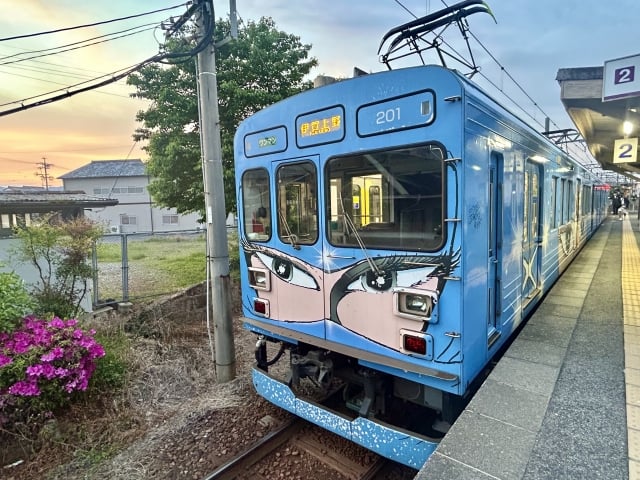
The train rattles through rice fields and small towns, past the kind of rural Japanese landscape that doesn't make Instagram highlight reels but absolutely should. In spring, the route cuts through walls of cherry blossoms. In autumn, the mountains glow russet and gold. The kids press their faces to the windows. You realize, somewhere between stations, that slowing down was exactly what you needed.
🎫 Quick tip: The Iga Railway accepts IC cards, but purchasing a day pass (¥800 for adults, ¥400 for children) makes sense if you're planning to explore beyond the main district. And yes, the conductor sometimes wears a ninja headband. No, this never stops being delightful.
Inside the Iga Ryu Ninja Museum: Where the Ninja House Reveals Its Secrets
The Iga Ryu Ninja Museum complex unfolds across several buildings, but one structure commands immediate attention: the Ninja House, a seemingly ordinary thatched-roof farmhouse that conceals extraordinary secrets.
Here's what makes it remarkable for families: children don't just learn about secret passages and escape routes—they discover them, guided by a demonstrator who speaks Japanese (English guides available with advance reservation). Watch your daughter's eyes widen when the innocent-looking wall rotates to reveal a hidden corridor. Listen to your son's delighted gasp when the floor panel lifts to expose a crawl space. The stairs leading to the second floor are deliberately steep and narrow (keep a firm hand on toddlers here), designed so ninja could defend each level more easily.
The demonstrator shows how braided cords could trigger alarms, how ceiling panels concealed weapons, how seemingly decorative elements served tactical purposes. Every part of this house was engineered for survival. The wooden floors creak—intentionally—to alert residents to intruders. The hallways lead to dead ends that aren't dead ends at all.
👨👩👦 Parent testimony: One father told us his twin boys, usually impossible to focus, stood absolutely silent during the 20-minute tour, absorbing every word. "They asked questions for hours afterward," he said. "About history, about strategy, about why some ninja used gunpowder and others didn't. I've never seen them so engaged."
The main museum building houses an extensive collection of ninja tools—over 400 items including climbing equipment, concealed weapons, and the famous shuriken in various shapes. The exhibits explain techniques of infiltration, disguise, and intelligence gathering.
Some displays show how ninja made their own weapons from farming tools, how they used strategy rather than brute force, how they studied everything from medicine to explosives. The legendary Sonshi military treatise from China influenced ninja philosophy, emphasizing that victory came from preparation and knowledge rather than combat alone.
The Explosive Ninja Show: Live Demonstrations That Make History Thunder
Twice daily (check current times—they vary seasonally), the Iga Ryu Ninja Museum hosts live ninja demonstrations in the outdoor performance area.
This is where the museum earns its reputation.
Professional ninja practitioners—some trained for over a decade—perform a 25-minute showcase of authentic techniques. They demonstrate shuriken throwing with precision that makes your heart stop when the nine-pointed star embeds itself in the wooden target with a thunk you feel in your chest. They swing kusarigama (weighted chain weapons) in patterns that blur the air. They show sword techniques developed specifically for confined spaces.
But the climax—the moment every child remembers—is the gunpowder demonstration. When the ninja ignites the powder with theatrical timing, the explosion cracks across the courtyard. Smoke billows. Kids jump. Parents laugh at their own startled reactions.
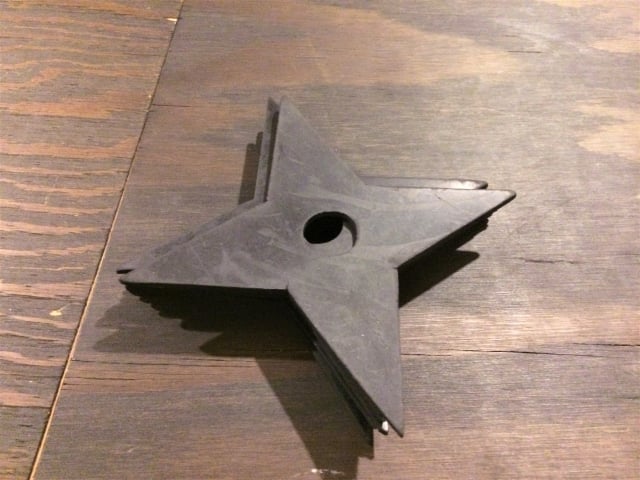
⚠️ A word of preparation: This is loud. If your toddler is noise-sensitive, bring ear protection or position yourselves toward the back. But most children—even young ones—handle it beautifully because they're prepared, they see the context, and frankly, they're having too much fun to be frightened.
The performers take questions afterward (in Japanese, though they're patient with translation apps), and often pose for photos. This interaction—seeing real expertise, asking about the physics of shuriken flight or why certain tools weighed exactly what they did—adds depth that pre-packaged tours can't match.
Ueno Castle: The Castle That Watches Over Ninja History
A five-minute walk uphill from the museum brings you to Ueno Castle (also called Iga-Ueno Castle), perched above the city with commanding views of the surrounding mountains.
Here's the complicated part: the current castle is a 1935 reconstruction. The original keep was never completed — a storm destroyed it in 1612 — and what stands now is a 1935 timber reconstruction, one of the few wooden rebuilds in Japan. Purists sometimes dismiss it. But I'd argue they're missing the point.
First, the stone walls—those are original, built by the legendary Todo Takatora, one of Japan's most skilled castle architects. These walls rank among the highest in Japan, soaring nearly 30 meters without support. Walk around the base and look up. The engineering is staggering, each stone fitted without mortar, angled to deflect siege equipment. Your kids might not care about the technical details, but they'll absolutely understand "really, really big and impressive."
Second, the castle offers context. From its upper floors, you can see why this location mattered strategically—the region spreading below, the mountain passes, the approaches an enemy army would have to take. The Iga Ryu ninja served as scouts and intelligence gatherers; standing here helps you understand the landscape they knew intimately.
Third, on a practical level: the castle has clean restrooms (always relevant when traveling with children), a small gift shop with quality souvenirs rather than tourist garbage, and a relatively easy climb if your kids are ambulatory. The interior museum focuses on the castle's history and the Todo clan, which provides nice balance after the ninja intensity.
The cherry trees around the castle grounds are spectacular in early April. The site becomes a popular hanami spot, and seeing Japanese families picnicking beneath the blossoms while kids in ninja costumes run around adds another layer to your visit—this isn't just a tourist destination; it's a living part of community life.
Ninja Costume Rental at Danjiri Museum: The Experience Your Kids Will Treasure
Walk ten minutes from the main Iga Ryu Ninja Museum and you'll find the Danjiri Kaikan Museum, which houses the massive festival floats used during Iga's autumn celebrations. But for families, the real draw is the costume rental center on the first floor.
For ¥1,500 per set (about €9, rental 10:00–15:00, return by 16:00), your children can transform into full ninja regalia: black jacket, pants, hood, belt, even foam swords. Adult sizes available too, and no, it's not silly when a 45-year-old parent poses in ninja gear with his kids—it's memorable.
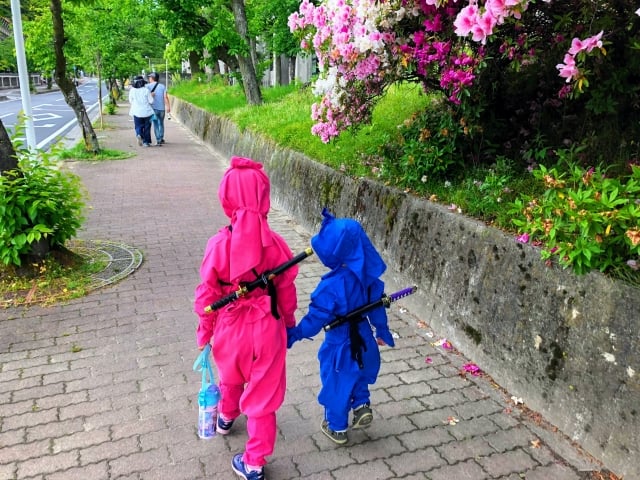
The staff helps with dressing (those ties can be tricky), and once transformed, you're free to explore the museum grounds and castle park while wearing the costumes. The rental includes the entire day until closing, so no need to rush.
What makes this experience extraordinary isn't just the costumes—though your children will absolutely love them—it's what the costumes unlock. Suddenly, your seven-year-old isn't just looking at escape routes; she's a ninja evaluating them. Your ten-year-old son isn't just hearing about stealth techniques; he's trying them out (or his version of them), creeping through the hallways of the Danjiri Museum, hiding behind trees near the castle.
📝 Practical note: Costume rental ends one hour before museum closing, so plan your visit accordingly. And yes, you can (and should) take the costume on the train back—watching a family of tiny ninja doze off during the return journey is absolutely part of the experience.
Practical Tips for Families: Making Your Iga-Ueno Visit Smooth
🚃 Getting There
| From | Route | Duration |
|---|---|---|
| Osaka | Kintetsu Line → Iga-Kambe → Ninja Train | ~90 min + 35 min |
| Kyoto | Kintetsu Line → Iga-Kambe → Ninja Train | ~90 min + 35 min |
| Nagoya | JR to Iga-Ueno Station | ~90 min |
Stroller Accessibility
Mixed. The Iga Ryu Ninja Museum grounds are stroller-friendly, but the Ninja House interior requires climbing stairs—plan to either carry your toddler or use a baby carrier. The castle has steep approaches, though a paved path exists. If you're traveling with a stroller, a compact, easily-foldable model saves frustration.
Timing Your Visit
The ninja museum opens at 10 AM (last entry 15:30 on weekdays, 16:00 at weekends); arriving when doors open means experiencing the ninja house before it gets crowded. The morning ninja show typically runs at 10:30 AM (verify current schedule), so a 9 AM arrival gives you time to explore the museum building first. The afternoon show around 2 PM works if you're coming from Osaka and want a more relaxed start.
Weekdays, especially Tuesday through Thursday, see significantly fewer visitors than weekends. If your schedule allows flexibility, mid-week visits feel almost private.
Food and Fuel
The museum has a small café serving onigiri, drinks, and snacks—adequate but nothing special. The real culinary opportunity is Iga beef, the region's premium wagyu. Several restaurants near Ueno station specialize in it, though expect to pay ¥2,000-4,000 per person for a proper meal. For families on a budget, the covered shopping arcade near the station has multiple affordable options including a charming bakery (the melon pan is excellent) and a family restaurant chain.
Language and Reservations
The museum operates primarily in Japanese, with English signage and occasional English-speaking guides. Reservation isn't required for general admission but absolutely necessary if you want an English-speaking guide for the Ninja House tour (book via their website at least 48 hours ahead). Without reservation, you'll get the Japanese tour, which is still engaging but loses some narrative detail.
💴 Budget Breakdown (per person)
| Item | Adult | Child |
|---|---|---|
| Ninja Museum Entry | ¥1,000 | ¥700 |
| Ninja Show | ¥600 | ¥600 |
| Costume Rental | ¥1,100 | ¥1,100 |
| Ueno Castle | ¥600 | ¥300 |
| Total (complete experience) | ¥3,700 | ¥3,100 |
💡 Add transport and food for a total of approximately ¥6,000-8,000 per person for the day (~€38-50).
The Real Art of Ninja History: Teaching Kids That Being Smart Beats Being Strong
Here's the fact that makes Iga-Ueno more than just a fun day trip: the underlying philosophy.
Western culture often glorifies warrior strength—the biggest sword, the strongest fighter, the most dramatic confrontation. But ninjutsu, as practiced by the Iga Ryu and their rivals in Koka, emphasized something different: intelligence over force, preparation over improvisation, survival over glory.
The schools that thrived in this mountainous region taught that the best victory was one where you never had to fight. That gathering information prevented wars. That understanding your environment—every path, every shadow, every sound—mattered more than any weapon.
When your children explore the ninja house, they're learning this lesson through architecture. The escape routes aren't random; they're strategically placed. The traps aren't cruel; they're efficient. The tools on display at the museum reflect this same philosophy—multi-purpose, concealable, designed by people who understood that surviving meant thinking several steps ahead.
🧠 The deeper lesson: In a world that increasingly rewards flash over substance, there's something quietly radical about taking your kids to a place that celebrates cleverness, adaptability, and strategic thinking. The lesson happens without lecturing. They're just having fun, wearing cool costumes, watching impressive demonstrations. But somewhere in their developing minds, they're absorbing the idea that being smart is valuable, that studying your environment matters, that preparation beats panic.
This won't transform your seven-year-old into a strategic genius overnight. But it plants a seed. And sometimes, the best educational experiences are the ones that feel like play.
Your Iga-Ueno Adventure Starts Here
The Iga Ryu Ninja Museum and the surrounding city of Ueno offer something increasingly rare in modern travel: genuine cultural immersion at a pace families can actually enjoy. No rushed schedules. No manufactured experiences. Just the authentic history of the Iga Ryu ninja, presented in a way that engages children and adults alike.
AFAR recommended Iga because it delivers what thoughtful travelers crave—depth, authenticity, and the space to discover at your own speed. For families, particularly those with an appreciation for regional culture and historical preservation, this destination offers exactly what you're seeking.
The self-guided approach isn't just about logistics. It's about honoring your family's unique dynamic, your children's specific interests, your collective energy levels. It's about creating memories on your terms.
The ninja train is waiting. The secrets of the ninja house are ready to be discovered. Your children's faces—lit with wonder as they unlock hidden passages and wear centuries of history—are worth the trip alone.
Ready to Plan Your Ninja Adventure?
Our self-guided tours handle all the logistics—train tickets, accommodations, timing recommendations—while preserving your freedom to explore at your family's pace. Contact us to start planning your authentic Iga-Ueno experience.
Last updated: January 25, 2026. Museum hours and show times vary seasonally—verify current schedules before your visit.